Author

admin

                A 2014 study published in the The Journal of Sexual Medicine reported that men under 5 feet 9 inches had a higher weekly frequency of sexual intercourse compared to their taller counterparts. As a 5-foot-5-inch man, I was heartened to read about this study. Before we delve into the different sexual experiences of shorter vs taller males, we need to look at the changing sexual trends that are impacting everyone.

                News Flash: While I was writing this article, Dolly Parton died. She was one of my heroes. I loved her, her music, and what she gave to the world. In a world of conflict, blame, and shame, Dolly was a beacon of hope. I will have more to share in future articles, but here I will say that I didn’t love her just because she was short. Certainly, being a short woman has different challenges than being a short man.

                What stands out to me about Dolly Parton was that she absolutely knew who she was, believed in herself, and expressed herself in ways that we can all learn from — Her lifelong connection to her roots, her long-term successful marriage, her inspirational songs and music, her love of children, and her belief in the goodness of everyone. She will be missed, but her legacy will live forever.

                I have been helping men, women, and couples improve their sex and love lives for more than fifty years. In the last five years, I have seen a disturbing trend. Men and women of all ages are having less sex, and many males are giving up on partnered sex all together and turning to pornography and AI companions. What is going on?

                Dr. Debra Soh is a neuroscientist who specializes in human sexuality. She has written an important new book, SEXtinction: The Decline of Sex and the Future of Intimacy. “Society has never been more sexualized,” says Dr. Soh, “yet we are having less sex than ever before. In 2016, a study published in the academic journal Archives of Sexual Behavior found that young people were having less sex than their preceding generations.”

                The study went on to say, “Millennials (born from 1980 to 1994 in their early twenties at the time) were more likely than previous generations at the same age to report no sexual partners since turning eighteen. The results were expected to continue for the Millennials’ successors, Generation Z (or ‘Zoomers,’ born from 1995 to 2012).”

                This sweeping global trend is affecting both sexes and all age cohorts but is especially pronounced among Millennials and Generation Z, with roughly one in three men and one in five women reporting they haven’t had sex in the past year.”

                “Considering that young men have, on average a higher sex drive and greater sociosexuality (that is, enjoyment of casual sex) than women, their decline in sexual activity is the opposite of what one might expect,” says Dr. Soh.

The Two Turbines of Change Impacting the Dynamic Between the Sexes Today

                In Sextinction, Dr. Soh describes two important factors driving the changes we are seeing in today’s sexual relationships:

  1. Men are losing the social and economic characteristics that make them attractive partners to women.
  2. Women are excelling along these very same vectors.

                Hypergamy (aka, marrying up) states that women, on average, look for financial resources and status in a potential mate and will trade up to acquire the best partner they can find. From an evolutionary perspective, this makes sense since pregnancy is riskier for females than it is for males. “Evolutionarily speaking,” says Dr. Soh, “Procreating with a mate who couldn’t protect and provide was dangerous. In most cases, it meant that neither you nor your children could expect to live for long.”

                Through the ages, women typically look for partners who are at least as successful as they are. Men generally seek partners based on youth and physical attractiveness, which are indicators of high fertility and likely reproductive success. But times, they are a changing, as Bob Dylan reminds us, in his iconic anthem. Some of the changes noted by Dr. Soh are the following:

  • Starting in adolescence, girls are more likely than boys to complete high school and continue to higher education.
  • For the past four decades, more women than men have graduated with bachelor’s degrees.
  • Since the mid-2000s, women have earned the majority of doctoral degrees.
  • In a few years, two women will graduate university for every man.
  • Women account for over half (50.7 percent) of the college-educated US labor force.

                “Bluntly put,” says Dr. Soh, “if men are unemployed or make less money than the women they are interested in, they will have a hard time attracting a partner.”

                We are living within a system that rewards the few at the expense of the many. The rich get richer and the rest fall further behind. An increasing number of men are experiencing “deaths of despair” and many have given up finding work that pays a livable income.

                In the words of Gloria Steinem, women are becoming the men they wanted to marry. This is why more women are turning away from marriage and more men are feeling increasingly hopeless. Many come to believe the 1970s bumper sticker: A Woman Needs a Man Like a Fish Needs a Bicycle.

                Or they ascribe to the more recent “Three Sixes” Rule. Dr. Soh says it describes a man who “is six feet or taller, has six-figure salary, and possesses a six-inch manhood. (In some cases, this rule will also require a potential mate to have a six-pack of abdominal muscles.”

                It’s not surprising that so many men feel they will never measure up. Statistically speaking:

  • The average penis length is about five inches.
  • Only 17 percent of men make over $100,000 annually.
  • And less than 15 percent of men in the U.S. are six feet tall.

                The loneliness epidemic is getting worse:

  • The average person today has fewer friends than in previous decades.
  • More than 25 percent of adults live alone, nearly 20 percent are neither married nor cohabitating with a partner.
  • According to the American Psychiatric Association, 10 percent of adults report feeling lonely every day.

Why Short Men Have More Sex and Make Better Partners

                Growing up I was always the shortest boy in my class. My mother and father were short, but my mother said I had tall uncles and I would get my growth spurt soon. I just had to be patient. I will be eight-three years old in December and I’m still waiting. I lied about my height when I said I was a five-feet-five-inch man.  I have lost an inch over the years, which happens to older people.

                The good news is that my wife, Carlin, just turned eight-eight. The even better news is that she has lost four inches and now I’m finally taller than her, even without the big hat.  Here’s a picture of us a few years ago at the Willits Kinetic Carnivale.

                As you can see, I attracted the most beautiful, sexy, and desirable woman I could imagine. And yes, from the time we met, fell in love, and married in 1980, everyone told her they couldn’t believe she was 42. “You look so much younger.” They said the same thing when she was 52, 62, 72, 82, and I’m sure they will say the same thing when she’s 92.

                Taller men have always been putting the moves on her since we first met. They were sure if given the opportunity she would dump the short guy (me) for a more manly man (like themselves.) But there are a few things I have learned over the years:

  • Knowing yourself and accepting who you are gives you a unique advantage in life. When you’re short, you’re short. You can stop trying to live up to other people’s expectations of desirability. I called it Quiet Confidence in an article I wrote, “The Hidden Secret of Becoming a Sexually Successful Male.”
  • When we accept ourselves the way we are, we gain confidence that allows us to be successful in work and in love. That’s real sex appeal.
  • Short men are sexy, even when Hollywood movie moguls make you believe they are taller: Al Pacino (5’7″), Tom Cruise (5’7″), The Big Bang Theory’s Johnny Galecki (5’5’’), Dustin Hoffman (5’4¾”).

                And we shouldn’t forget the only movie star, Elijah Wood (5’5’’), who had to be digitally enhanced to look shorter to play his part as Frodo the courageous Hobbit.

  • When you don’t need to aspire to the tall ideal women are initially looking for, you can enjoy getting to know a woman without having to impress her.
  • Being short helps us remember that the magic of getting what we want in the world has more to do with how we respond to the realities of life, than the realities themselves.  
  • We know that love, passion, friendship, and intimacy, can develop slowly and can be savored like fine wine.
  • As some forgotten sage once said: “Be who you is, because if you be who you ain’t, you ain’t who you is.”  ‘Nuff said.

                You can learn more about my work by visiting me at www.MenAlive.com

The post Why Short Men Have More Sex appeared first on MenAlive.
                As a marriage and family counselor for more than fifty years, I have a long-time interest in improving the love lives of men and women. I am also a leader in the emerging field of gender-specific health care and specialize in working with men and their families. I first learned about the work of Dr. Leonard Sax in 2005 when I read his book Why Gender Matters: What Parents and Teachers Need to Know About the Emerging Science of Sex Differences.

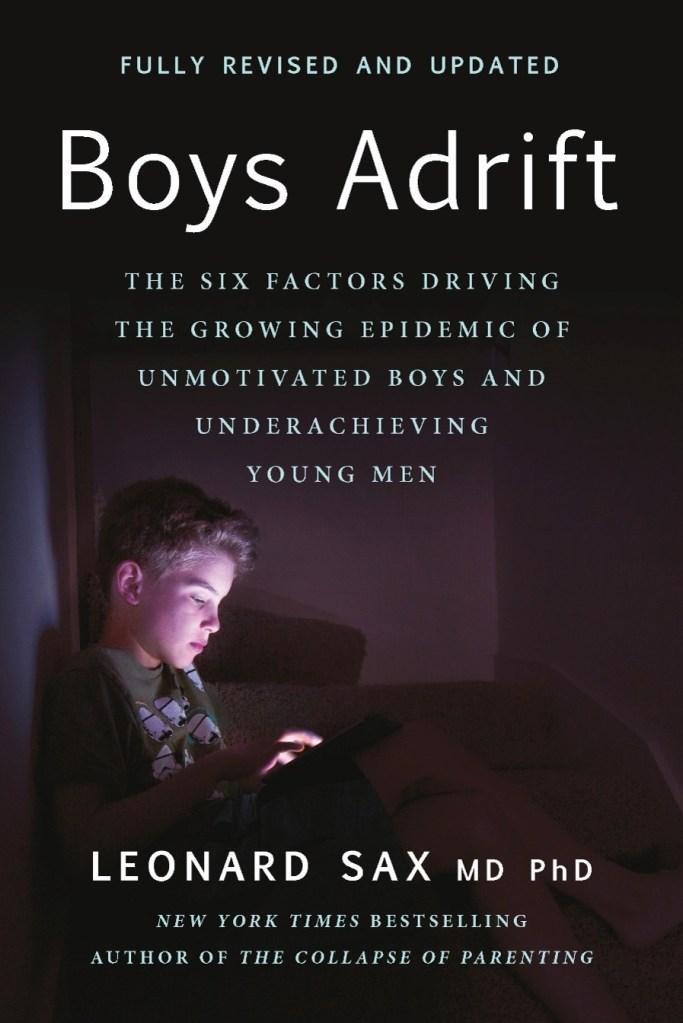
                Dr. Sax also wrote the book Boys Adrift in 2007 with a revised edition in 2016. I was excited when I was sent a copy of his 2026 edition. What he shares in the book can not only help us understand the growing epidemic of unmotivated boys and underachieving young men, but the ways unhealed males impact the lives of girls and young women. More importantly, he offers practical tools for reversing this dangerous trend and helps men and women to become true and equal partners in marriage and in life.  

                I recently interviewed Dr. Sax who has an unusual background and skill set. He is a board-certified family physician with many years’ experience helping children and adults. He is also a PhD psychologist who has helped youth and adults with mental, emotional, and relational health problems. He has also visited more than 500 schools over the past 25 years listening and talking with students and teachers.

                He shares two stories in his book that, for me, capture the essence of problem we are facing today:

                “One teacher at a high school I recently visited asked the girls in his class, ‘What words come to mind when you hear the word ‘male’? He wrote the words on the whiteboard as the girls called them out.

  • The first word a girl called out can’t be printed here, but it begins with the letter ‘A’ and ends with ‘hole’
  • ‘Immature,’  
  • ‘Mean’
  • ‘Self-centered’
  • ‘Disrespectful’
  • ‘Unhygienic’
  • ‘Not emotionally connected.’”

                The second story involved a young woman Dr. Sax had seen as a physician from the time she was a child and was now a 20-year-old mother of two little toddlers of her own. When he encountered her on the street one day he said,

                “I bumped into Brett the other day, and he was just going on and on about how great you are, and how funny you are, and how pretty you are. He told me he’s asked you to marry him. Twice… Lynda, how come you don’t want to marry the father of your two children?”

                Her answer was short and succinct and spoke to an issue I have heard many times from other women.

                “Dr. Sax, I already got two babies at home. I don’t need a third,” she answered.

                In the work I have been doing in recent years as a marriage and family counselor I hear from many single or divorced women who say,

                “I want real lasting love with a good man, but there aren’t any out there. I’m ready to give up.”  

                I tell the women that there are many good men out there, but they can be difficult to find. Men are equally discouraged,

                “I’m busting my butt trying to be a good man, but women are impossible to please and they piss me off.”

                I tell the guy I understand their frustration and encourage them to improve their lives and become the kind of man who the woman they want won’t be able to resist.

                For anyone who has visited my website, MenAlive, they see my welcome video, “Confessions of a Twice-Divorced Marriage Counselor.” Finding a partner and having a passionate, long-lasting marriage isn’t easy, even for experts. People also hear that my present wife, Carlin, and I have been married for forty-six years, and our relationship gets better through the years.

                When I thought I had written my last book (number sixteen), Carlin challenged me to write at least one more.

                “With all the conflict these days between women and men, you need to write a book that tells guys what you’ve learned about how to become a man of value.” 

                The result is my book, 12 Rules for Good Men which follows my previous book, The Enlightened Marriage: The 5 Transformative Stages of Relationships and Why the Best is Still to Come.

                Dr. Sax and I are kindred spirits. In his new edition of Boys Adrift he says,

                “Across the board, women are looking to marry men who are at least as accomplished and ambitious as they are, and there are no longer enough good men to go around.”

                Dr. Sax goes on to offer some disturbing statistics:

  • Nearly 1 in 5 young men 25 to 34 years of age is now still living at home with a parent, compared to fewer than 1 in 8 women.
  • 1 in 3 American men with only a high school degree is not working and not looking for work; that’s 10 million American men who are not even in the labor force.

                It isn’t just that modern mores have changed and young people are “coupling” without formalizing it with a marriage ceremony. The trend is the same for those married as well as those living together and it is not limited to the U.S.

                “Looking around the world,” says Dr. Sax, “we see a marked decline in both coupling and in the total fertility rate from the 1990s through the 2020s, in countries as diverse as Finland, Mexico, Peru, South Korea, Thailand, Tunisia, and Turkey.”

                Dr. Sax says,

                “Healthy marriages are fundamental to a healthy society.”

                He goes on to offer the reasons that so many young women now find the prospect of partnering with a young man unappealing.

                “As a family doctor, I heard from a young woman who said, ‘I don’t mind so much that he earns less money than I do. But he’s just a bum. He expects me to make all the meals, clean up after him. He’s not a child. I’m not his mother.”

The Six Factors That Parents, Boys, and Young Men Need to Know to Fulfill Their Potential

                In previous editions of the book, Dr. Sax described the following five factors which I will detail briefly before addressing the most recent factor that is both surprising and frightening.  

  1. Changes in the education system with schools becoming more unfriendly to boys.
  2. The ubiquity of video games.
  3. Over-medicating boys for ADHD.
  4. Endocrine disruptors in the water affecting males.
  5. The loss of male role models to teach boys what it means to be a good man.
  6. The new factor: Pornography, AI Girlfriends, and the Manosphere

                Pornography is nothing new, but what boys and men can view freely now is more addicting and violent than anything we’ve previously seen. Dr. Sax says,

                “I’m talking about digital, streaming, online pornography, pornography generated by artificial intelligence, of the kind that didn’t really exist before 2010 or in some cases 2020.”

                Dr. Sax goes on to say,

                “Researchers recently found that 45% of the most popular videos on Pornhub include at least one act of physical aggression against women. Spanking, gagging, slapping, hair pulling, and choking were the most popular.”

                AI girlfriends create such realistic “sex partners” that boys and men can become hooked and find they can no longer get turned on by real encounters with real women.

                The Manosphere is driven by equally compelling “influencers” that draw young men in and sell them false hope for fame and fortune that supposedly will make them irresistible to women.

                Is it any wonder that many boys and young are drifting further away and girls and women are checking out of the dating and mating game? Dr. Sax says,

                “A 16-year-old girl told me how her 17-year-old boyfriend asked for anal sex. She said no. He said that all the girls in the porn videos love anal sex. She said, ‘You idiot, those are actresses. They are being paid. They are pretending. How about we shove something hard up your behind and see how much you like it?’ The relationship ended soon after.”

                Fortunately, healing is not only possible, but things are changing for the better. We all have a part to play. We invite you to join us.

Learn More Here

                To learn more about Dr. Leonard Sax, his books, and his work, visit him at:

                https://www.leonardsax.com/. He says he responds directly to those who reach out to him.

                You can watch my interview with Dr. Sax here.

                If you would like to read more articles like these, I invite you to subscribe to my free weekly newsletter at MenAlive.com: https://menalive.com/email-newsletter/

The post Boys Adrift: The Epidemic Destroying Our Families and The Man Who Knows How to Heal Them appeared first on MenAlive.

                I have been a clinician specializing in men’s mental health for more than fifty years. Professionally, the work began for me on November 21,1969 when I held my newborn son in my arms and made a vow that I would be a different kind of father than my father was able to be for me and to do everything I could to help men live fully healthy lives.

                Personally, my work began much earlier. In 1949, when I was five years old, my forty-three-year-old father took an overdose of sleeping pills. He had become increasingly depressed when he couldn’t support his family doing the work he loved. Fortunately, he didn’t die but was committed to Camarillo State Mental Hospital, forty miles north of our home in Los Angeles.

                I didn’t understand what happened to my father, but my uncle agreed to visit him at the hospital and my mother wanted me to go with him.

                “Your father needs you,”

                she told me. I didn’t understand why he was in a hospital or what I could do to help, but being a dutiful son I went with my uncle every Sunday for a year even though I was becoming increasingly frightened and confused seeing my father locked up with “crazy” people. I wrote about my experiences, my father’s deteriorating mental health, and his eventual escape in my book, My Distant Dad: Healing the Family Father Wound.

                I grew up, went to college at U.C. Santa Barbara, then in 1965 was awarded full-tuition fellowship to attend medical school at U.C. San Francisco. I wanted to become a psychiatrist and help men like my father but found medical school to be too restrictive in their approach to treating patients.

                I transferred to U.C. Berkeley’s School of Social Welfare and later returned to school and earned my PhD in International Health. My dissertation research was published as a book, Male vs Female Depression: Why Men Act Out and Women Act In. I have had a long and successful career thus far helping men and their families to live fully, love deeply, and make a positive difference in the world.

                The field has changed a great deal since I first began my work in 1969. I was excited to learn about a new book by a colleague, Andrew P. Smiler, Clinical Work With Men: Understanding Masculinity in Psychotherapy. I recently had the opportunity to interview Dr. Smiler for my MenAlive podcast.

                Clinical Work With Men is the kind of book I wish were available when my father needed help, but glad it is available now. Drawing on extensive research and clinical experience, Smiler introduces seven common masculinity types — from the breadwinner and the protector to the angry man and the player — each with its own strengths, struggles, and therapeutic applications. Through vivid clinical vignettes and actionable strategies, therapists will learn to:

  • Recognize the core values and identify themes that drive male clients’ behavior;
  • Build rapport by aligning therapeutic approaches with clients’ self-understandings;
  • Address emotional development, social connection, and intersectional challenges and
  • Apply practical interventions tailored to diverse masculinities.

                Dr. Smiler is an award-winning author, therapist, and psychologist. His therapeutic practice focuses on helping teenage boys, adult men, and their families live happier, healthier, and more productive lives. He is a past president of the American Psychological Association Division 51, the Society for the Psychology of Men and Masculinities. He is also the author of several other books including Is Masculinity Toxic? A Primer for the 21st Century.

The Emerging Field of Gender-Specific Medicine

                Marianne J. Legato, MD, is an internationally renowned academic, physician, author and lecturer. She pioneered the new field of gender-specific medicine. She is a Professor Emerita of Clinical Medicine at Columbia University College of Physicians & Surgeons and an Adjunct Professor of Medicine at Johns Hopkins Medical School. Dr. Legato is also the founder and director of the Foundation for Gender-Specific Medicine, which she created in 2006.

                In her 2002 book, Eve’s Rib: The New Science of Gender-Specific Medicine and How It Can Save Our Life, she says,

                “Until now, we’ve acted as though men and women are essentially identical except for the differences in reproductive function. In fact, information we’ve been gathering over the past ten years tells us that this is anything but true, and that everywhere we look, the two sexes are startlingly and unexpectedly different not only in their normal function but in the ways they experience illness.”

                Dr. Legato is not the only clinician and researcher to take the risk to tackle sex and gender issues. There are many, including David C. Page, MD. Dr. Page is professor of biology at the Massachusetts Institute of Technology (MIT) and director of the Whitehead Institute, where he has a laboratory devoted to the study of the Y-chromosome. 

                “It has been said that our genomes are 99.9% identical from one person to the next,” says Dr. Page. “It turns out that this assertion is correct as long as the two individuals being compared are both men. It’s also correct if the two individuals being compared are both women. However, if you compare the genome of a man with the genome of a woman, you’ll find that they are only 98.5% identical. In other words, the genetic difference between a man and a woman are 15 times greater than the genetic difference between two men or between two women.” 

                In looking ahead to the future of gender-specific healthcare, Dr. Paige is hopeful.

                “Here’s what I think. We need to build a better tool kit for researchers that is XX and XY informed rather than our current gender-neutral stance. We need a tool kit that recognizes the fundamental difference on a cellular, organ, system, and person level between XY and XX. I believe that if we do this, we will arrive at a fundamentally new paradigm for understanding and treating human disease.”

                One of the most innovative and effective programs in this emerging field is Man Therapy,  led by Joe Conrad.

                “Man Therapy was launched in 2010,” says Conrad. “We realized early on that if we waited until men were in crisis, we would be too late. From the beginning, our team set three goals for Man Therapy:

1) Break through the stigma surrounding mental health by making it approachable.

2) Encourage help-seeking behavior.

3) Reduce suicidal ideation.

                “Through research, men told us to just give them the information they needed to fix themselves, so we built a website that provides a broad range of information, resources, and tools to do just that. It is extremely rewarding to know that we are accomplishing our goal of positively impacting and changing men’s lives.”

                Another important program is the American Institute for Boys and Men (AIBM) founded by Richard V. Reeves, author of the book Of Boys and Men: Why the Modern Male is Struggling, Why It Matters, and What to Do About It. One of the chapters in the book, and a focus of the work of AIBM, is titled “Men Can Heal: Getting Men into Jobs of the Future.”

                Reeves notes there has been great success getting more women into STEM (Science, Technology, Engineering, and Mathematics) professions. Now we need to get more men into HEAL (Health, Education, Administration, and Literacy) professions. Given the challenges facing men today, there is a great need to get more men trained to work in the field of men’s mental, emotional, and relational health.

Dr. Smiler Offers Help For Men and Their Families Now

                Following our interview Dr. Smiler offering some concluding remarks about what he hopes other therapists will learn when they read the book.

                “I want to expand how you think about men and masculinity and help you move away from cultural stereotypes so you can meet your male clients where they are and recognize the positive and negative components of their masculinity.”

                Dr. Smiler offers therapy and coaching services as well as workshops. He offers practical problem-solving for men and those who support them.

                “Whether you’re a guy looking to improve your own life or you’re a concerned parent, teacher, or coach — creation starts here,” says Dr. Smiler.

                You can learn more about Dr. Andrew P. Smiler and his work here:

                https://andrewsmiler.com/

                You can watch our full interview here.

                If you enjoy reading articles about men’s mental, emotional, and relational healing, I invite you to subscribe to my free weekly newsletter here:

                https://menalive.com/email-newsletter/

The post Clinical Work With Men: Why We Need Gender-Specific Therapy For Men’s Mental, Emotional, and Relational Health appeared first on MenAlive.

                This is the third in a series of articles I’m writing about what I am learning about life, love, and health since the shocking call from my doctor following my yearly visit to my cardiologist.

                “Your recent tests show that you need a pacemaker to prevent serious heart problems.”

                In the first article, “Living and Loving After Getting a Pacemaker,” I described my earlier problems with tachycardia when my heart would suddenly speed up, treatment I received, and the things I had learned.

                In the second article, “For My Children, Grandchildren, and Great Grandchildren,” I talk about my own family history and the things I have learned in my eight-three years of life that I want to pass on to future generations. In this article, I will explore the deeper things I am learning about love, life, and the changes we go through at various stages in our lives.  

                I went back to the hospital on Monday to check on my pacemaker and be sure everything was working OK. Tests showed that everything is working fine and messages are being transmitted back to the doctors whenever my heart gets out of rhythm.

                As my cardiologist described to me, in some ways the electrical system that keeps our heart in rhythm is similar to the wiring in our houses. As we get older things can get out of sync in the same way that the wiring in an old house can become faulty and cause problems. Putting in a pacemaker gives me the help I need to keep the electrical system of my heart working properly.

                I’m still getting used to having a physical object in my chest and learning to work with this new partnership between my biological and psychological self and the technology that allows my doctors the ability to know what is going on with my heart’s electrical system.

                I am amazed that this modern technology not only alerts my doctor to the inner workings of my heart but automatically sends an electrical signal to both chambers of my heart to get them back into a healthy rhythm.

                Although I appreciate the technological wonders of modern medicine that can keep us alive and well, I also like to tune into the lessons that illnesses and malfunctions can teach us.

                I believe there is deep wisdom within our body/mind/spirit that connects us to the wisdom of the universe. In my recent morning walk and meditation, I asked what I needed to learn by developing the arrythmia that created the need for the pacemaker. What came back to me was that I needed to learn more about “the rhythms of love as we age.”

New Wisdom About the Rhythms of Love and Life

                For me, matters of the heart have always been associated with love. From the time I was nine years old I used to take the bus from our home in the San Fernando Valley into Hollywood where I would get off at Hollywood and Vine and go on adventures. This was the early 1950s, a time when the world was safer, or seemed so, and where a single mom could trust a mature boy like me to go off in the morning and return safely by late afternoon.

                One of my favorite adventures was to walk to Grauman’s Chinese Theater. Established by showman Sid Grauman, this iconic venue was known for its distinctive Chinese pagoda architecture and had been a significant landmark in Los Angeles since its opening in 1927. The theatre hosted numerous film premieres and events, making it a central location for Hollywood’s glitz and glamour. It was the site of the Academy Awards from 1944 to 1946, further solidifying its status in the film industry.

                I would pay $1.00 to see a show $.25 for a box of popcorn. I would lose myself in romantic movies like Three Coins in the Fountain, where I imagined falling in love with a beautiful woman at the Trevi Fountain in Rome or being the jewel thief Pépé le Moko who was lured out of the Casbah by the beautiful Yvonne De Carlo. I took seriously the love lessons I learned from the Academy Award Nominated song, “For Every Man There’s a Woman.”

                I can still remember the words and hear the music in my mind.

For every man there’s a woman
For every life there’s a plan
And wise men know it was ever so
Since the world began, woman was made for man
Where is she, where is the woman for me?

                For those who visit my website, MenAlive, you are greeted by my welcome video, “Confessions of a Twice Divorced Marriage Counselor.” Through the years I learned that wisdom offered about love and marriage in romantic movies of the 1950s was engaging but limited in its ability to help a young boy learn about what it means to be a man and have a successful relationship with a woman.  

                My wife, Carlin, and I have been married for forty-six years. It was the third marriage for both of us. We had both grown up in dysfunctional families, raised by single mothers following the divorce from our fathers. When we first met and fell in love in 1980, the rhythm of our love was intense, fast, and furious.

                We each had children from our previous relationships (she had three and I had two) and we raised her youngest son and my daughter together. During the child-rearing years I would describe the rhythm of our love was like constantly juggling multiple balls in the air, picking them up when they fell, and trying to find time to love ourselves and each other.

                After the kids were grown up, left the nest, and were out on their own, we finally had time for ourselves. We devoted more time to our own work. Carlin started a School for Joyful Living and Sacred Action. She wrote her first book, Love It, Don’t Label It: A Practical Guide for Using Spiritual Principles in Everyday Life. I travelled more, spoke at conferences and wrote the international best-sellers Male Menopause and Surviving Male Menopause: A Guide for Women and Men. We had time to travel together and enjoyed romantic days and nights together. Our rhythm of love was free and easy, fun, and frolicking.

                We really didn’t think much about aging. If we thought about it at all, we just assumed that we’d just continue on the joyful path we were on. All that changed suddenly three-and-a-half years ago when Carlin slipped on a wet sidewalk and called me in distress. I was able to get her to the hospital but soon found she had broken her hip and needed surgery. During the surgery, she suffered a mild stroke (if any stroke can be considered mild).

                She went from being strong and independent to needing a great deal of care and support. I took over many of the tasks she used to do including paying the bills and doing our taxes. Carlin turned eighty-eight in July, and she has worked hard to regain her strength, work with her changed cognition, and continue doing things she loves.

                The rhythm of our love now is deeper, slower, and simpler. We are clearly in a new period of love and life and learning to navigate the mysterious new world we find ourselves in. Life continues to be a beautiful and mysterious adventure.

                I always look forward to hearing from readers. If you haven’t already, I invite you to subscribe to my free weekly newsletter and read new articles when they are published.

The post Getting to the Heart of the Matter, Part 3: The Changing Rhythms of Love Through the Ages appeared first on MenAlive.

                In my recent article, “Getting to the Heart of the Matter: Living and Loving After Getting a Pacemaker,” I described my recent visit to the doctor and the unexpected news that I needed a pacemaker. Test showed that I was having life-threatening arrhythmia, even though I was not aware of any symptoms.

                As my wife, Carlin, and I move into our 80s, we are both aware that our time on earth is limited, though we are doing everything we can to continue to live fully, love deeply, and make a positive difference in the world. We have six grown children, seventeen grand-children, and six great grandchildren. There are some things I have learned that I would like to share with my own children, grandchildren, and great grandchildren as well as others who are seeking guidance during these times of transformation.

                I was born in New York City on December 21,1943 during the dark days of World War II. My father had been an actor in New York City and we moved to Los Angeles, California shortly after my birth. They were able to purchase a small house in the San Fernando Valley for $4,000 from a man who had worked for the phone company and built it himself with telephone polls that were given to him in lieu of pay during the war.

                I remember my parents had a “victory garden” to grow our own fruits and vegetables and raised chickens. I enjoyed playing outside and though the area was becoming more urbanized there was still a good deal of open area and wild spaces where we could play. The winding Los Angeles River was a few blocks from our house where we caught crawdads in the summer and watched it rage wildly in the winter.

                The world I grew up in is very different than the world of today. To address the challenges and opportunities my children, grandchildren, and great grandchildren will face, we must understand our place in the community of life on planet Earth.

                Cosmologist Brian Swimme and historian Thomas Berry, authors of The Universe Story, offer the following timeline [dates are approximate based on best science at the time]:

  • 15 billion years ago: The universe begins as “a primordial flaring forth.”
  • 4 billion years ago: The first life appeared.
  • 216 million years ago: First mammals are present.
  • 2.6 million years ago: first humans evolved.

                Clearly it took billions of years for the first life to appear on Earth and millions of years before mammals evolved. Our human ancestors have been here for a relatively short period of time.

                The Challenge we face today is that many of us have forgotten that we are one species among many in the community of life. Most other species have found their place in the community of life and have been here much longer than us. Yet, humans have come to see ourselves as the dominant species.

                As Thomas Berry reminds us,

                “We never knew enough. Nor were we sufficiently intimate with all our cousins in the great family of the earth. Nor could we listen to the various creatures of the earth, each telling its own story. The time has now come, however, when we will listen or we will die.”

                The Opportunity we have is that life has been evolving for 4 billion years. There is infinite wisdom to be had. We just need to have humility and courage to learn how to listen.

                My long-time friend and colleague Chip Conley has done a great deal in his life.

                In a recent newsletter he says,

                “In the era of AI, wisdom is making a comeback as AI doesn’t have the most important raw material for making sense of one’s life and the world: lived experience.”

                He goes on to say, “I’ve spent two dozen years leading a hotel company, more than seven years being the in-house mentor to the Airbnb founders, and now eight years creating the world’s first midlife wisdom school, so I have some raw material. My definition of wisdom is ‘metabolized experience mindfully shared for the common good.’ It’s something real and maybe more important than ever.”

                Here are a few things I will share from my own lived experience acquired over the last 82 years. From the time I was five years old I loved to climb the trees in our yard. My mother would come out to call me in for lunch and she soon learned that if I wasn’t playing in the yard I would be up in one of the trees. Once I got into the trees, I would keep climbing until I was high enough that I could feel the wind gently blowing and the limb I was on would sway back and forth.

                I would call down with delight to my mother on the ground. I could tell by her voice that it scared her to have her only child high up in a tree afraid he might fall to his death. But for me, I felt safe in the trees. It was the human world that seemed confusing and conflicted. In the tree I felt held and at home.

                I never wanted to swing in the trees like I saw in the Tarzan movies I later watched on television. I just wanted to feel connected to the sky, listen to the birds, the wind, and the natural rhythms of life. I believe trees have a lot to teach us. In their book, The Universe Story, Brian Swimme and Thomas Berry say the first trees evolved 370 million years ago.

                 David Attenborough, the world’s best-known natural history filmmaker, describes the loss of biodiversity in his book, A Life on Our Planet: My Witness Statement and Vision for the Future. He says,

                “The spiraling decline of our planet’s biodiversity is the true tragedy of our time. Only when billions of different individual organisms make the most of every resource and opportunity they encounter, and millions of species lead lives that interlock so that they sustain each other, can the planet run efficiently.”

                Since humans have arrived, we have come to dominate the planet, and we are in danger of destroying our life-support system during the three epochs in human history:

                The Pleistocene is the geological epoch (Approximately 2.6 million to 11,700 years ago) during which humans and other large mammals including bears, wolves, and wooly mammoths, evolved.

                The Holocene (11,700 to the present) is the epoch which facilitated the development of agriculture and permanent settlements. It is marked by a warmer climate following the last Ice Age, leading to the development of agriculture and permanent settlements.

                Although not officially designated as a geological epoch, the Anthropocene is seen as being dominated by the spread of humans throughout the world. It is proposed to have begun in the mid-20th century, though its exact start is debated.

                Throughout my life, I have been passionately interested in how humans can best fit in with the other species in the community of life and have observed the tremendous loss of diversity that David Attenborough addresses.  

                My hope is that the adults of our present world will think of the lives of our children, grandchildren, and great grandchildren and change our ways before it is too late.

                “The Anthropocene could yet mark the beginning of a new and sustainable relationship between ourselves and our planet,” says David Attenborough. “It could be a time in which we learn to work with nature rather than against it.”

                I look forward to your own experiences, thoughts and feelings. Come visit me at MenAlive and subscribe to my free weekly newsletter.

The post Getting to the Heart of the Matter, Part 2: For My Children, Grandchildren & Great Grandchildren appeared first on MenAlive.

                It began as a routine yearly follow-up with my cardiologist. I had been referred originally by my family doctor ten years ago because my heart would race periodically even when I wasn’t exercising. The problem was eventually diagnosed as a heart rhythm problem called tachycardia.

                I had always thought of my heart as a pump to get the blood sent through my body. I learned that the pump relies on electrical pulses generated by a small area of tissue called the sinoatrial node that controls they heart’s rhythm. Like the wiring in our house, with age problems can occur. Over time, I was able to learn how to get the rhythm to return to normal on its own.

                However, with this visit, my doctor heard something that causes some concern and further tests showed that I had a more serious problem that if not treated could be dangerous, including sudden death. I was surprised since I didn’t have any symptoms.

                “It’s not an emergency that we need to hospitalize you right away, but I highly recommend you have a pacemaker put in as soon as possible,”

                my cardiologist told me.

                He referred me to a specialist who did these kinds of procedures. The doctor explained it was relatively simple. I would go to the local hospital. The procedure would take about an hour and would be done under local anesthesia. The small devise would be implanted through a small incision in my upper chest under my collar bone, and two small leads would be threaded through a vein into the two chambers of my heart. I would need someone to drive me but could go home the same day.

                Although the news was shocking at first, the decision to have it done was clearly a no-brainer. Over the last three years Carlin has had her own health problems and I’ve become her major caregiver. Dying suddenly from something that could be corrected was not an option.

                It has now been five days since the surgery and things are going OK. I’m still sore but everything is looking good. I must be careful what I do — no heavy lifting, etc. for three to four weeks until things heal. I will go back to the hospital in three weeks to be sure everything is working OK. Life goes on.

Living and Loving as We Move Into the Next Phase of Life

                I will be 83 this year and Carlin will 88. We’ve been married for 46 years. For those who visit my website, MenAlive, you see my welcome video, “Confessions of a Twice Divorced Marriage Counselor.” Third time really was the charm for us. We feel very blessed to be alive and together and able to be there for each other as we continue to enjoy the mysteries of life as we recognize that our earthly journey is moving toward the end.

                In earlier years it never occurred to me that life would be so challenging as we got older. It also never occurred to me that love would be so very sweet and joyful at this time of life. As our physical capacities have become more limited, we take great comfort from waking up each morning, giving each other a “high-five, we’re alive,” and seeing what adventures we have in store for ourselves today.

                We spend more time enjoying simple things:

  • Sitting in the garden
  • Walking in the neighborhood
  • Watching T.V. and seeing David Attenborough share his discoveries about life on planet Earth.
  • Connecting with friends and family.

                Carlin is mostly retired from her work as a counselor. I still see a few clients, write regular articles that I post weekly at MenAlive and The Good Men Project. I often interview other experts working in the field of Gender-Specific Healing and Men’s Mental, Emotional, and Relational Health and share their work in my articles. I maintain a few partnerships and collaborations with colleagues.

                Our 6 grown children, 17 grandchildren, and 6 great grandchildren are also a source of joy, as are the many friends we’ve been blessed with over the years.

Opening Our Hearts to the World

                We all have personal challenges in our lives that we must attend to as we move from birth to death. But we all must deal with the realities of world we live in. As I get older, it becomes increasingly clear to me that all life is connected. We survive and thrive, live and die, within an intricate web of life.

                Just as my new pacemaker will help me return to a safe and healthy heart rhythm, I believe that humans need to reconnect with the rhythms of the natural world.

                It is also clear to me that for some time now humans have become disconnected from the community of life and if we are to survive as a species, we must find our way home again. Thomas Berry was a priest, a “geologian,” and a historian of religions. He spoke eloquently about our connection to the Earth and the consequences of our failure to remember we are one member in the community of life.

                He reminds us:

                “We never knew enough. Nor were we sufficiently intimate with all our cousins in the great family of the earth. Nor could we listen to the various creatures of the earth, each telling its own story. The time has now come, however, when we will listen or we will die.”

                David Attenborough is the world’s best-known natural history filmmaker. He recently turned 100 and is still working. In a recent book, A Life on Our Planet: My Witness Statement and Vision for the Future, he says,

                “For life to truly thrive on this planet, there must be immense biodiversity. Only when billions of different individual organisms make the most of every resource and opportunity they encounter, and millions of species lead lives that interlock so that they sustain each other, can the planet run efficiently.”

                Attenborough concludes with this call to action:

                “The natural world is fading. The evidence is all around. It has happened during my lifetime. I have seen it with my own eyes. It will lead to our destruction. Yet there is still time to put things right.”

                Harville Hendrix and his wife Helen LaKelly Hunt have been helping men, women, and couples to learn to listen to each other and communicate more effectively for more than forty years. In an article I wrote about their work, “Healing The Wounded Angry Men of the World Using The Revolutionary Tools of Safe Conversations,” I shared their vision for teaching the skills they have used with couples to the whole world. At their website, Safe Conversations/Quantum Connections,  you can learn about how they intend to teach 2.4 billion people, in the next twenty-five years, the simple practices that can literally save humanity.

My Six Practices for Staying Balanced and Sane in a World Out of Balance

                Here are six practices that I use every day to help me navigate these challenging times:

                1. Do the Next Right Thing and Think the Next Right Thought

                In times of challenge I have found it is easy to become overwhelmed. I have found that asking, “What is the next right thing?” focuses me on the one thing I need to do next. Asking, “What is the next right thought?” keeps my mind free of thoughts if disaster.

                2. Take It Slow and Easy

                When I feel afraid, I tend to speed up and usually make mistakes that slows me down and relaxes me. Taking three deep breaths before I act grounds me.

                3. Let go and let God.

                When I feel I must do everything myself, this thought helps me recognize that I am not alone. There are resources all around me ready to help.

                4. Be kind and patient with myself and others.

                When I feel overwhelmed and inadequate I tend to berate myself or see others as letting me down or actively trying to undermine me. We’re all doing the best we can.

                5. Let them be and let me be.

                In The Let Them Theory Mel Robbins reminds us we can’t make “them” change, we can only change ourselves and that small, consistent action changes everything.

                6. How are things now?

                Most of my pain, worry and panic is about the past or the future. When I ask myself, how things are right now, usually I can say they are OK.

                These are challenging times, but also times of hope, renewal, and transformation. There is still time to do the next right thing. What will you do?

                I look forward to your own experiences, thoughts and feelings. Come visit me at MenAlive and subscribe to my free weekly newsletter.

The post Getting to the Heart of the Matter: Living and Loving After Getting a Pacemaker appeared first on MenAlive.

                No one forgets the birth of their first child. For me the blessed event occurred on November 21, 1969. I had done my best to coach my wife through the Lamaze breathing techniques that we had learned in our birthing classes. It was now time for her to move to the delivery room to complete the birth process and welcome our newborn child into the world.

                We were both ready for the final stage of the journey. The nurse turned to me with a smile saying,

                “OK, Mr. Diamond, your job is done now. You can go to the waiting room and we’ll let you know when your child arrives.”

                I felt a mixture of relief and disappointment. On the one hand we had done this far together and I wanted to be with my wife for the birth. On the other, I was afraid I might freak out and pass out. I didn’t want to screw things up.

                I kissed my wife and told her she would do fine. She attempted a smile but was overcome with the next contraction. As they wheeled her to the left towards the delivery room, I went the other direction. But as I started to go through the waiting room doors, something stopped me. I felt the calling of my soon-to-be born child saying,

                “I don’t want a waiting room father. Your place is here with us.”

                I turned around and walked back the other way and pushed through the doors into the delivery room. I didn’t ask permission and there was no question of my leaving, if asked. I didn’t care what the rules were, my child needed me, and I answered the call. It wasn’t long until our beautiful baby boy was born. As Jemal was handed to me, amid tears of relief and joy, I made a vow that I would be a different kind of father than my father was able to be for me and to do everything I could to create a world where fathers were fully involved with their children throughout their lives.

                After we brought him home from the hospital, I took three weeks off from work to spend time being the supportive parent for my wife and continue bonding with our son. The event of Jemal’s birth and the aftermath changed my life forever. A year after Jemal’s birth, my wife announced that she needed a break from 24/7 child rearing. She acknowledged that I was a great help, but she needed a break from being the primary caregiver. A girlfriend had invited her to go on a road trip, maybe for a few weeks, and asked if I could take a few weeks off from work again and be with Jemal.

                I quickly agreed, wanting to be a good, new-age, liberated father. But inside I was terrified. It was one thing to be the supportive parent knowing that I had the mother of our child to step in at any time. I believed that mothers had an inherent understanding of babies and knew what to do, a special something I felt men lacked. I felt I had learned a lot about taking care of our baby boy, but what did I know really. I was just a man. What would I do if he needed something that I couldn’t give him? We didn’t have mothers in the area that could help us out, but my wife assured me I could call her anytime if I needed advice.

                The first few days were scary, but Jemal and I figured things out together. I found I had abilities I didn’t know I had. We played together, father and son. I fed him, changed his diapers, slept with one ear open listening to any cries in the night. My wife phoned a few times and I told her honestly that things were going fine. We both missed her, but father and son were surviving and thriving.

                We did more than survive and thrive. We formed a bond together that has lasted through time. We’re connected in a way that most fathers and sons are not. I feel confident as a father and as a man that I never imagined I would feel.

                Jemal will be fifty-six in November. My wife and I now have six grown children, seventeen grandchildren, and four great grandchildren. I continue to love and learn. I recently heard about a new book, Father Time: A Natural History of Men and Babies by world renowned evolutionary anthropologist Sarah Blaffer Hrdy. It helped me understand my own experiences as a father and the importance of fathers throughout evolutionary history.

                I recently had the good fortune of interviewing Dr. Hrdy, which you can watch here.  After a full career studying the lives of mothers and writing iconic books including The Woman That Never Evolved, Mother Nature, she began to recognize the importance of fathering that had been mostly neglected by experts in Darwinian science and evolutionary psychology.

                “It has long seemed self-evident that women care for babies and men do other things,” says Dr. Hrdy. “Hasn’t it always been so? When evolutionary science came along, it rubber-stamped this venerable division of labor: mammalian males evolved to compete for status and mates, while females were purpose-built to gestate, suckle, and otherwise nurture the victors’ offspring.”

                Yet experiences Dr. Hrdy was having in her own family watched men nurture babies, led her explore the evolutionary roots of male nurture of young babies and has helped us recognize a much more expanded reality of what it means to be a man. What she discovered will forever change our views of manhood.

                I learned this more than fifty years ago when Jemal was born. More and more men have experienced this expanded reality.

                “Men caring for babies undergo the same neurological transformations, the same increase in prolactin levels and oxytocin-induced sensual pleasure as mothers do,”

                says Dr. Hrdy. I didn’t understand the biological changes I went through at the time, but that was certainly my experience as I spent significant time physically in touch with Jemal.

                “If their brains undergo shape-shifting similar to that in mothers, wouldn’t men’s psychological preferences change as well?” asks Dr. Hrdy. “Might men’s priorities come to more nearly resemble the more prosocial ones mothers are assumed to have? Might such men also be more likely to opt for safer and more sustainable courses of action?”

                I would take it another step further. Would men with this kind of changed brains, brains that are not only tuned to children, but to humans and other living things, be the kind of men who can join with women to create a healthier, more sustainable world? It doesn’t take experts to alert us to the reality that humanity is out of balance with the laws of nature and that we need to change our ways if we are going to survive and thrive as a species.

                Thomas Berry was a priest, a “geologian,” and a historian of religions. He spoke eloquently to our connection to the Earth and the consequences of our failure to remember we are one member in the community of life.

                “We never knew enough. Nor were we sufficiently intimate with all our cousins in the great family of the earth. Nor could we listen to the various creatures of the earth, each telling its own story. The time has now come, however, when we will listen or we will die.”

                At a time when mothers are feeling overwhelmed by trying to take care of infants and many are seeking child care from strangers or even looking to AI robots to raise our children, the answer may be to support more hands-on, and  hearts-connected fathers and their babies. What do you think?

                You can learn more about Dr. Hrdy and her work by visiting her website. You can watch my in-depth interview with her here.

                If you appreciate articles like these, I invite you to subscribe to my free weekly newsletter here.  

The post Why Fathers and Their Babies Are Key to Humanity’s Survival appeared first on MenAlive.

                Heated disagreements about sexuality and gender are everywhere these days. As an evolutionary-trained clinician who specializes in gender-specific medicine and men’s health, I have been helping individuals and couples improve their love lives for more than fifty years. I recently interviewed Dr. Nathan L. Lents about his latest book, The Sexual Evolution: How 500 Million Years of Sex, Gender, and Mating Shape Modern Relationships. I found the book to be enlightening, engaging, and downright fun to read.

                I have often found resistance in some circles when I talk about the biological and evolutionary roots of who we are as males and females. Some people fear that differences will be used, as they have in the past, to restrict people’s freedom and to keep some locked into boxes that are rigid and unchanging. That does not have to be the case as Dr. Lents points out so effectively.    

                Joan Roughgarden, Professor emerita of biology at Stanford University, and author of Evolution’s Rainbow had this to say about The Sexual Evolution:

                “A lot of people seem to think they know what science says when it comes to sex. Well, Nathan Lents has news for them. Read this book — it’s fascinating, charming, and eye-opening, with lovely ink drawings that bring the animals in its pages to life. It dispels misconceptions about life in the animal kingdom and our place in it, but most important, it shows clearly that nature’s beautiful sexual diversity extends to all living things — especially humans.”

                “In just two generations, the sexual landscape has completely changed throughout most of the developed world, and so it is no surprise that many people find all of this terribly unsettling,” says Dr. Lents. “What is surprising to me however, is how little the biology and natural history of sex has factored into the public conversation. I assert that this moment of sexual turmoil is actually a rediscovery of the much more expansive relationship with sex that our ancestors once had and that other animals enjoy today.”

                I grew up in southern California and spent endless hours wandering in nature. I was a biology major in college and found the world of plants and animals fascinating. As a marriage and family counselor I have found that my understanding of biology and evolution is invaluable in helping me support my client’s desire to have a wonderfully passionate sex and love life.

                In a recent article, “This Truth About Males and Females Will Change Your View of Sex, Love, and Life Forever,” I described the work of my colleague, Michael Gurian, who has been reporting on male/female differences in brain function for decades. In a  video blog, he shared the research that has been going on for more than 40 years and the evidence from a new study that shows brain differences, in utero, long before the effects of gender socialization.

                If there was one thing Dr. Lents wanted people to take away from reading his book, it is the value of diversity in the lives of all living things.

                He said that in the modern world, much of how we express our sexuality, and how we form our sexual relationships, stems from cultural constructions, not innate biological wiring. Even a cursory glimpse of the sex lives of other animals demolishes any notion that sexual activity is narrowly purposed toward procreation. Biologists have discovered an ever-expanding list of reasons that animals have sex with each other. Animals use sex for bonding, social cohesion and alliance building. They use sex deceptively, competitively and financially. They even have sex for the same reason that we most often do it: just for the fun of it.

                Moreover, in no other species but humans is sex rigidly restricted by broad constructions such as heterosexuality and sexual monogamy, nor was it so restricted for most of the history of our own species. As humans explore this supposedly new sexual territory, we can look to our animal cousins for guidance on how to manage this minefield of social upheaval.

                Not only will an understanding of our evolutionary diversity help improve our love lives, it may very well be the key to our survival. You don’t have to be a trained scientist to recognize that our human species is out of touch with the laws of nature. The burning hot temperatures we are experiencing all over the world is one reminder of the risk we are facing as humans continue to undermine our connections to the Gaia and all her diverse life forms.

                As Thomas Berry warned us:

                “We never knew enough. Nor were we sufficiently intimate with all our cousins in the great family of the earth. Nor could we listen to the various creatures of the earth each telling its own story. The time has now come, however, when we will listen or we will die.”

                There is still time to listen and learn. If you would like to get more information about Nathan H. Lents, you can do so here: https://thehumanevolutionblog.com/. He told me he’s interested in hearing from people and he reads all emails people send.

                If you are interested in my own work, please visit me at https://menalive.com/.

The post The Sexual Evolution: What 500 Million Years of Life Tells Us About Sex, Gender, and Mating appeared first on MenAlive.

                I have been a marriage and family therapist for more than fifty years and have written seventeen books including best-sellers like Looking for Love in All the Wrong Places and The Enlightened Marriage. I have helped thousands of individuals and couples find the love of their lives and have the relationship they’ve always wanted. Yet, my own love life was a disaster. If you come to my website, MenAlive, you will see my welcome video, “Confessions of a Twice-Divorced Marriage Counselor.”

                You will learn about my first two marriages and how they ended in divorce. All relationship breakups are confusing and painful, but even more so when you have been making your living helping other men and women find real lasting love. The good news is that I discovered the secret for finding the right partner and having a great marriage. My wife, Carlin, and I have been happily married for 46 wonderful years.

                It took me a long time to realize that the key to having a successful love life was a hidden wound I didn’t even know I had. Millions of men and women suffer from a father wound, a wound that has become so pervasive in our society that most people don’t even know they have it or that they need to heal it in order to have relationships that are truly satisfying and successful.

                You can learn about our healing journey in our book, The Enlightened Marriage: The 5 Transformative Stages of Relationships and Why The Best is Still to Come and take your own self-paced journey to success in my on-line course, “Navigating the 5 Stages of Love.”

                My business card reads, “Jed Diamond, PhD, Healing Men and the Women Who Love Them since 1969.” That was the year after I completed my initial graduate training and began working as a mental health professional. 1969 was also the year our first son was born. When I held him in my arms shorty after his birth, I made a vow that I would be a different kind of father than my father was able to be for me and to do everything I could to create a world where men were fully healed and engaged with their families throughout their lives.

Discovering and Healing the Family Father Wound

                Although I have written 17 books, it took me a long time to deal with my father wound. My Distant Dad: Healing the Family was my 15th published book. The book began with the following two epigraphs:

                “A father may be physically present, but absent in spirit. His absence may be literal through death, divorce or dysfunction, but more often it is a symbolic absence through silence and the inability to transmit what he may not have acquired.”

–Dr. James Hollis

                “Kids have a hole in their soul in the shape of their dad. And if a father is unwilling or unable to fill that role, it can leave a wound that is not easily healed.”

–Roland Warren

                The first chapter began with the following memory:

                I was five years old when my uncle drove me to the mental hospital. I was confused and afraid.

                “Why do I have to go?” I asked my Uncle Harry.

                He looked at me with his round face and kind eyes. “Your father needs you.”

                “What’s the matter with him?” I was beginning to cry and I clamped my throat tight to stop the tears.

                He turned away and looked back at the road. In our family, we didn’t talk about difficult issues.

                It took me a long time to understand what happened to my father and to overcome the silence and denial that clouded my life for many years beginning at age five.

                I went with my uncle to visit my father every Sunday for a year. It took me most of that time to realize he was not in an ordinary hospital but was in a mental hospital. It took many years to learn that my father had taken an overdose of sleeping pills. He had become increasingly depressed because he couldn’t support his family doing the work he loved.

                I grew up wondering what happened to my father, when it would happen to me, and I could do to prevent it from happening to other men and their families. It isn’t just males who have “a hole in their soul in the shape of their father.”

                I knew that my mother grew up without a father in the home. Like my own father wound, it took years before I learned about the nature of my mother’s early life. She and her younger sister were born in Toledo, Ohio. When my mother was five years old, her father died suddenly. My grandmother and her two small children were forced to move to Savanah, Georgia with my grandmother’s father and stepmother. That family wound was denied and hidden, but impacted all aspects of my mother’s life, including her four dysfunctional marriages.

Healing the Family Father Wound

                Here are some of the things that indicate that the family father wound may be undermining your relationships:

  • Your present relationship is not working well.

            You may be having constant fights that never seem to get anywhere or there may be angry silences that can last for days, weeks, or months. Your relationship may be wonderful one moment than turn bad the next. As the Eagles song,  “Victim of Love,” says:

                “You’re walkin’ the wire, pain and desire, looking for love in between.”

  • Looking back on past relationships, you recognize a similar pattern.

            This isn’t the first time a relationship has started out well but eventually went south.  We often think we had just picked the wrong partner, but now realize there is something deeper, something more hidden.

  • Reflecting on your family of origin, you feel a certain resonance.

                Your parents’ relationship may not be the same as the ones you have experienced, but there definitely are similarities.

  • Your father was absent physically or emotionally.

                You may have lost him through death, divorce, or dysfunction. His absence impacts your mother, yourself, and other members of your family. You begin to suspect that you have been, “looking for love in all the wrong places,” (the title of my second book).

  • There is a longing, a hunger that you feel.

                Falling in love feels like you have finally filled an inner void, that you have found that magical partner that will make everything all right, but it never seems to work.

                I share my father’s and my own healing journey in my book, My Distant Dad: Healing the Family Father Wound. I also developed an on-line course that anyone can take to explore your own father wound, how it may be impacting your life now, and what you can do to heal. You can learn more about the course, “Healing the Family Father Wound” here.

                If you would like to read more articles about life and love, please consider subscribing to my free weekly newsletter:  https://menalive.com/email-newsletter/

The post Healing the Father Wound You Never Knew You Had appeared first on MenAlive.

                I grew up believing the famous author James Michener might be my “real” father. I am sure I’m not the only person to believe our true-family origins are different from what we’ve been told. I was born on December 21,1943 in New York City to Morris (Muni) Diamond and Edith Kohn Diamond. My father was born on December 17,1906 in Jacksonville, Florida. My mother was born on October 6,1908 in Toledo, Ohio. James A. Michener was born on February 3, 1907, in New York City.

                My mom and dad met in 1927 at a Jewish youth league meeting in Jacksonville. They moved to New York in 1929–He to pursue an acting career. She to pursue adventure. Her motto:

                “Bring it on. I’ll try anything once.”

                I grew up hearing romantic stories about their life in Greenwich Village, their political activism, and being poor but in love.

                The official story was that they met, fell in love, and were married in 1934. They tried to conceive but were unsuccessful until an experimental procedure of injecting my father’s sperm into my mother’s womb was successful, and created the new life that is me. Over the years I heard stories from my mother’s younger sister, Florence, that suggested my “origin story” may be different than the one my parents told me. I learned that there was another young man, a young writer living in New York, who was competing with my father for my mother’s affections.

                James A. Michener is one of the world’s most popular writers. He won the Pulitizer in Prize in 1948 for his book Tales of the South Pacific and wrote more than 40 epic best-selling novels including Hawaii, Centennial, Texas, and Alaska. Although there is a great deal of mystery about James Michener’s early life, we do know that he left New York in 1943, the year I was born, to join the navy.

James A. Michener

                In his memoir, The World is My Home, published when Michener was 85 years old, he begins with a childhood memory.

                “I have been impelled to attempt this project because of an experience that occurred eighty years ago when I was a country lad of five, and was of such powerful import that the memory has never left me.”

                “The farmer living at the end of the lane had an aging apple tree that had once been abundantly productive but had now lost its energy and ability to bear any fruit at all. The farmer, on an early spring day I still remember, hammered eight nails, long and rusty, into the trunk of the tree.”

                “That autumn a miracle happened. The tired old tree, having been goaded back to life, produced a bumper crop of juicy red apples, bigger and better than we had seen before. When I asked how this had happened, the farmer explained: ‘Hammerin’ in the rusty nails gave it shock to remind it that its job is to produce apples.’”

                “In the 1980s, when I was nearly eighty years old, I had some fairly large rusty nails hammered into my trunk — a quintuple bypass heart surgery, a new left hip, a dental rebuilding, an attack of permanent vertigo — and like the sensible apple tree, I resolved to resume bearing fruit.”

                “Between the years 1986 and 1991 I would write eleven books, publish seven of them, including two very long ones, and have the other three completed in their third revisions and awaiting publication. It was an almost indecent display of frenzied industry, but it was carried out slowly, carefully, each morning at the typewriter and each afternoon at research or quiet reflection.”

                James Michener died October 16, 1997 at the age of 90.

Morris (Muni) Diamond

                My father died April 26, 1996 at the age of 89. He never became famous though he fulfilled his dream of becoming an actor in New York and later playwright in Hollywood. He was part of the generation of artists whose commitment to social justice and the working class ultimately made them targets during the McCarthy era and the Red Scare. Later in life, he was best known as a street puppeteer in Los Angeles and later in San Francisco under his stage name, “Tommy Roberts, the Puppet Man.”

                On May 22, 1996 an article in the San Francisco Chronicle headlined “Requiem for S.F. Puppet Man.”

                “The Tenderloin said goodbye to Tommy Roberts, the puppet man, with tears in its eyes and cookies in its mouth. The puppets were there, sitting on a small table. There was a king, a dog, a scarecrow and a bunch of little men. All were silent, an unusual condition for a Tommy Roberts puppet, which worked harder than any other marionettes in history.”

                “If they could have talked without him, they would have recited the poet about Union Square, or the one about the public library. Over the past thirty years, Roberts had a way of showing up on college campuses and in city parks with paper bags full of ragged homemade hand puppets. The puppets, only slightly smaller than their 4 foot-8 master, would share Roberts’ poetry without being asked.”

                “The puppet man died last month, at the age of 89. ‘By the standards of society my father was not a success,’ said his son, Jed Diamond, at his memorial service. ‘He didn’t make a lot of money. He was labeled as mentally ill. He liked to live among people that society pretends do not exist.

“A month before he died, he asked his son to walk with him to the new San Francisco library still under construction. ‘It took us nearly an hour to get there,’ Jed said.  ‘He loved books and wanted to leave his poem, The Public Library, for the workers. After a short rest he told me it’s time to go home. The first paragraph of the poem captures my father’s spirit:

The Public Library-

Here is my cathedral, my castle, my hallowed halls.

Here I am gallant knight, victorious leader,

Gypsy Wild — dreamer, artist, poet, wide-eyed child.

Here I’ve been nurtured and fed on spirit bread.

Here I’ve grown from crawling provincial bigot

To standing, seeking, universal man.

Finding truth and light to brighten mind’s night.

From dreamers molded out of our native clay.’

Jed Diamond

                I will be 83 later this year and for more than fifty years I have been a leader in the field of Gender-Specific Medicine and men’s mental, emotional, and relational health. I have written 17 books including international best-sellers Surviving Male Menopause and The Irritable Male Syndrome: Understanding and Managing the 4 Key Causes of Depression and Aggression.

                I feel I’ve got at least another ten years of productive life and have had my own health challenges including being diagnosed as having bipolar disorder. James Michener may not be my biological father, but he certainly has been a life-long mentor and guide for me.  

                My work as a healer began early when my mid-life father took an overdose of sleeping pills when I was five years old. He had become increasingly depressed when he couldn’t make a living to support his family doing the work that he loved.

                Fortunately, he didn’t die but was committed to Camarillo State Mental Hospital. I grew up wondering what happened to my father, when it would happen to me, and what I could do to keep other families from experiencing the pain and suffering our family went through.

                Following my graduation from U.C. Santa Barbara, I went to medical school. I wanted to become a psychiatrist and help prevent the feelings of hopelessness that leads too many men to want to end their lives. I soon found medical school too elitist and limiting for the kind of healing I knew was necessary.  

                I transferred to U.C. Berkeley’s School of Social Welfare where I earned a master’s degree and developed a full-time practice helping men, women, and families.  At age sixty, I returned to school and got a PhD in International Health. My dissertation study was published as a book, Male vs Female Depression: Why Men Act Out and Women Act In.

                My book, My Distant Dad: Healing the Family Father Wound explored the healing journey that has spanned multiple generations. I have an online course for those who want to explore their own father wound.

                I post new articles each week for those who subscribe to my free weekly newsletter. I invite you to subscribe and look forward to your comments.

The post James Michener, My Father, and Me: Finding Our Place in the World and Embracing The Mysteries of Life appeared first on MenAlive.