Category:

Medical News

I Bought ‘GLP-3’

by

After Katie started on Ozempic, she got her hairdresser interested, too. This summer, when they saw each other again, she thought that her hairdresser had lost some weight and that she looked “so great.”

“Are you still on a GLP-1?” she asked, referring to the class of blockbuster drugs that includes Ozempic and obesity meds.

“Actually,” her hairdresser replied, “I’m on a GLP-3.

Okay, so, technically, there is no such thing as a GLP-3 drug. But “GLP-3” is a name used on the underground market for retatrutide, an obesity drug still being studied by the pharmaceutical company Eli Lilly. As the nickname implies, retatrutide is like a GLP-1 drug—but more, more, more. It’s more effective, has more modes of action, and induces more weight loss. It may in fact be the most powerful weight-loss drug ever created.

When early retatrutide data were presented at a medical conference in 2023, a scientist who was there told me, the usually staid audience burst into spontaneous applause. Two weeks ago, the first of the highly anticipated Phase 3 clinical-trial results corroborated the jaw-dropping initial numbers: Patients lost on average 71 pounds, or 29 percent of their body weight—double what people lose on semaglutide, which is better known as Ozempic or Wegovy. Some trial participants stopped retatrutide early because they had lost too much weight; they stopped, in other words, because the drug was too effective. As of now, retatrutide is still not approved, though. The FDA has yet to subject its safety and efficacy data to close scrutiny. You cannot get retatrutide from your doctor. You cannot buy it at a pharmacy.

“I’m a very by-the-book, ‘The doctor gives it to you; you take it’ kind of person,” Katie told me. (The Atlantic agreed to identify some sources by their first names only for reasons of medical privacy.) When her hairdresser first mentioned retatrutide in the summer, the Phase 3 results weren’t even out. “But she was just like, ‘It was incredible,’” Katie said. When she looked up retatrutide online, she came across people posting “insane” before-and-after photos.

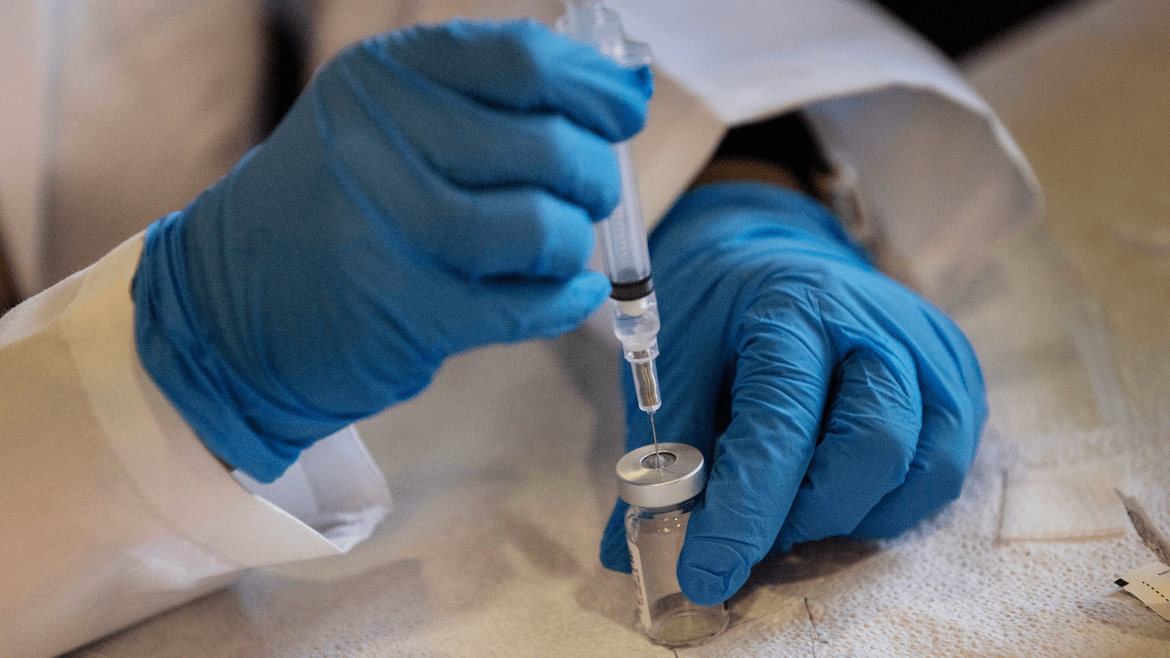
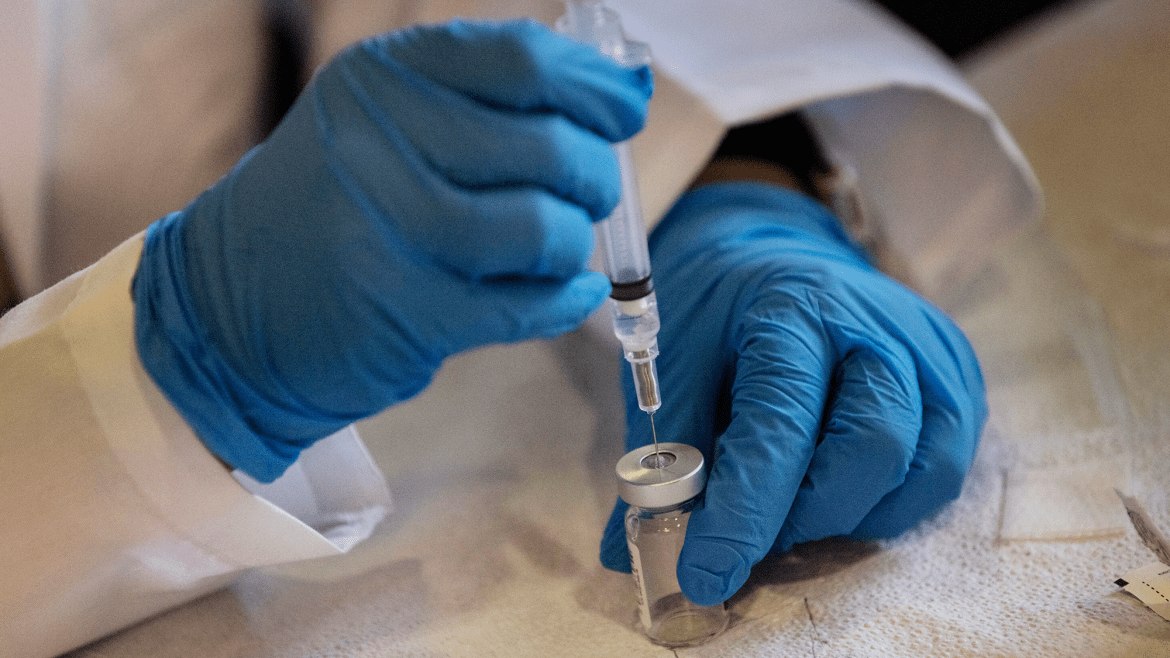
Katie, who is 44, had been prescribed Ozempic by her doctor two years ago, but she was ready for something new: Her co-pay had just shot up from $20 to $700 a month. She was nauseated all the time, but she wasn’t losing any more weight after stalling at 30 pounds. So with her hairdresser’s help, Katie began ordering freeze-dried retatrutide online, mixing the white powder with sterile water, calculating dosages, and injecting herself with needles. She paid only a fraction of what Ozempic had cost her. Six months later, she’s lost another 20 pounds.

The catch, of course, is that her drugs do not come from Eli Lilly, nor do any of the drugs on the entirely unregulated underground market. No one is saying exactly where they do come from, but it’s commonly assumed that unnamed suppliers are copying Eli Lilly’s drug in China.

Over the past year, the underground market has only grown, in both size and visibility. What began with early adopters—many of them bodybuilders and biohackers—using crypto to buy the drug through Chinese contacts on Telegram has morphed into a network of slick websites where U.S. resellers take PayPal or credit cards. On social media, influencers openly hawk affiliate discount codes for “GLP-3” and “reta.” And retatrutide is spreading through old-fashioned word of mouth—like with Katie and her hairdresser—because its effects are just so visible.

The true scope of the underground market is by design difficult to know, but dozens of brands have popped up. Forums and group chats devoted to retatrutide have up to tens of thousands of members. In certain circles, retatrutide is almost normalized. Tyler Simmons, 36, who lives in Northern California and is a bit health obsessed, told me he personally knows 30 to 40 people on retatrutide.

Experts who study counterfeit and copycat pharmaceuticals tell me they cannot think of another drug that gained this level of popularity so fast, before its clinical trials even concluded. The people injecting underground retatrutide have entered—willingly, it seems—into an immense biological and social experiment.

This May, to understand the process, I purchased retatrutide from several online vendors I found easily through social media. (I did not intend to use any of the drugs, The Atlantic’s lawyers would want me to note for the record.) The process was disarmingly casual for something people were injecting into their bodies. It felt, in some cases, just like ordering socks. One vendor sent a Shop-app link to track my package.

There were some obvious signs that these are not entirely aboveboard operations, though. For one, the websites were plastered with disclaimers that their products were for “research use only.” These disclaimers satisfy a legal loophole that allows drug compounds to be sold for lab research but not for human use. Hence, sellers and buyers of retatrutide often refer to this as a “gray market.”  

But in fact, people are plainly buying it to inject themselves. Though I sometimes saw commenters online use the fig leaf of saying “my lab rat” (which were losing comically large amounts of weight for rodents), most were discussing personal use quite openly. And vendors are not always coy about the true purpose. After the Substacker known as Crémieux wrote a popular guide to buying cheap weight-loss drugs—touting retatrutide as his top pick—one vendor, Peptide Partners, sent a discount code to share with readers: “ScrewTariffs” for 15 percent off.

A package I bought from another company, called Nexaph, originated in Indiana, according to the tracking info, but the return address on its label was in Wyoming. That address leads to a strip-mall office registered to an improbable 20,000 businesses. The cheapest retatrutide tends to come directly from China, though, sold via nebulous entities without websites. I bought one batch from a sales rep on Telegram for Jinan Elitepeptide Chemical Co. A week and a half later, I received a box for a face massager, sealed with a sticker that read, in Chinese, “Original packaging. Authentic product.” Inside were the 10 small unlabeled vials of white powder that I had ordered. (No massager, though.) None of the vendors responded to my subsequent request for comment, except R3JUVEN8, which sent me a statement reiterating that its products, including the retatrutide branded as “Radiant Sculpt” on its site, are “exclusively for laboratory research use.”

The vials I purchased came with no further information about who manufactured the powder or where. But China is home to a large, legitimate drug-manufacturing base, meaning it has the expertise to produce retatrutide. And even before retatrutide caught on, vendors linked to China were selling other peptides—a category of compounds that includes the obesity drugs semaglutide (Ozempic/Wegovy) and tirzepatide (Mounjaro/Zepbound), as well as substances, such as BPC-157, that are popular in fitness and wellness circles. Making another peptide would not be a huge leap; retatrutide as a molecule is not especially difficult for a knowledgeable chemist to copy.

The drug’s molecular structure has been public for years, since Eli Lilly published it in a research paper in 2022. It is essentially a chain of 39 amino-acid building blocks, its shape cleverly designed to fit into the receptors of three different hormones all at once: GLP-1, GIP, and glucagon. (This triple action is the 3 in GLP-3.) The existing obesity drugs on the market hit GLP-1 receptors or GLP-1 plus GIP receptors. Only retatrutide adds glucagon for the full trifecta.  

Where earlier obesity drugs work primarily through appetite suppression, glucagon seems to also boost metabolism by revving up the liver. Put them together and the triple combo might achieve the best of all worlds: “You get a reduction in food intake, and you can turn the dial up and get a little better energy expenditure,” Jonathan Campbell, an obesity researcher at Duke, told me. In other words, fewer calories in and more calories out.

Scientists knew that retatrutide held promise, but when those astonishing preliminary results were shared in 2023, excitement spilled out from labs into the public. A new and more powerful obesity drug was coming, and some people, it turns out, could not wait.

“I’m a risk-taker,” Elizabeth, 62, told me. When she started buying reta in 2024, she had already tried semaglutide and tirzepatide, but she was eager to get her hands on the most effective drug. Back then, the underground market operated much less openly. She had to find a Chinese sales rep on WhatsApp, then transfer hundreds of dollars for several months of supply.

As a biologist herself, Elizabeth was comfortable working with needles and reading scientific papers. She modeled her dosing regimen on the clinical-trial protocol. When her heart began racing, she accepted it as a documented side effect of retatrutide. She has lost more than 100 pounds in the past two and a half years—first on the two older drugs and the last 50 or so pounds on retatrutide. After a lifelong struggle with obesity, she told me in May, these are “some of the most amazing events of my whole life.”

For that, she was willing to risk not just her money, but the potential downsides—both known and unknown—of taking retatrutide, a novel yet clearly powerful drug. The full Phase 3 clinical-trial results should provide a clearer picture soon, but one noteworthy finding so far is dysesthesia, or odd sensations in the skin, such as burning and pain, that suggest unrest in the nervous system. One in five patients on the highest dose of retatrutide experienced dysesthesia, roughly triple its occurrence among patients taking semaglutide’s current maximum dose.

Retatrutide causes many of the other side effects of drugs in its class, too: nausea, diarrhea, vomiting, and more serious ones. Adrian Crook, a fitness influencer on YouTube, made a video about how retatrutide almost landed him in the hospital when his stomach became paralyzed. And Elizabeth says she has lost quite a bit of muscle on the drug. “I’m as weak as a kitten,” she told me.

Then there are the risks of injecting drugs sold for “research use only” on the underground market. These include, but are not limited to, the fact that the vials might contain: a different weight-loss drug or an entirely unknown substance, either benign or harmful; dangerous bacteria or traces of bacteria called endotoxins; the wrong dose, whether too low (and therefore ineffective) or too high (which could cause side effects of alarming intensity, because retatrutide is supposed to be slowly titrated up over as many as 20 weeks as your body acclimates to the drug); or other contaminants, such as solvents used in manufacturing or heavy metals.

“All of this stuff just scares the crap out of me,” Randy Seeley concluded after enumerating the potential dangers to me. Seeley, who studies obesity at the University of Michigan, uses peptides for research in his lab, and even the stuff sourced to legitimate scientific-supply companies doesn’t always work as expected, he said. Compounds manufactured for the petri dish are not held to the same strict standards as those made for human use.

It’s not quite fair to say the underground market comes with zero accountability, though. Certain corners, at least, have developed a robust culture of lab testing. A handful of labs—the Levi Strausses of the peptide gold rush—now specialize in testing these compounds. Many vendors post “certificates of analysis” attesting to their purity and sterility. Buyers can send vials to laboratories themselves, either as part of an organized group test or on their own. Some vendors will even refund batches that fail. Without testing, Marco, 53, told me, he would never have injected retatrutide from the internet. (Marco is his middle name.) The tests may not cover every hypothetical risk, but they make it safe enough to assure him. “There’s a lot of people who just get these things and shoot them,” he said. “I don’t judge them in any way, but I think those people are out of their minds.”

The tests, insofar as they are reliable, do flag problems. According to Finnrick Analytics, a start-up that provides free peptide tests and publicly shares the results, 10 percent of the retatrutide samples it has tested in the past 60 days had issues of sterility, purity, or incorrect dosing. Two other peptide-testing labs, Trustpointe and Janoshik, have said in interviews with Rory Hester, a.k.a. PepTok on YouTube, that they see, respectively, an overall fail rate of 20 percent and a 3 to 5 percent fail rate for sterility alone across all peptides. These are not based on random samples—labs test only what their customers send. On the whole, though, these numbers suggest that, although most of the retatrutide flowing through the underground market is what vendors promise it is, the drugs also fail testing at rates far, far higher than is acceptable in standard drug manufacturing.

As retatrutide has grown in popularity, the people seeking it out are no longer just self-professed risk-takers. “The future of the market is normies,” Hester, who also writes the peptide-focused Substack Gray Market, told me. The world of Telegram, Discord, and WhatsApp—what Hester calls the “dark gray” peptide market—is by design somewhat inaccessible. “Your grandmother is not going to go on Telegram,” he said. The customer-friendly U.S.-based sites that he calls “light gray” can appeal to a much larger audience. Hester is putting his money where his mouth is. Earlier this month, he announced that he co-owns the peptide company Crush Research.

But the size of the gray market may be fundamentally at odds with its viability. The bigger it gets, the more people are injecting themselves thanks to a legal loophole, and the harder it may be for authorities to ignore. (The FDA did not respond to a request for comment. Secretary of Health and Human Services Robert F. Kennedy Jr. has previously promised to reverse the FDA’s “aggressive suppression” of peptides—along with psychedelics, raw milk, sunshine, and other treatments that “can’t be patented”—though it’s unclear how that applies to retatrutide specifically, which is in fact patented.) And not everyone in the gray market welcomes the attention or the scrutiny that follows. As Finnrick has been posting test results by vendor, its COO, Raphaël Mazoyer, told me, online commentators have accused the company of being an agent of the FDA and the Chinese government. (He denied both.)

A week ago, rumors started swirling, as they periodically do, of a coming U.S. crackdown. Some buyers online dismissed them as an attempt to juice panic buying. Several websites did stop selling retatrutide, though.

The “dark gray” market is not as easily within the grasp of U.S. authorities, but it’s been a turbulent few months there, too. In September, two of the most popular retatrutide suppliers from China abruptly disappeared. Their sales reps stopped replying to messages, stranding buyers who had already paid hundreds of dollars. Rumors later spread of arrests in China. Then, in November, a third vendor’s retatrutide allegedly landed two people in the hospital, according to warnings that spread on social media. The company blamed a raid for interfering with the quality of its drugs. Someone started impersonating its sales rep by using a sneakily similar username. Later, when no further details came out, online commentators started wondering if the hospitalizations were just a hoax. It’s hard to know what is real and what is fake, but that is the nature of an underground market. New vendors keep popping up, like a game of whack-a-mole.

Meanwhile, the frenzy over retatrutide has kicked into even higher gear since the Phase 3 results were announced this month. When the FDA approves the drug, which is widely expected, it will arrive as possibly the most hotly anticipated drug ever. The retatrutide buyers I interviewed said they welcome the legitimate stuff—though they expect it to be incredibly expensive. Marco, whose insurance actually covers obesity drugs, told me he will happily keep buying on the underground market for friends who otherwise can’t afford retatrutide. In any case, he’s stocked up. “I have a year’s supply of reta in my freezer,” he said.

GLP-1 drugs are, in general, meant to be taken indefinitely, but recently, Elizabeth told me she was going to quit retatrutide, at least temporarily. She had reached her goal weight—what she weighed in high school 45 years ago. “Incredible but I feel lousy,” she wrote. She was experiencing both extreme fatigue, which she couldn’t directly attribute to retatrutide, and anhedonia, or an inability to feel pleasure, which is anecdotally linked to GLP-1 drugs in some people. “Would you trade happiness for thinness? Does it have to be one or the other?” she wrote. “At this point, I’m beginning to wonder.” The psychological effect of these drugs really needs to be studied, she added. At this point, a year and a half in, she has been taking retatrutide longer than patients in the concluded clinical trials. She’s hoping to try a lower dose, perhaps one at which she can maintain her weight without feeling so lousy.

Elizabeth has never told her doctor about taking an unapproved drug or buying from the underground market. This whole time with retatrutide, she’s been figuring it out on her own.

The Island Without Time

by

This article was featured in the One Story to Read Today newsletter. Sign up for it here.

When the sun rises on May 18 in the small Norwegian fishing village of Sommarøy, located above the Arctic Circle, it doesn’t set again until July 26. Later in the year, it vanishes from November until January. 

In the winter, the island is covered in snow. But during the midnight sun, the weather is temperate, even hot. Purple wildflowers stick out of mossy grass, and the electric-blue water and white sand look more Caribbean than Arctic. Walking along the coast around 11 p.m., you might see kayakers paddling on the smooth sea in the distance, or children in pajamas fishing and running along the beach with their catches. 

Inspired by the extreme periods of light and dark, in late spring 2019, a group of locals signed a petition to make the village the first “time-free zone,” a place where anyone could buy groceries, cut grass, or eat dinner no matter the time. Their reasoning made sense enough: In a town where the sun shines at 1 a.m. in July and you can see the stars at 1 p.m. in December, the time on the clock is meaningless. International media seized on the time-free zone as a curiosity, and the town leaned into the branding, flaunting its freedom from the clock and inviting others to experience it. The realities of how to run a business, coordinate work, and have a social life without time went unmentioned; what mattered was the fantasy of a time- and stress-free life. 

Some semblance of time does exist on Sommarøy. The grocery store, which is the only true store in town, has opening and closing hours, as does the café on the beach. The hotel has regular check-in and check-out times. People have cellphones that tell time. 

Yet when I visited in July, the island was deep into its nightless rhythm, and I saw signs that the clock held little sway. When I tried to schedule a meeting with Olivier Pitras—the 65-year-old owner of a bed-and-breakfast and a kayak-rental company that gives midnight tours—he told me to simply drop by his shop and see if he was available. To achieve even further immersion in the time-free life, I obscured the clocks on my phone and my laptop and blocked the time of incoming email. The night I arrived, I walked around the entire island at an easy pace. The colors in the sky resembled sunlight I was familiar with seeing at 7 or 8 o’clock in the morning. But was it actually 8 p.m.? Midnight? 

For nine days, I attempted to live outside of time in a white wooden house with a wraparound porch. On any other trip, I would probably sit outside in the evenings and watch the sun set. Instead, the sun moved in a circle over my head, like it was caught in the loop of a spinning lasso.

A photograph of local men gathering at a small grocery store. There is a clock on the wall
Ingun Mæhlum for The Atlantic
A working clock in the café attached to Sommarøy’s grocery store

The desire to get rid of the clock entirely cuts against a very human impulse to control, predict, and measure time. The Babylonians used the moon to mark out a 19-year cycle in which seven years contained 13 months and the others, 12. Ancient Egyptians once kept track of time by the rise and fall of the Nile River. Indigenous groups in Siberia have a loose lunar calendar organized by months with names such as “ducks-and-geese-go-away month.” In the Trobriand Islands, the new year traditionally begins when marine worms swarm on the surface of the water to breed. Near Sommarøy, the Indigenous people who live in northern Norway, the Sámi, have eight seasons that follow reindeer migration.

But the more a society trades and travels, the more it must adapt its time system to be consistent and coordinated. Hours of uniform length were widely adopted only in the 14th century, when clocks could maintain equal durations. (Previously, dividing periods of sunlight into 12 hours, as the Romans did, meant the length of those hours would vary seasonally.) “There are few greater revolutions in human experience than this movement from the seasonal or ‘temporary’ hour to the equal hour,” the historian Daniel J. Boorstin wrote in his book The Discoverers. “Here was man’s declaration of independence from the sun, new proof of his mastery over himself and his surroundings.” In 1967, the clock’s divorce from the natural world was finalized: The International Bureau of Weights and Measures adopted a definition of a second measured by the oscillations of a cesium atom, rather than a fraction of the solar day.

Sommarøy’s time-free zone was, in a sense, an attempt by residents to reclaim their connection to a more natural measure of time. After all, every year, the island experiences roughly 1,656 hours of consecutive daylight. It’s almost as if humans moved to Mercury, where the day—noon to noon—lasts 176 Earth days, but never adjusted their watches.

The idea of tossing clock time out the window clearly had wide appeal: Nearly 1,500 news outlets around the world covered the 2019 petition that proposed the time-free zone. Kjell Ove Hveding, a Sommarøy native, went to Oslo to hand-deliver it to the Norwegian politician Kent Gudmundsen. “There’s no need to know what time it is,” Hveding said in a press release that included a picture of him destroying the face of a clock. Local press published a photo of watches—reportedly abandoned by clock-weary residents—hung on a bridge leading to the island. 

[Read: We live by a unit of time that doesn’t make sense]

But soon after the time-free zone went viral, the story began to crack. An employee at Sommarøy’s only hotel expressed skepticism to the Norwegian public-broadcasting company, NRK, that a functioning business could operate without its clocks. Hveding turned out to be part-owner of said hotel, with something to gain from increasing tourism to the island. An NRK investigation revealed that the petition was funded by a state-owned company, Innovation Norway, that promotes Norwegian businesses. The company paid for additional help from PR agencies in Oslo and London. NRK also reported that the watches on the bridge weren’t a result of swelling support from locals, but belonged to Hveding and a few others. They were removed after the photos were taken. Gudmundsen told NRK that after his photo op, the bundle of papers with signatures was also taken away and never submitted to the government. Innovation Norway issued a public apology.

To this day, Hveding denies that the campaign was a ruse. “This is us, this is how we live,” he insisted to The New York Times in 2019. Later that year, Sommarøy residents took over a Facebook page dedicated to the time-free zone (and no longer affiliated with Innovation Norway), inviting people from “down south on the planet where nights are dark” to see for themselves what living time-free could be like.

Sommaroy_11.jpg
Ingun Mæhlum for The Atlantic
A broken clock in Sommarøy
a color photograph of drying cod strips hanging outside from wooden beams
Ingun Mæhlum for The Atlantic
Cod hanging out to dry

Pitras and I never set a precise moment to meet but easily found time on one of the instances I walked past his kayak-rental business. On a cloudless day, we sat at a wooden table behind the shop, facing the water. Pitras put on his sunglasses, while I shielded my eyes and described a theory about time I’d been mulling over. 

Since 2011, the researchers Tamar Avnet, at Yeshiva University, and Anne-Laure Sellier, at HEC Paris, have studied people’s preferences for living with time. Clock-timers, as Avnet and Sellier have dubbed them, do things based on what their watches say. But for event-timers, the exact minute or hour doesn’t matter. A clock-timer might wake up each day at 7 a.m., start working at 9 a.m., eat lunch at noon when it’s delivered, and get into bed at 10 p.m. An event-timer rejects the alarm clock, maybe waking up at 6 o’clock, maybe at 9. They’ll stop working when they feel a task is done, or eat when they get hungry, but at no predetermined time.

[Listen: Time-management tips from the universe]

Sommarøy did seem to have daily rhythms, I told Pitras. I could identify the evenings by the way the town went quiet, most houses’ blackout curtains drawn and their inhabitants sleeping inside. But I wondered aloud whether people in Sommarøy were especially adept at moving in and out of clock time. Pitras certainly was. He has been a sailor for 46 years, he told me. When sailing on a boat alone, he performed tasks when they needed to be done, day or night; when sailing on a crew, he followed strict schedules. Now, when he organizes Arctic expeditions during the midnight sun, the groups enter a shared event time. They go hiking as they collectively please, even if at midnight; come back for dinner at 5 a.m.; go to sleep; then wake up for breakfast at 2 p.m. Pitras said shifting between clock and event time is easier for him without the sun’s clear demarcation between day and night.  

Others I spoke with in Sommarøy also described a sense of freedom and agency. Halvar Ludvigsen, a fourth-generation resident of Sommarøy, invited me onto his porch when I approached him. “I work at night, and I don’t care about the time,” Ludvigsen said, in a gruff voice. Neither did his retired neighbor, who told me that when he was growing up in Sommarøy, he worked all day on his family’s farm, then went fishing at midnight and invited the neighbors over for a meal. Yet another event-timer, I thought.

Ludvigsen told me that he and Hveding, not the PR agencies, came up with the idea of the time-free zone. Marianne Solbakken, a 67-year-old who grew up in the region, told me one afternoon that all of the drama over the publicity effort obscured the truth: Time is more flexible in Sommarøy. “The life we live is real,” she told me. “How can you be inside when the sun is shining at 11 o’clock in the evening?” Solbakken went to the original meeting about establishing the time-free zone in June 2019, and even wrote a song about putting her watch away during the summer: “And if we want to paint the house in the middle of the night / Yes, then, we just take out the paintbrush / Then we will call the neighbor and ask him to help us / And you should believe he will come soon.” (The lyrics, which sound better in Norwegian, are set to the melody of a well-known song by Halvdan Sivertsen.) 

As my week went on, I participated in a kind of event-time Olympics. I worked when I wanted to, ate when I was hungry, and went hiking at night—until 11 p.m., the record showed later. (My fiancé, who traveled with me, recorded when I ate, slept, wrote, read, and exercised.) I felt a great expansiveness of choice to be in total control of my day, without running out of light. 

[Read: How to make time pass quickly]

Time-management styles do seem to influence how people experience the world. In Avnet and Sellier’s studies, at least, clock-timers were more likely to believe that events are steered by fate, not by intention. They are also worse at distinguishing between events that are causally linked and events that are unrelated. Those who follow event time are more likely to say that what happens on a daily basis is a result of their own actions. In one of their experiments, Avnet and Sellier split participants into two types of hot-yoga classes: one in which instructors advised people in a clock-free room to move through poses without attention to how long each was held, and one in which a teacher noted how much time should be spent in each pose. In the clock-time class, students skipped and gave up on more poses than in the event-time class—and were more likely to consider the instructor responsible for these failures. Students had less positive experiences in the clock-time class.

Despite such findings, Avnet and Sellier stressed to me that they don’t regard clock or event time as superior, and in truth, we all engage with both time styles. But it’s clock time that’s imposed on most of us from a young age, Kevin Birth, an anthropologist at CUNY Queens College, told me. Outside of vacation, most people don’t get the chance to embrace event time—even if it might suit them. In his 2015 book, the sociologist Hartmut Rosa wrote that modern humans crave detachment from social acceleration, which he defined as the increasing “experience per unit of time.” Perhaps that’s why so many people were charmed by the idea of a time-free zone. At the southern end of the island, I often stopped at the beach café, where Gjertrud Tvenning Gilberg sells charcuterie, along with homemade cakes, pastries, and soup. “Most people who come here live in cities, and there’s a big rush,” Tvenning Gilberg said. Perhaps Sommarøy isn’t strictly without time, but it offers a temporary respite for those who use the clock to harness their busyness.

Sommaroy_08.jpg
Ingun Mæhlum for The Atlantic
Gjertrud Tvenning Gilberg’s beach-café offerings
A color photograph of a woman carrying large baskets while walking to the beach
Ingun Mæhlum for The Atlantic
Gjertrud Tvenning Gilberg runs a beach café in Sommarøy. She carries everything from her house to the café.

As an event-timer doing my best to live in a clock-time world, I expected to thrive in my temporary timelessness. But after just a few days in Sommarøy, the clock began to haunt me. I began to doubt whether I was doing things at the “right” time. I missed the feeling of progressing toward a finish line, and developed strong urges to check the time when no one was watching. I hated relying on my fiancé to tell me that it was time for a work call. Ultimately, I slipped into a routine; later, I learned that it closely resembled my schedule at home. 

When we talked upon my return, Avnet guessed that I had been uncomfortable with the 24-hour sun. She said that, paradoxically, pure clock-timers may flourish more in Sommarøy. “A clock like me, I wake up at 7 a.m. regardless if the sun comes up at 5 or if it comes out at 9,” she said. But committed event-timers might struggle without non-clock cues to drive our actions.

There haven’t been studies on time preferences above the Arctic Circle, or how people there view fate and manage their emotions in relation to how they view time. (Avnet and Sellier told me they hope to do research in northern Norway in the future.) But people in northern Norway don’t seem to have higher rates of mental distress during the winter than they do in other seasons, as you might expect of people who spend so many weeks in the dark. Kari Leibowitz, a psychologist who has studied Norwegians in this region, wrote for The Atlantic in 2015 that those who lived farther north had a more positive, and protective, mindset about the wintertime. Another way to look at it is that they are more in control of their activities, regardless of the light levels outside. In Cincinnati in January, you might not go for a run at 10 p.m., because it’s dark. But if it’s dark at 3 p.m. or 10 p.m. in Sommarøy, the lack of light won’t stop you.

A color photograph of fishing boats reflected in a window of a building
Ingun Mæhlum for The Atlantic
Sommarøy
A color photograph of a woman walking through shallow water in a one piece bathing suit
Ingun Mæhlum for The Atlantic
Gjertrud Tvenning Gilberg swims in the ocean every morning.

I saw Tvenning Gilberg, the café owner, as a role model of routine within timelessness. Every day, winter or summer, she gets up early, reads, writes, and swims in the ocean right outside her door, but not based on the time on the clock. (She told me she uses her clock almost exclusively for baking.) She has hours at the café, but ones she sets herself. She had a career as a meteorologist, she told me, so she more intimately understands the sun’s movements, even when it doesn’t rise or set. In the winter, though the sun doesn’t rise, she recognizes a brightening of the sky during the day. In the summer, the sun will be to the south by midday, and at midnight, to the northwest. 

That’s where I should look for the first official sunset of the summer, Tvenning Gilberg told me. It would take place on my last night, at 12:30 a.m.; the sun would rise again just 49 minutes later. I un-hid the time on my phone so I could catch the exact moment—but that night was cloudy. Somewhere underneath the gray mist, I knew the sun had fallen below the horizon. I wished I could have seen it. The day I landed in New York, I made a point of walking to the East River at dusk. I wasn’t quite sure of the time, but I felt immense relief looking at the darkening sky. 

I Bought ‘GLP-3’

by

After Katie started on Ozempic, she got her hairdresser interested, too. This summer, when they saw each other again, she thought that her hairdresser had lost some weight and that she looked “so great.”

“Are you still on a GLP-1?” she asked, referring to the class of blockbuster drugs that includes Ozempic and obesity meds.

“Actually,” her hairdresser replied, “I’m on a GLP-3.

Okay, so, technically, there is no such thing as a GLP-3 drug. But “GLP-3” is a name used on the underground market for retatrutide, an obesity drug still being studied by the pharmaceutical company Eli Lilly. As the nickname implies, retatrutide is like a GLP-1 drug—but more, more, more. It’s more effective, has more modes of action, and induces more weight loss. It may in fact be the most powerful weight-loss drug ever created.

When early retatrutide data were presented at a medical conference in 2023, a scientist who was there told me, the usually staid audience burst into spontaneous applause. Two weeks ago, the first of the highly anticipated Phase 3 clinical-trial results corroborated the jaw-dropping initial numbers: Patients lost on average 71 pounds, or 29 percent of their body weight—double what people lose on semaglutide, which is better known as Ozempic or Wegovy. Some trial participants stopped retatrutide early because they had lost too much weight; they stopped, in other words, because the drug was too effective. As of now, retatrutide is still not approved, though. The FDA has yet to subject its safety and efficacy data to close scrutiny. You cannot get retatrutide from your doctor. You cannot buy it at a pharmacy.

“I’m a very by-the-book, ‘The doctor gives it to you; you take it’ kind of person,” Katie told me. (The Atlantic agreed to identify some sources by their first names only for reasons of medical privacy.) When her hairdresser first mentioned retatrutide in the summer, the Phase 3 results weren’t even out. “But she was just like, ‘It was incredible,’” Katie said. When she looked up retatrutide online, she came across people posting “insane” before-and-after photos.

Katie, who is 44, had been prescribed Ozempic by her doctor two years ago, but she was ready for something new: Her co-pay had just shot up from $20 to $700 a month. She was nauseated all the time, but she wasn’t losing any more weight after stalling at 30 pounds. So with her hairdresser’s help, Katie began ordering freeze-dried retatrutide online, mixing the white powder with sterile water, calculating dosages, and injecting herself with needles. She paid only a fraction of what Ozempic had cost her. Six months later, she’s lost another 20 pounds.

The catch, of course, is that her drugs do not come from Eli Lilly, nor do any of the drugs on the entirely unregulated underground market. No one is saying exactly where they do come from, but it’s commonly assumed that unnamed suppliers are copying Eli Lilly’s drug in China.

Over the past year, the underground market has only grown, in both size and visibility. What began with early adopters—many of them bodybuilders and biohackers—using crypto to buy the drug through Chinese contacts on Telegram has morphed into a network of slick websites where U.S. resellers take PayPal or credit cards. On social media, influencers openly hawk affiliate discount codes for “GLP-3” and “reta.” And retatrutide is spreading through old-fashioned word of mouth—like with Katie and her hairdresser—because its effects are just so visible.

The true scope of the underground market is by design difficult to know, but dozens of brands have popped up. Forums and group chats devoted to retatrutide have up to tens of thousands of members. In certain circles, retatrutide is almost normalized. Tyler Simmons, 36, who lives in Northern California and is a bit health obsessed, told me he personally knows 30 to 40 people on retatrutide.

Experts who study counterfeit and copycat pharmaceuticals tell me they cannot think of another drug that gained this level of popularity so fast, before its clinical trials even concluded. The people injecting underground retatrutide have entered—willingly, it seems—into an immense biological and social experiment.

This May, to understand the process, I purchased retatrutide from several online vendors I found easily through social media. (I did not intend to use any of the drugs, The Atlantic’s lawyers would want me to note for the record.) The process was disarmingly casual for something people were injecting into their bodies. It felt, in some cases, just like ordering socks. One vendor sent a Shop-app link to track my package.

There were some obvious signs that these are not entirely aboveboard operations, though. For one, the websites were plastered with disclaimers that their products were for “research use only.” These disclaimers satisfy a legal loophole that allows drug compounds to be sold for lab research but not for human use. Hence, sellers and buyers of retatrutide often refer to this as a “gray market.”  

But in fact, people are plainly buying it to inject themselves. Though I sometimes saw commenters online use the fig leaf of saying “my lab rat” (which were losing comically large amounts of weight for rodents), most were discussing personal use quite openly. And vendors are not always coy about the true purpose. After the Substacker known as Crémieux wrote a popular guide to buying cheap weight-loss drugs—touting retatrutide as his top pick—one vendor, Peptide Partners, sent a discount code to share with readers: “ScrewTariffs” for 15 percent off.

A package I bought from another company, called Nexaph, originated in Indiana, according to the tracking info, but the return address on its label was in Wyoming. That address leads to a strip-mall office registered to an improbable 20,000 businesses. The cheapest retatrutide tends to come directly from China, though, sold via nebulous entities without websites. I bought one batch from a sales rep on Telegram for Jinan Elitepeptide Chemical Co. A week and a half later, I received a box for a face massager, sealed with a sticker that read, in Chinese, “Original packaging. Authentic product.” Inside were the 10 small unlabeled vials of white powder that I had ordered. (No massager, though.) None of the vendors responded to my subsequent request for comment, except R3JUVEN8, which sent me a statement reiterating that its products, including the retatrutide branded as “Radiant Sculpt” on its site, are “exclusively for laboratory research use.”

The vials I purchased came with no further information about who manufactured the powder or where. But China is home to a large, legitimate drug-manufacturing base, meaning it has the expertise to produce retatrutide. And even before retatrutide caught on, vendors linked to China were selling other peptides—a category of compounds that includes the obesity drugs semaglutide (Ozempic/Wegovy) and tirzepatide (Mounjaro/Zepbound), as well as substances, such as BPC-157, that are popular in fitness and wellness circles. Making another peptide would not be a huge leap; retatrutide as a molecule is not especially difficult for a knowledgeable chemist to copy.

The drug’s molecular structure has been public for years, since Eli Lilly published it in a research paper in 2022. It is essentially a chain of 39 amino-acid building blocks, its shape cleverly designed to fit into the receptors of three different hormones all at once: GLP-1, GIP, and glucagon. (This triple action is the 3 in GLP-3.) The existing obesity drugs on the market hit GLP-1 receptors or GLP-1 plus GIP receptors. Only retatrutide adds glucagon for the full trifecta.  

Where earlier obesity drugs work primarily through appetite suppression, glucagon seems to also boost metabolism by revving up the liver. Put them together and the triple combo might achieve the best of all worlds: “You get a reduction in food intake, and you can turn the dial up and get a little better energy expenditure,” Jonathan Campbell, an obesity researcher at Duke, told me. In other words, fewer calories in and more calories out.

Scientists knew that retatrutide held promise, but when those astonishing preliminary results were shared in 2023, excitement spilled out from labs into the public. A new and more powerful obesity drug was coming, and some people, it turns out, could not wait.

“I’m a risk-taker,” Elizabeth, 62, told me. When she started buying reta in 2024, she had already tried semaglutide and tirzepatide, but she was eager to get her hands on the most effective drug. Back then, the underground market operated much less openly. She had to find a Chinese sales rep on WhatsApp, then transfer hundreds of dollars for several months of supply.

As a biologist herself, Elizabeth was comfortable working with needles and reading scientific papers. She modeled her dosing regimen on the clinical-trial protocol. When her heart began racing, she accepted it as a documented side effect of retatrutide. She has lost more than 100 pounds in the past two and a half years—first on the two older drugs and the last 50 or so pounds on retatrutide. After a lifelong struggle with obesity, she told me in May, these are “some of the most amazing events of my whole life.”

For that, she was willing to risk not just her money, but the potential downsides—both known and unknown—of taking retatrutide, a novel yet clearly powerful drug. The full Phase 3 clinical-trial results should provide a clearer picture soon, but one noteworthy finding so far is dysesthesia, or odd sensations in the skin, such as burning and pain, that suggest unrest in the nervous system. One in five patients on the highest dose of retatrutide experienced dysesthesia, roughly triple its occurrence among patients taking semaglutide’s current maximum dose.

Retatrutide causes many of the other side effects of drugs in its class, too: nausea, diarrhea, vomiting, and more serious ones. Adrian Crook, a fitness influencer on YouTube, made a video about how retatrutide almost landed him in the hospital when his stomach became paralyzed. And Elizabeth says she has lost quite a bit of muscle on the drug. “I’m as weak as a kitten,” she told me.

Then there are the risks of injecting drugs sold for “research use only” on the underground market. These include, but are not limited to, the fact that the vials might contain: a different weight-loss drug or an entirely unknown substance, either benign or harmful; dangerous bacteria or traces of bacteria called endotoxins; the wrong dose, whether too low (and therefore ineffective) or too high (which could cause side effects of alarming intensity, because retatrutide is supposed to be slowly titrated up over as many as 20 weeks as your body acclimates to the drug); or other contaminants, such as solvents used in manufacturing or heavy metals.

“All of this stuff just scares the crap out of me,” Randy Seeley concluded after enumerating the potential dangers to me. Seeley, who studies obesity at the University of Michigan, uses peptides for research in his lab, and even the stuff sourced to legitimate scientific-supply companies doesn’t always work as expected, he said. Compounds manufactured for the petri dish are not held to the same strict standards as those made for human use.

It’s not quite fair to say the underground market comes with zero accountability, though. Certain corners, at least, have developed a robust culture of lab testing. A handful of labs—the Levi Strausses of the peptide gold rush—now specialize in testing these compounds. Many vendors post “certificates of analysis” attesting to their purity and sterility. Buyers can send vials to laboratories themselves, either as part of an organized group test or on their own. Some vendors will even refund batches that fail. Without testing, Marco, 53, told me, he would never have injected retatrutide from the internet. (Marco is his middle name.) The tests may not cover every hypothetical risk, but they make it safe enough to assure him. “There’s a lot of people who just get these things and shoot them,” he said. “I don’t judge them in any way, but I think those people are out of their minds.”

The tests, insofar as they are reliable, do flag problems. According to Finnrick Analytics, a start-up that provides free peptide tests and publicly shares the results, 10 percent of the retatrutide samples it has tested in the past 60 days had issues of sterility, purity, or incorrect dosing. Two other peptide-testing labs, Trustpointe and Janoshik, have said in interviews with Rory Hester, a.k.a. PepTok on YouTube, that they see, respectively, an overall fail rate of 20 percent and a 3 to 5 percent fail rate for sterility alone across all peptides. These are not based on random samples—labs test only what their customers send. On the whole, though, these numbers suggest that, although most of the retatrutide flowing through the underground market is what vendors promise it is, the drugs also fail testing at rates far, far higher than is acceptable in standard drug manufacturing.

As retatrutide has grown in popularity, the people seeking it out are no longer just self-professed risk-takers. “The future of the market is normies,” Hester, who also writes the peptide-focused Substack Gray Market, told me. The world of Telegram, Discord, and WhatsApp—what Hester calls the “dark gray” peptide market—is by design somewhat inaccessible. “Your grandmother is not going to go on Telegram,” he said. The customer-friendly U.S.-based sites that he calls “light gray” can appeal to a much larger audience. Hester is putting his money where his mouth is. Earlier this month, he announced that he co-owns the peptide company Crush Research.

But the size of the gray market may be fundamentally at odds with its viability. The bigger it gets, the more people are injecting themselves thanks to a legal loophole, and the harder it may be for authorities to ignore. (The FDA did not respond to a request for comment. Secretary of Health and Human Services Robert F. Kennedy Jr. has previously promised to reverse the FDA’s “aggressive suppression” of peptides—along with psychedelics, raw milk, sunshine, and other treatments that “can’t be patented”—though it’s unclear how that applies to retatrutide specifically, which is in fact patented.) And not everyone in the gray market welcomes the attention or the scrutiny that follows. As Finnrick has been posting test results by vendor, its COO, Raphaël Mazoyer, told me, online commentators have accused the company of being an agent of the FDA and the Chinese government. (He denied both.)

A week ago, rumors started swirling, as they periodically do, of a coming U.S. crackdown. Some buyers online dismissed them as an attempt to juice panic buying. Several websites did stop selling retatrutide, though.

The “dark gray” market is not as easily within the grasp of U.S. authorities, but it’s been a turbulent few months there, too. In September, two of the most popular retatrutide suppliers from China abruptly disappeared. Their sales reps stopped replying to messages, stranding buyers who had already paid hundreds of dollars. Rumors later spread of arrests in China. Then, in November, a third vendor’s retatrutide allegedly landed two people in the hospital, according to warnings that spread on social media. The company blamed a raid for interfering with the quality of its drugs. Someone started impersonating its sales rep by using a sneakily similar username. Later, when no further details came out, online commentators started wondering if the hospitalizations were just a hoax. It’s hard to know what is real and what is fake, but that is the nature of an underground market. New vendors keep popping up, like a game of whack-a-mole.

Meanwhile, the frenzy over retatrutide has kicked into even higher gear since the Phase 3 results were announced this month. When the FDA approves the drug, which is widely expected, it will arrive as possibly the most hotly anticipated drug ever. The retatrutide buyers I interviewed said they welcome the legitimate stuff—though they expect it to be incredibly expensive. Marco, whose insurance actually covers obesity drugs, told me he will happily keep buying on the underground market for friends who otherwise can’t afford retatrutide. In any case, he’s stocked up. “I have a year’s supply of reta in my freezer,” he said.

GLP-1 drugs are, in general, meant to be taken indefinitely, but recently, Elizabeth told me she was going to quit retatrutide, at least temporarily. She had reached her goal weight—what she weighed in high school 45 years ago. “Incredible but I feel lousy,” she wrote. She was experiencing both extreme fatigue, which she couldn’t directly attribute to retatrutide, and anhedonia, or an inability to feel pleasure, which is anecdotally linked to GLP-1 drugs in some people. “Would you trade happiness for thinness? Does it have to be one or the other?” she wrote. “At this point, I’m beginning to wonder.” The psychological effect of these drugs really needs to be studied, she added. At this point, a year and a half in, she has been taking retatrutide longer than patients in the concluded clinical trials. She’s hoping to try a lower dose, perhaps one at which she can maintain her weight without feeling so lousy.

Elizabeth has never told her doctor about taking an unapproved drug or buying from the underground market. This whole time with retatrutide, she’s been figuring it out on her own.

I Bought ‘GLP-3’

by

After Katie started on Ozempic, she got her hairdresser interested, too. This summer, when they saw each other again, she thought that her hairdresser had lost some weight and that she looked “so great.”

“Are you still on a GLP-1?” she asked, referring to the class of blockbuster drugs that includes Ozempic and obesity meds.

“Actually,” her hairdresser replied, “I’m on a GLP-3.

Okay, so, technically, there is no such thing as a GLP-3 drug. But “GLP-3” is a name used on the underground market for retatrutide, an obesity drug still being studied by the pharmaceutical company Eli Lilly. As the nickname implies, retatrutide is like a GLP-1 drug—but more, more, more. It’s more effective, has more modes of action, and induces more weight loss. It may in fact be the most powerful weight-loss drug ever created.

When early retatrutide data were presented at a medical conference in 2023, a scientist who was there told me, the usually staid audience burst into spontaneous applause. Two weeks ago, the first of the highly anticipated Phase 3 clinical-trial results corroborated the jaw-dropping initial numbers: Patients lost on average 71 pounds, or 29 percent of their body weight—double what people lose on semaglutide, which is better known as Ozempic or Wegovy. Some trial participants stopped retatrutide early because they had lost too much weight; they stopped, in other words, because the drug was too effective. As of now, retatrutide is still not approved, though. The FDA has yet to subject its safety and efficacy data to close scrutiny. You cannot get retatrutide from your doctor. You cannot buy it at a pharmacy.

“I’m a very by-the-book, ‘The doctor gives it to you; you take it’ kind of person,” Katie told me. (The Atlantic agreed to identify some sources by their first names only for reasons of medical privacy.) When her hairdresser first mentioned retatrutide in the summer, the Phase 3 results weren’t even out. “But she was just like, ‘It was incredible,’” Katie said. When she looked up retatrutide online, she came across people posting “insane” before-and-after photos.

Katie, who is 44, had been prescribed Ozempic by her doctor two years ago, but she was ready for something new: Her co-pay had just shot up from $20 to $700 a month. She was nauseated all the time, but she wasn’t losing any more weight after stalling at 30 pounds. So with her hairdresser’s help, Katie began ordering freeze-dried retatrutide online, mixing the white powder with sterile water, calculating dosages, and injecting herself with needles. She paid only a fraction of what Ozempic had cost her. Six months later, she’s lost another 20 pounds.

The catch, of course, is that her drugs do not come from Eli Lilly, nor do any of the drugs on the entirely unregulated underground market. No one is saying exactly where they do come from, but it’s commonly assumed that unnamed suppliers are copying Eli Lilly’s drug in China.

Over the past year, the underground market has only grown, in both size and visibility. What began with early adopters—many of them bodybuilders and biohackers—using crypto to buy the drug through Chinese contacts on Telegram has morphed into a network of slick websites where U.S. resellers take PayPal or credit cards. On social media, influencers openly hawk affiliate discount codes for “GLP-3” and “reta.” And retatrutide is spreading through old-fashioned word of mouth—like with Katie and her hairdresser—because its effects are just so visible.

The true scope of the underground market is by design difficult to know, but dozens of brands have popped up. Forums and group chats devoted to retatrutide have up to tens of thousands of members. In certain circles, retatrutide is almost normalized. Tyler Simmons, 36, who lives in Northern California and is a bit health obsessed, told me he personally knows 30 to 40 people on retatrutide.

Experts who study counterfeit and copycat pharmaceuticals tell me they cannot think of another drug that gained this level of popularity so fast, before its clinical trials even concluded. The people injecting underground retatrutide have entered—willingly, it seems—into an immense biological and social experiment.

This May, to understand the process, I purchased retatrutide from several online vendors I found easily through social media. (I did not intend to use any of the drugs, The Atlantic’s lawyers would want me to note for the record.) The process was disarmingly casual for something people were injecting into their bodies. It felt, in some cases, just like ordering socks. One vendor sent a Shop-app link to track my package.

There were some obvious signs that these are not entirely aboveboard operations, though. For one, the websites were plastered with disclaimers that their products were for “research use only.” These disclaimers satisfy a legal loophole that allows drug compounds to be sold for lab research but not for human use. Hence, sellers and buyers of retatrutide often refer to this as a “gray market.”  

But in fact, people are plainly buying it to inject themselves. Though I sometimes saw commenters online use the fig leaf of saying “my lab rat” (which were losing comically large amounts of weight for rodents), most were discussing personal use quite openly. And vendors are not always coy about the true purpose. After the Substacker known as Crémieux wrote a popular guide to buying cheap weight-loss drugs—touting retatrutide as his top pick—one vendor, Peptide Partners, sent a discount code to share with readers: “ScrewTariffs” for 15 percent off.

A package I bought from another company, called Nexaph, originated in Indiana, according to the tracking info, but the return address on its label was in Wyoming. That address leads to a strip-mall office registered to an improbable 20,000 businesses. The cheapest retatrutide tends to come directly from China, though, sold via nebulous entities without websites. I bought one batch from a sales rep on Telegram for Jinan Elitepeptide Chemical Co. A week and a half later, I received a box for a face massager, sealed with a sticker that read, in Chinese, “Original packaging. Authentic product.” Inside were the 10 small unlabeled vials of white powder that I had ordered. (No massager, though.) None of the vendors responded to my subsequent request for comment, except R3JUVEN8, which sent me a statement reiterating that its products, including the retatrutide branded as “Radiant Sculpt” on its site, are “exclusively for laboratory research use.”

The vials I purchased came with no further information about who manufactured the powder or where. But China is home to a large, legitimate drug-manufacturing base, meaning it has the expertise to produce retatrutide. And even before retatrutide caught on, vendors linked to China were selling other peptides—a category of compounds that includes the obesity drugs semaglutide (Ozempic/Wegovy) and tirzepatide (Mounjaro/Zepbound), as well as substances, such as BPC-157, that are popular in fitness and wellness circles. Making another peptide would not be a huge leap; retatrutide as a molecule is not especially difficult for a knowledgeable chemist to copy.

The drug’s molecular structure has been public for years, since Eli Lilly published it in a research paper in 2022. It is essentially a chain of 39 amino-acid building blocks, its shape cleverly designed to fit into the receptors of three different hormones all at once: GLP-1, GIP, and glucagon. (This triple action is the 3 in GLP-3.) The existing obesity drugs on the market hit GLP-1 receptors or GLP-1 plus GIP receptors. Only retatrutide adds glucagon for the full trifecta.  

Where earlier obesity drugs work primarily through appetite suppression, glucagon seems to also boost metabolism by revving up the liver. Put them together and the triple combo might achieve the best of all worlds: “You get a reduction in food intake, and you can turn the dial up and get a little better energy expenditure,” Jonathan Campbell, an obesity researcher at Duke, told me. In other words, fewer calories in and more calories out.

Scientists knew that retatrutide held promise, but when those astonishing preliminary results were shared in 2023, excitement spilled out from labs into the public. A new and more powerful obesity drug was coming, and some people, it turns out, could not wait.

“I’m a risk-taker,” Elizabeth, 62, told me. When she started buying reta in 2024, she had already tried semaglutide and tirzepatide, but she was eager to get her hands on the most effective drug. Back then, the underground market operated much less openly. She had to find a Chinese sales rep on WhatsApp, then transfer hundreds of dollars for several months of supply.

As a biologist herself, Elizabeth was comfortable working with needles and reading scientific papers. She modeled her dosing regimen on the clinical-trial protocol. When her heart began racing, she accepted it as a documented side effect of retatrutide. She has lost more than 100 pounds in the past two and a half years—first on the two older drugs and the last 50 or so pounds on retatrutide. After a lifelong struggle with obesity, she told me in May, these are “some of the most amazing events of my whole life.”

For that, she was willing to risk not just her money, but the potential downsides—both known and unknown—of taking retatrutide, a novel yet clearly powerful drug. The full Phase 3 clinical-trial results should provide a clearer picture soon, but one noteworthy finding so far is dysesthesia, or odd sensations in the skin, such as burning and pain, that suggest unrest in the nervous system. One in five patients on the highest dose of retatrutide experienced dysesthesia, roughly triple its occurrence among patients taking semaglutide’s current maximum dose.

Retatrutide causes many of the other side effects of drugs in its class, too: nausea, diarrhea, vomiting, and more serious ones. Adrian Crook, a fitness influencer on YouTube, made a video about how retatrutide almost landed him in the hospital when his stomach became paralyzed. And Elizabeth says she has lost quite a bit of muscle on the drug. “I’m as weak as a kitten,” she told me.

Then there are the risks of injecting drugs sold for “research use only” on the underground market. These include, but are not limited to, the fact that the vials might contain: a different weight-loss drug or an entirely unknown substance, either benign or harmful; dangerous bacteria or traces of bacteria called endotoxins; the wrong dose, whether too low (and therefore ineffective) or too high (which could cause side effects of alarming intensity, because retatrutide is supposed to be slowly titrated up over as many as 20 weeks as your body acclimates to the drug); or other contaminants, such as solvents used in manufacturing or heavy metals.

“All of this stuff just scares the crap out of me,” Randy Seeley concluded after enumerating the potential dangers to me. Seeley, who studies obesity at the University of Michigan, uses peptides for research in his lab, and even the stuff sourced to legitimate scientific-supply companies doesn’t always work as expected, he said. Compounds manufactured for the petri dish are not held to the same strict standards as those made for human use.

It’s not quite fair to say the underground market comes with zero accountability, though. Certain corners, at least, have developed a robust culture of lab testing. A handful of labs—the Levi Strausses of the peptide gold rush—now specialize in testing these compounds. Many vendors post “certificates of analysis” attesting to their purity and sterility. Buyers can send vials to laboratories themselves, either as part of an organized group test or on their own. Some vendors will even refund batches that fail. Without testing, Marco, 53, told me, he would never have injected retatrutide from the internet. (Marco is his middle name.) The tests may not cover every hypothetical risk, but they make it safe enough to assure him. “There’s a lot of people who just get these things and shoot them,” he said. “I don’t judge them in any way, but I think those people are out of their minds.”

The tests, insofar as they are reliable, do flag problems. According to Finnrick Analytics, a start-up that provides free peptide tests and publicly shares the results, 10 percent of the retatrutide samples it has tested in the past 60 days had issues of sterility, purity, or incorrect dosing. Two other peptide-testing labs, Trustpointe and Janoshik, have said in interviews with Rory Hester, a.k.a. PepTok on YouTube, that they see, respectively, an overall fail rate of 20 percent and a 3 to 5 percent fail rate for sterility alone across all peptides. These are not based on random samples—labs test only what their customers send. On the whole, though, these numbers suggest that, although most of the retatrutide flowing through the underground market is what vendors promise it is, the drugs also fail testing at rates far, far higher than is acceptable in standard drug manufacturing.

As retatrutide has grown in popularity, the people seeking it out are no longer just self-professed risk-takers. “The future of the market is normies,” Hester, who also writes the peptide-focused Substack Gray Market, told me. The world of Telegram, Discord, and WhatsApp—what Hester calls the “dark gray” peptide market—is by design somewhat inaccessible. “Your grandmother is not going to go on Telegram,” he said. The customer-friendly U.S.-based sites that he calls “light gray” can appeal to a much larger audience. Hester is putting his money where his mouth is. Earlier this month, he announced that he co-owns the peptide company Crush Research.

But the size of the gray market may be fundamentally at odds with its viability. The bigger it gets, the more people are injecting themselves thanks to a legal loophole, and the harder it may be for authorities to ignore. (The FDA did not respond to a request for comment. Secretary of Health and Human Services Robert F. Kennedy Jr. has previously promised to reverse the FDA’s “aggressive suppression” of peptides—along with psychedelics, raw milk, sunshine, and other treatments that “can’t be patented”—though it’s unclear how that applies to retatrutide specifically, which is in fact patented.) And not everyone in the gray market welcomes the attention or the scrutiny that follows. As Finnrick has been posting test results by vendor, its COO, Raphaël Mazoyer, told me, online commentators have accused the company of being an agent of the FDA and the Chinese government. (He denied both.)

A week ago, rumors started swirling, as they periodically do, of a coming U.S. crackdown. Some buyers online dismissed them as an attempt to juice panic buying. Several websites did stop selling retatrutide, though.

The “dark gray” market is not as easily within the grasp of U.S. authorities, but it’s been a turbulent few months there, too. In September, two of the most popular retatrutide suppliers from China abruptly disappeared. Their sales reps stopped replying to messages, stranding buyers who had already paid hundreds of dollars. Rumors later spread of arrests in China. Then, in November, a third vendor’s retatrutide allegedly landed two people in the hospital, according to warnings that spread on social media. The company blamed a raid for interfering with the quality of its drugs. Someone started impersonating its sales rep by using a sneakily similar username. Later, when no further details came out, online commentators started wondering if the hospitalizations were just a hoax. It’s hard to know what is real and what is fake, but that is the nature of an underground market. New vendors keep popping up, like a game of whack-a-mole.

Meanwhile, the frenzy over retatrutide has kicked into even higher gear since the Phase 3 results were announced this month. When the FDA approves the drug, which is widely expected, it will arrive as possibly the most hotly anticipated drug ever. The retatrutide buyers I interviewed said they welcome the legitimate stuff—though they expect it to be incredibly expensive. Marco, whose insurance actually covers obesity drugs, told me he will happily keep buying on the underground market for friends who otherwise can’t afford retatrutide. In any case, he’s stocked up. “I have a year’s supply of reta in my freezer,” he said.

GLP-1 drugs are, in general, meant to be taken indefinitely, but recently, Elizabeth told me she was going to quit retatrutide, at least temporarily. She had reached her goal weight—what she weighed in high school 45 years ago. “Incredible but I feel lousy,” she wrote. She was experiencing both extreme fatigue, which she couldn’t directly attribute to retatrutide, and anhedonia, or an inability to feel pleasure, which is anecdotally linked to GLP-1 drugs in some people. “Would you trade happiness for thinness? Does it have to be one or the other?” she wrote. “At this point, I’m beginning to wonder.” The psychological effect of these drugs really needs to be studied, she added. At this point, a year and a half in, she has been taking retatrutide longer than patients in the concluded clinical trials. She’s hoping to try a lower dose, perhaps one at which she can maintain her weight without feeling so lousy.

Elizabeth has never told her doctor about taking an unapproved drug or buying from the underground market. This whole time with retatrutide, she’s been figuring it out on her own.

I Bought ‘GLP-3’

by

After Katie started on Ozempic, she got her hairdresser interested, too. This summer, when they saw each other again, she thought that her hairdresser had lost some weight and that she looked “so great.”

“Are you still on a GLP-1?” she asked, referring to the class of blockbuster drugs that includes Ozempic and obesity meds.

“Actually,” her hairdresser replied, “I’m on a GLP-3.

Okay, so, technically, there is no such thing as a GLP-3 drug. But “GLP-3” is a name used on the underground market for retatrutide, an obesity drug still being studied by the pharmaceutical company Eli Lilly. As the nickname implies, retatrutide is like a GLP-1 drug—but more, more, more. It’s more effective, has more modes of action, and induces more weight loss. It may in fact be the most powerful weight-loss drug ever created.

When early retatrutide data were presented at a medical conference in 2023, a scientist who was there told me, the usually staid audience burst into spontaneous applause. Two weeks ago, the first of the highly anticipated Phase 3 clinical-trial results corroborated the jaw-dropping initial numbers: Patients lost on average 71 pounds, or 29 percent of their body weight—double what people lose on semaglutide, which is better known as Ozempic or Wegovy. Some trial participants stopped retatrutide early because they had lost too much weight; they stopped, in other words, because the drug was too effective. As of now, retatrutide is still not approved, though. The FDA has yet to subject its safety and efficacy data to close scrutiny. You cannot get retatrutide from your doctor. You cannot buy it at a pharmacy.

“I’m a very by-the-book, ‘The doctor gives it to you; you take it’ kind of person,” Katie told me. (The Atlantic agreed to identify some sources by their first names only for reasons of medical privacy.) When her hairdresser first mentioned retatrutide in the summer, the Phase 3 results weren’t even out. “But she was just like, ‘It was incredible,’” Katie said. When she looked up retatrutide online, she came across people posting “insane” before-and-after photos.

Katie, who is 44, had been prescribed Ozempic by her doctor two years ago, but she was ready for something new: Her co-pay had just shot up from $20 to $700 a month. She was nauseated all the time, but she wasn’t losing any more weight after stalling at 30 pounds. So with her hairdresser’s help, Katie began ordering freeze-dried retatrutide online, mixing the white powder with sterile water, calculating dosages, and injecting herself with needles. She paid only a fraction of what Ozempic had cost her. Six months later, she’s lost another 20 pounds.

The catch, of course, is that her drugs do not come from Eli Lilly, nor do any of the drugs on the entirely unregulated underground market. No one is saying exactly where they do come from, but it’s commonly assumed that unnamed suppliers are copying Eli Lilly’s drug in China.

Over the past year, the underground market has only grown, in both size and visibility. What began with early adopters—many of them bodybuilders and biohackers—using crypto to buy the drug through Chinese contacts on Telegram has morphed into a network of slick websites where U.S. resellers take PayPal or credit cards. On social media, influencers openly hawk affiliate discount codes for “GLP-3” and “reta.” And retatrutide is spreading through old-fashioned word of mouth—like with Katie and her hairdresser—because its effects are just so visible.

The true scope of the underground market is by design difficult to know, but dozens of brands have popped up. Forums and group chats devoted to retatrutide have up to tens of thousands of members. In certain circles, retatrutide is almost normalized. Tyler Simmons, 36, who lives in Northern California and is a bit health obsessed, told me he personally knows 30 to 40 people on retatrutide.

Experts who study counterfeit and copycat pharmaceuticals tell me they cannot think of another drug that gained this level of popularity so fast, before its clinical trials even concluded. The people injecting underground retatrutide have entered—willingly, it seems—into an immense biological and social experiment.

This May, to understand the process, I purchased retatrutide from several online vendors I found easily through social media. (I did not intend to use any of the drugs, The Atlantic’s lawyers would want me to note for the record.) The process was disarmingly casual for something people were injecting into their bodies. It felt, in some cases, just like ordering socks. One vendor sent a Shop-app link to track my package.

There were some obvious signs that these are not entirely aboveboard operations, though. For one, the websites were plastered with disclaimers that their products were for “research use only.” These disclaimers satisfy a legal loophole that allows drug compounds to be sold for lab research but not for human use. Hence, sellers and buyers of retatrutide often refer to this as a “gray market.”  

But in fact, people are plainly buying it to inject themselves. Though I sometimes saw commenters online use the fig leaf of saying “my lab rat” (which were losing comically large amounts of weight for rodents), most were discussing personal use quite openly. And vendors are not always coy about the true purpose. After the Substacker known as Crémieux wrote a popular guide to buying cheap weight-loss drugs—touting retatrutide as his top pick—one vendor, Peptide Partners, sent a discount code to share with readers: “ScrewTariffs” for 15 percent off.

A package I bought from another company, called Nexaph, originated in Indiana, according to the tracking info, but the return address on its label was in Wyoming. That address leads to a strip-mall office registered to an improbable 20,000 businesses. The cheapest retatrutide tends to come directly from China, though, sold via nebulous entities without websites. I bought one batch from a sales rep on Telegram for Jinan Elitepeptide Chemical Co. A week and a half later, I received a box for a face massager, sealed with a sticker that read, in Chinese, “Original packaging. Authentic product.” Inside were the 10 small unlabeled vials of white powder that I had ordered. (No massager, though.) None of the vendors responded to my subsequent request for comment, except R3JUVEN8, which sent me a statement reiterating that its products, including the retatrutide branded as “Radiant Sculpt” on its site, are “exclusively for laboratory research use.”

The vials I purchased came with no further information about who manufactured the powder or where. But China is home to a large, legitimate drug-manufacturing base, meaning it has the expertise to produce retatrutide. And even before retatrutide caught on, vendors linked to China were selling other peptides—a category of compounds that includes the obesity drugs semaglutide (Ozempic/Wegovy) and tirzepatide (Mounjaro/Zepbound), as well as substances, such as BPC-157, that are popular in fitness and wellness circles. Making another peptide would not be a huge leap; retatrutide as a molecule is not especially difficult for a knowledgeable chemist to copy.

The drug’s molecular structure has been public for years, since Eli Lilly published it in a research paper in 2022. It is essentially a chain of 39 amino-acid building blocks, its shape cleverly designed to fit into the receptors of three different hormones all at once: GLP-1, GIP, and glucagon. (This triple action is the 3 in GLP-3.) The existing obesity drugs on the market hit GLP-1 receptors or GLP-1 plus GIP receptors. Only retatrutide adds glucagon for the full trifecta.  

Where earlier obesity drugs work primarily through appetite suppression, glucagon seems to also boost metabolism by revving up the liver. Put them together and the triple combo might achieve the best of all worlds: “You get a reduction in food intake, and you can turn the dial up and get a little better energy expenditure,” Jonathan Campbell, an obesity researcher at Duke, told me. In other words, fewer calories in and more calories out.

Scientists knew that retatrutide held promise, but when those astonishing preliminary results were shared in 2023, excitement spilled out from labs into the public. A new and more powerful obesity drug was coming, and some people, it turns out, could not wait.

“I’m a risk-taker,” Elizabeth, 62, told me. When she started buying reta in 2024, she had already tried semaglutide and tirzepatide, but she was eager to get her hands on the most effective drug. Back then, the underground market operated much less openly. She had to find a Chinese sales rep on WhatsApp, then transfer hundreds of dollars for several months of supply.

As a biologist herself, Elizabeth was comfortable working with needles and reading scientific papers. She modeled her dosing regimen on the clinical-trial protocol. When her heart began racing, she accepted it as a documented side effect of retatrutide. She has lost more than 100 pounds in the past two and a half years—first on the two older drugs and the last 50 or so pounds on retatrutide. After a lifelong struggle with obesity, she told me in May, these are “some of the most amazing events of my whole life.”

For that, she was willing to risk not just her money, but the potential downsides—both known and unknown—of taking retatrutide, a novel yet clearly powerful drug. The full Phase 3 clinical-trial results should provide a clearer picture soon, but one noteworthy finding so far is dysesthesia, or odd sensations in the skin, such as burning and pain, that suggest unrest in the nervous system. One in five patients on the highest dose of retatrutide experienced dysesthesia, roughly triple its occurrence among patients taking semaglutide’s current maximum dose.

Retatrutide causes many of the other side effects of drugs in its class, too: nausea, diarrhea, vomiting, and more serious ones. Adrian Crook, a fitness influencer on YouTube, made a video about how retatrutide almost landed him in the hospital when his stomach became paralyzed. And Elizabeth says she has lost quite a bit of muscle on the drug. “I’m as weak as a kitten,” she told me.

Then there are the risks of injecting drugs sold for “research use only” on the underground market. These include, but are not limited to, the fact that the vials might contain: a different weight-loss drug or an entirely unknown substance, either benign or harmful; dangerous bacteria or traces of bacteria called endotoxins; the wrong dose, whether too low (and therefore ineffective) or too high (which could cause side effects of alarming intensity, because retatrutide is supposed to be slowly titrated up over as many as 20 weeks as your body acclimates to the drug); or other contaminants, such as solvents used in manufacturing or heavy metals.

“All of this stuff just scares the crap out of me,” Randy Seeley concluded after enumerating the potential dangers to me. Seeley, who studies obesity at the University of Michigan, uses peptides for research in his lab, and even the stuff sourced to legitimate scientific-supply companies doesn’t always work as expected, he said. Compounds manufactured for the petri dish are not held to the same strict standards as those made for human use.

It’s not quite fair to say the underground market comes with zero accountability, though. Certain corners, at least, have developed a robust culture of lab testing. A handful of labs—the Levi Strausses of the peptide gold rush—now specialize in testing these compounds. Many vendors post “certificates of analysis” attesting to their purity and sterility. Buyers can send vials to laboratories themselves, either as part of an organized group test or on their own. Some vendors will even refund batches that fail. Without testing, Marco, 53, told me, he would never have injected retatrutide from the internet. (Marco is his middle name.) The tests may not cover every hypothetical risk, but they make it safe enough to assure him. “There’s a lot of people who just get these things and shoot them,” he said. “I don’t judge them in any way, but I think those people are out of their minds.”

The tests, insofar as they are reliable, do flag problems. According to Finnrick Analytics, a start-up that provides free peptide tests and publicly shares the results, 10 percent of the retatrutide samples it has tested in the past 60 days had issues of sterility, purity, or incorrect dosing. Two other peptide-testing labs, Trustpointe and Janoshik, have said in interviews with Rory Hester, a.k.a. PepTok on YouTube, that they see, respectively, an overall fail rate of 20 percent and a 3 to 5 percent fail rate for sterility alone across all peptides. These are not based on random samples—labs test only what their customers send. On the whole, though, these numbers suggest that, although most of the retatrutide flowing through the underground market is what vendors promise it is, the drugs also fail testing at rates far, far higher than is acceptable in standard drug manufacturing.

As retatrutide has grown in popularity, the people seeking it out are no longer just self-professed risk-takers. “The future of the market is normies,” Hester, who also writes the peptide-focused Substack Gray Market, told me. The world of Telegram, Discord, and WhatsApp—what Hester calls the “dark gray” peptide market—is by design somewhat inaccessible. “Your grandmother is not going to go on Telegram,” he said. The customer-friendly U.S.-based sites that he calls “light gray” can appeal to a much larger audience. Hester is putting his money where his mouth is. Earlier this month, he announced that he co-owns the peptide company Crush Research.

But the size of the gray market may be fundamentally at odds with its viability. The bigger it gets, the more people are injecting themselves thanks to a legal loophole, and the harder it may be for authorities to ignore. (The FDA did not respond to a request for comment. Secretary of Health and Human Services Robert F. Kennedy Jr. has previously promised to reverse the FDA’s “aggressive suppression” of peptides—along with psychedelics, raw milk, sunshine, and other treatments that “can’t be patented”—though it’s unclear how that applies to retatrutide specifically, which is in fact patented.) And not everyone in the gray market welcomes the attention or the scrutiny that follows. As Finnrick has been posting test results by vendor, its COO, Raphaël Mazoyer, told me, online commentators have accused the company of being an agent of the FDA and the Chinese government. (He denied both.)

A week ago, rumors started swirling, as they periodically do, of a coming U.S. crackdown. Some buyers online dismissed them as an attempt to juice panic buying. Several websites did stop selling retatrutide, though.

The “dark gray” market is not as easily within the grasp of U.S. authorities, but it’s been a turbulent few months there, too. In September, two of the most popular retatrutide suppliers from China abruptly disappeared. Their sales reps stopped replying to messages, stranding buyers who had already paid hundreds of dollars. Rumors later spread of arrests in China. Then, in November, a third vendor’s retatrutide allegedly landed two people in the hospital, according to warnings that spread on social media. The company blamed a raid for interfering with the quality of its drugs. Someone started impersonating its sales rep by using a sneakily similar username. Later, when no further details came out, online commentators started wondering if the hospitalizations were just a hoax. It’s hard to know what is real and what is fake, but that is the nature of an underground market. New vendors keep popping up, like a game of whack-a-mole.

Meanwhile, the frenzy over retatrutide has kicked into even higher gear since the Phase 3 results were announced this month. When the FDA approves the drug, which is widely expected, it will arrive as possibly the most hotly anticipated drug ever. The retatrutide buyers I interviewed said they welcome the legitimate stuff—though they expect it to be incredibly expensive. Marco, whose insurance actually covers obesity drugs, told me he will happily keep buying on the underground market for friends who otherwise can’t afford retatrutide. In any case, he’s stocked up. “I have a year’s supply of reta in my freezer,” he said.

GLP-1 drugs are, in general, meant to be taken indefinitely, but recently, Elizabeth told me she was going to quit retatrutide, at least temporarily. She had reached her goal weight—what she weighed in high school 45 years ago. “Incredible but I feel lousy,” she wrote. She was experiencing both extreme fatigue, which she couldn’t directly attribute to retatrutide, and anhedonia, or an inability to feel pleasure, which is anecdotally linked to GLP-1 drugs in some people. “Would you trade happiness for thinness? Does it have to be one or the other?” she wrote. “At this point, I’m beginning to wonder.” The psychological effect of these drugs really needs to be studied, she added. At this point, a year and a half in, she has been taking retatrutide longer than patients in the concluded clinical trials. She’s hoping to try a lower dose, perhaps one at which she can maintain her weight without feeling so lousy.

Elizabeth has never told her doctor about taking an unapproved drug or buying from the underground market. This whole time with retatrutide, she’s been figuring it out on her own.

I Bought ‘GLP-3’

by

After Katie started on Ozempic, she got her hairdresser interested, too. This summer, when they saw each other again, she thought that her hairdresser had lost some weight and that she looked “so great.”

“Are you still on a GLP-1?” she asked, referring to the class of blockbuster drugs that includes Ozempic and obesity meds.

“Actually,” her hairdresser replied, “I’m on a GLP-3.

Okay, so, technically, there is no such thing as a GLP-3 drug. But “GLP-3” is a name used on the underground market for retatrutide, an obesity drug still being studied by the pharmaceutical company Eli Lilly. As the nickname implies, retatrutide is like a GLP-1 drug—but more, more, more. It’s more effective, has more modes of action, and induces more weight loss. It may in fact be the most powerful weight-loss drug ever created.

When early retatrutide data were presented at a medical conference in 2023, a scientist who was there told me, the usually staid audience burst into spontaneous applause. Two weeks ago, the first of the highly anticipated Phase 3 clinical-trial results corroborated the jaw-dropping initial numbers: Patients lost on average 71 pounds, or 29 percent of their body weight—double what people lose on semaglutide, which is better known as Ozempic or Wegovy. Some trial participants stopped retatrutide early because they had lost too much weight; they stopped, in other words, because the drug was too effective. As of now, retatrutide is still not approved, though. The FDA has yet to subject its safety and efficacy data to close scrutiny. You cannot get retatrutide from your doctor. You cannot buy it at a pharmacy.

“I’m a very by-the-book, ‘The doctor gives it to you; you take it’ kind of person,” Katie told me. (The Atlantic agreed to identify some sources by their first names only for reasons of medical privacy.) When her hairdresser first mentioned retatrutide in the summer, the Phase 3 results weren’t even out. “But she was just like, ‘It was incredible,’” Katie said. When she looked up retatrutide online, she came across people posting “insane” before-and-after photos.

Katie, who is 44, had been prescribed Ozempic by her doctor two years ago, but she was ready for something new: Her co-pay had just shot up from $20 to $700 a month. She was nauseated all the time, but she wasn’t losing any more weight after stalling at 30 pounds. So with her hairdresser’s help, Katie began ordering freeze-dried retatrutide online, mixing the white powder with sterile water, calculating dosages, and injecting herself with needles. She paid only a fraction of what Ozempic had cost her. Six months later, she’s lost another 20 pounds.

The catch, of course, is that her drugs do not come from Eli Lilly, nor do any of the drugs on the entirely unregulated underground market. No one is saying exactly where they do come from, but it’s commonly assumed that unnamed suppliers are copying Eli Lilly’s drug in China.

Over the past year, the underground market has only grown, in both size and visibility. What began with early adopters—many of them bodybuilders and biohackers—using crypto to buy the drug through Chinese contacts on Telegram has morphed into a network of slick websites where U.S. resellers take PayPal or credit cards. On social media, influencers openly hawk affiliate discount codes for “GLP-3” and “reta.” And retatrutide is spreading through old-fashioned word of mouth—like with Katie and her hairdresser—because its effects are just so visible.

The true scope of the underground market is by design difficult to know, but dozens of brands have popped up. Forums and group chats devoted to retatrutide have up to tens of thousands of members. In certain circles, retatrutide is almost normalized. Tyler Simmons, 36, who lives in Northern California and is a bit health obsessed, told me he personally knows 30 to 40 people on retatrutide.

Experts who study counterfeit and copycat pharmaceuticals tell me they cannot think of another drug that gained this level of popularity so fast, before its clinical trials even concluded. The people injecting underground retatrutide have entered—willingly, it seems—into an immense biological and social experiment.

This May, to understand the process, I purchased retatrutide from several online vendors I found easily through social media. (I did not intend to use any of the drugs, The Atlantic’s lawyers would want me to note for the record.) The process was disarmingly casual for something people were injecting into their bodies. It felt, in some cases, just like ordering socks. One vendor sent a Shop-app link to track my package.

There were some obvious signs that these are not entirely aboveboard operations, though. For one, the websites were plastered with disclaimers that their products were for “research use only.” These disclaimers satisfy a legal loophole that allows drug compounds to be sold for lab research but not for human use. Hence, sellers and buyers of retatrutide often refer to this as a “gray market.”  

But in fact, people are plainly buying it to inject themselves. Though I sometimes saw commenters online use the fig leaf of saying “my lab rat” (which were losing comically large amounts of weight for rodents), most were discussing personal use quite openly. And vendors are not always coy about the true purpose. After the Substacker known as Crémieux wrote a popular guide to buying cheap weight-loss drugs—touting retatrutide as his top pick—one vendor, Peptide Partners, sent a discount code to share with readers: “ScrewTariffs” for 15 percent off.

A package I bought from another company, called Nexaph, originated in Indiana, according to the tracking info, but the return address on its label was in Wyoming. That address leads to a strip-mall office registered to an improbable 20,000 businesses. The cheapest retatrutide tends to come directly from China, though, sold via nebulous entities without websites. I bought one batch from a sales rep on Telegram for Jinan Elitepeptide Chemical Co. A week and a half later, I received a box for a face massager, sealed with a sticker that read, in Chinese, “Original packaging. Authentic product.” Inside were the 10 small unlabeled vials of white powder that I had ordered. (No massager, though.) None of the vendors responded to my subsequent request for comment, except R3JUVEN8, which sent me a statement reiterating that its products, including the retatrutide branded as “Radiant Sculpt” on its site, are “exclusively for laboratory research use.”

The vials I purchased came with no further information about who manufactured the powder or where. But China is home to a large, legitimate drug-manufacturing base, meaning it has the expertise to produce retatrutide. And even before retatrutide caught on, vendors linked to China were selling other peptides—a category of compounds that includes the obesity drugs semaglutide (Ozempic/Wegovy) and tirzepatide (Mounjaro/Zepbound), as well as substances, such as BPC-157, that are popular in fitness and wellness circles. Making another peptide would not be a huge leap; retatrutide as a molecule is not especially difficult for a knowledgeable chemist to copy.

The drug’s molecular structure has been public for years, since Eli Lilly published it in a research paper in 2022. It is essentially a chain of 39 amino-acid building blocks, its shape cleverly designed to fit into the receptors of three different hormones all at once: GLP-1, GIP, and glucagon. (This triple action is the 3 in GLP-3.) The existing obesity drugs on the market hit GLP-1 receptors or GLP-1 plus GIP receptors. Only retatrutide adds glucagon for the full trifecta.  

Where earlier obesity drugs work primarily through appetite suppression, glucagon seems to also boost metabolism by revving up the liver. Put them together and the triple combo might achieve the best of all worlds: “You get a reduction in food intake, and you can turn the dial up and get a little better energy expenditure,” Jonathan Campbell, an obesity researcher at Duke, told me. In other words, fewer calories in and more calories out.

Scientists knew that retatrutide held promise, but when those astonishing preliminary results were shared in 2023, excitement spilled out from labs into the public. A new and more powerful obesity drug was coming, and some people, it turns out, could not wait.

“I’m a risk-taker,” Elizabeth, 62, told me. When she started buying reta in 2024, she had already tried semaglutide and tirzepatide, but she was eager to get her hands on the most effective drug. Back then, the underground market operated much less openly. She had to find a Chinese sales rep on WhatsApp, then transfer hundreds of dollars for several months of supply.

As a biologist herself, Elizabeth was comfortable working with needles and reading scientific papers. She modeled her dosing regimen on the clinical-trial protocol. When her heart began racing, she accepted it as a documented side effect of retatrutide. She has lost more than 100 pounds in the past two and a half years—first on the two older drugs and the last 50 or so pounds on retatrutide. After a lifelong struggle with obesity, she told me in May, these are “some of the most amazing events of my whole life.”

For that, she was willing to risk not just her money, but the potential downsides—both known and unknown—of taking retatrutide, a novel yet clearly powerful drug. The full Phase 3 clinical-trial results should provide a clearer picture soon, but one noteworthy finding so far is dysesthesia, or odd sensations in the skin, such as burning and pain, that suggest unrest in the nervous system. One in five patients on the highest dose of retatrutide experienced dysesthesia, roughly triple its occurrence among patients taking semaglutide’s current maximum dose.

Retatrutide causes many of the other side effects of drugs in its class, too: nausea, diarrhea, vomiting, and more serious ones. Adrian Crook, a fitness influencer on YouTube, made a video about how retatrutide almost landed him in the hospital when his stomach became paralyzed. And Elizabeth says she has lost quite a bit of muscle on the drug. “I’m as weak as a kitten,” she told me.

Then there are the risks of injecting drugs sold for “research use only” on the underground market. These include, but are not limited to, the fact that the vials might contain: a different weight-loss drug or an entirely unknown substance, either benign or harmful; dangerous bacteria or traces of bacteria called endotoxins; the wrong dose, whether too low (and therefore ineffective) or too high (which could cause side effects of alarming intensity, because retatrutide is supposed to be slowly titrated up over as many as 20 weeks as your body acclimates to the drug); or other contaminants, such as solvents used in manufacturing or heavy metals.

“All of this stuff just scares the crap out of me,” Randy Seeley concluded after enumerating the potential dangers to me. Seeley, who studies obesity at the University of Michigan, uses peptides for research in his lab, and even the stuff sourced to legitimate scientific-supply companies doesn’t always work as expected, he said. Compounds manufactured for the petri dish are not held to the same strict standards as those made for human use.

It’s not quite fair to say the underground market comes with zero accountability, though. Certain corners, at least, have developed a robust culture of lab testing. A handful of labs—the Levi Strausses of the peptide gold rush—now specialize in testing these compounds. Many vendors post “certificates of analysis” attesting to their purity and sterility. Buyers can send vials to laboratories themselves, either as part of an organized group test or on their own. Some vendors will even refund batches that fail. Without testing, Marco, 53, told me, he would never have injected retatrutide from the internet. (Marco is his middle name.) The tests may not cover every hypothetical risk, but they make it safe enough to assure him. “There’s a lot of people who just get these things and shoot them,” he said. “I don’t judge them in any way, but I think those people are out of their minds.”

The tests, insofar as they are reliable, do flag problems. According to Finnrick Analytics, a start-up that provides free peptide tests and publicly shares the results, 10 percent of the retatrutide samples it has tested in the past 60 days had issues of sterility, purity, or incorrect dosing. Two other peptide-testing labs, Trustpointe and Janoshik, have said in interviews with Rory Hester, a.k.a. PepTok on YouTube, that they see, respectively, an overall fail rate of 20 percent and a 3 to 5 percent fail rate for sterility alone across all peptides. These are not based on random samples—labs test only what their customers send. On the whole, though, these numbers suggest that, although most of the retatrutide flowing through the underground market is what vendors promise it is, the drugs also fail testing at rates far, far higher than is acceptable in standard drug manufacturing.

As retatrutide has grown in popularity, the people seeking it out are no longer just self-professed risk-takers. “The future of the market is normies,” Hester, who also writes the peptide-focused Substack Gray Market, told me. The world of Telegram, Discord, and WhatsApp—what Hester calls the “dark gray” peptide market—is by design somewhat inaccessible. “Your grandmother is not going to go on Telegram,” he said. The customer-friendly U.S.-based sites that he calls “light gray” can appeal to a much larger audience. Hester is putting his money where his mouth is. Earlier this month, he announced that he co-owns the peptide company Crush Research.

But the size of the gray market may be fundamentally at odds with its viability. The bigger it gets, the more people are injecting themselves thanks to a legal loophole, and the harder it may be for authorities to ignore. (The FDA did not respond to a request for comment. Secretary of Health and Human Services Robert F. Kennedy Jr. has previously promised to reverse the FDA’s “aggressive suppression” of peptides—along with psychedelics, raw milk, sunshine, and other treatments that “can’t be patented”—though it’s unclear how that applies to retatrutide specifically, which is in fact patented.) And not everyone in the gray market welcomes the attention or the scrutiny that follows. As Finnrick has been posting test results by vendor, its COO, Raphaël Mazoyer, told me, online commentators have accused the company of being an agent of the FDA and the Chinese government. (He denied both.)

A week ago, rumors started swirling, as they periodically do, of a coming U.S. crackdown. Some buyers online dismissed them as an attempt to juice panic buying. Several websites did stop selling retatrutide, though.

The “dark gray” market is not as easily within the grasp of U.S. authorities, but it’s been a turbulent few months there, too. In September, two of the most popular retatrutide suppliers from China abruptly disappeared. Their sales reps stopped replying to messages, stranding buyers who had already paid hundreds of dollars. Rumors later spread of arrests in China. Then, in November, a third vendor’s retatrutide allegedly landed two people in the hospital, according to warnings that spread on social media. The company blamed a raid for interfering with the quality of its drugs. Someone started impersonating its sales rep by using a sneakily similar username. Later, when no further details came out, online commentators started wondering if the hospitalizations were just a hoax. It’s hard to know what is real and what is fake, but that is the nature of an underground market. New vendors keep popping up, like a game of whack-a-mole.

Meanwhile, the frenzy over retatrutide has kicked into even higher gear since the Phase 3 results were announced this month. When the FDA approves the drug, which is widely expected, it will arrive as possibly the most hotly anticipated drug ever. The retatrutide buyers I interviewed said they welcome the legitimate stuff—though they expect it to be incredibly expensive. Marco, whose insurance actually covers obesity drugs, told me he will happily keep buying on the underground market for friends who otherwise can’t afford retatrutide. In any case, he’s stocked up. “I have a year’s supply of reta in my freezer,” he said.

GLP-1 drugs are, in general, meant to be taken indefinitely, but recently, Elizabeth told me she was going to quit retatrutide, at least temporarily. She had reached her goal weight—what she weighed in high school 45 years ago. “Incredible but I feel lousy,” she wrote. She was experiencing both extreme fatigue, which she couldn’t directly attribute to retatrutide, and anhedonia, or an inability to feel pleasure, which is anecdotally linked to GLP-1 drugs in some people. “Would you trade happiness for thinness? Does it have to be one or the other?” she wrote. “At this point, I’m beginning to wonder.” The psychological effect of these drugs really needs to be studied, she added. At this point, a year and a half in, she has been taking retatrutide longer than patients in the concluded clinical trials. She’s hoping to try a lower dose, perhaps one at which she can maintain her weight without feeling so lousy.

Elizabeth has never told her doctor about taking an unapproved drug or buying from the underground market. This whole time with retatrutide, she’s been figuring it out on her own.

I Bought ‘GLP-3’

by

After Katie started on Ozempic, she got her hairdresser interested, too. This summer, when they saw each other again, she thought that her hairdresser had lost some weight and that she looked “so great.”

“Are you still on a GLP-1?” she asked, referring to the class of blockbuster drugs that includes Ozempic and obesity meds.

“Actually,” her hairdresser replied, “I’m on a GLP-3.

Okay, so, technically, there is no such thing as a GLP-3 drug. But “GLP-3” is a name used on the underground market for retatrutide, an obesity drug still being studied by the pharmaceutical company Eli Lilly. As the nickname implies, retatrutide is like a GLP-1 drug—but more, more, more. It’s more effective, has more modes of action, and induces more weight loss. It may in fact be the most powerful weight-loss drug ever created.

When early retatrutide data were presented at a medical conference in 2023, a scientist who was there told me, the usually staid audience burst into spontaneous applause. Two weeks ago, the first of the highly anticipated Phase 3 clinical-trial results corroborated the jaw-dropping initial numbers: Patients lost on average 71 pounds, or 29 percent of their body weight—double what people lose on semaglutide, which is better known as Ozempic or Wegovy. Some trial participants stopped retatrutide early because they had lost too much weight; they stopped, in other words, because the drug was too effective. As of now, retatrutide is still not approved, though. The FDA has yet to subject its safety and efficacy data to close scrutiny. You cannot get retatrutide from your doctor. You cannot buy it at a pharmacy.

“I’m a very by-the-book, ‘The doctor gives it to you; you take it’ kind of person,” Katie told me. (The Atlantic agreed to identify some sources by their first names only for reasons of medical privacy.) When her hairdresser first mentioned retatrutide in the summer, the Phase 3 results weren’t even out. “But she was just like, ‘It was incredible,’” Katie said. When she looked up retatrutide online, she came across people posting “insane” before-and-after photos.

Katie, who is 44, had been prescribed Ozempic by her doctor two years ago, but she was ready for something new: Her co-pay had just shot up from $20 to $700 a month. She was nauseated all the time, but she wasn’t losing any more weight after stalling at 30 pounds. So with her hairdresser’s help, Katie began ordering freeze-dried retatrutide online, mixing the white powder with sterile water, calculating dosages, and injecting herself with needles. She paid only a fraction of what Ozempic had cost her. Six months later, she’s lost another 20 pounds.

The catch, of course, is that her drugs do not come from Eli Lilly, nor do any of the drugs on the entirely unregulated underground market. No one is saying exactly where they do come from, but it’s commonly assumed that unnamed suppliers are copying Eli Lilly’s drug in China.

Over the past year, the underground market has only grown, in both size and visibility. What began with early adopters—many of them bodybuilders and biohackers—using crypto to buy the drug through Chinese contacts on Telegram has morphed into a network of slick websites where U.S. resellers take PayPal or credit cards. On social media, influencers openly hawk affiliate discount codes for “GLP-3” and “reta.” And retatrutide is spreading through old-fashioned word of mouth—like with Katie and her hairdresser—because its effects are just so visible.

The true scope of the underground market is by design difficult to know, but dozens of brands have popped up. Forums and group chats devoted to retatrutide have up to tens of thousands of members. In certain circles, retatrutide is almost normalized. Tyler Simmons, 36, who lives in Northern California and is a bit health obsessed, told me he personally knows 30 to 40 people on retatrutide.

Experts who study counterfeit and copycat pharmaceuticals tell me they cannot think of another drug that gained this level of popularity so fast, before its clinical trials even concluded. The people injecting underground retatrutide have entered—willingly, it seems—into an immense biological and social experiment.

This May, to understand the process, I purchased retatrutide from several online vendors I found easily through social media. (I did not intend to use any of the drugs, The Atlantic’s lawyers would want me to note for the record.) The process was disarmingly casual for something people were injecting into their bodies. It felt, in some cases, just like ordering socks. One vendor sent a Shop-app link to track my package.

There were some obvious signs that these are not entirely aboveboard operations, though. For one, the websites were plastered with disclaimers that their products were for “research use only.” These disclaimers satisfy a legal loophole that allows drug compounds to be sold for lab research but not for human use. Hence, sellers and buyers of retatrutide often refer to this as a “gray market.”  

But in fact, people are plainly buying it to inject themselves. Though I sometimes saw commenters online use the fig leaf of saying “my lab rat” (which were losing comically large amounts of weight for rodents), most were discussing personal use quite openly. And vendors are not always coy about the true purpose. After the Substacker known as Crémieux wrote a popular guide to buying cheap weight-loss drugs—touting retatrutide as his top pick—one vendor, Peptide Partners, sent a discount code to share with readers: “ScrewTariffs” for 15 percent off.

A package I bought from another company, called Nexaph, originated in Indiana, according to the tracking info, but the return address on its label was in Wyoming. That address leads to a strip-mall office registered to an improbable 20,000 businesses. The cheapest retatrutide tends to come directly from China, though, sold via nebulous entities without websites. I bought one batch from a sales rep on Telegram for Jinan Elitepeptide Chemical Co. A week and a half later, I received a box for a face massager, sealed with a sticker that read, in Chinese, “Original packaging. Authentic product.” Inside were the 10 small unlabeled vials of white powder that I had ordered. (No massager, though.) None of the vendors responded to my subsequent request for comment, except R3JUVEN8, which sent me a statement reiterating that its products, including the retatrutide branded as “Radiant Sculpt” on its site, are “exclusively for laboratory research use.”

The vials I purchased came with no further information about who manufactured the powder or where. But China is home to a large, legitimate drug-manufacturing base, meaning it has the expertise to produce retatrutide. And even before retatrutide caught on, vendors linked to China were selling other peptides—a category of compounds that includes the obesity drugs semaglutide (Ozempic/Wegovy) and tirzepatide (Mounjaro/Zepbound), as well as substances, such as BPC-157, that are popular in fitness and wellness circles. Making another peptide would not be a huge leap; retatrutide as a molecule is not especially difficult for a knowledgeable chemist to copy.

The drug’s molecular structure has been public for years, since Eli Lilly published it in a research paper in 2022. It is essentially a chain of 39 amino-acid building blocks, its shape cleverly designed to fit into the receptors of three different hormones all at once: GLP-1, GIP, and glucagon. (This triple action is the 3 in GLP-3.) The existing obesity drugs on the market hit GLP-1 receptors or GLP-1 plus GIP receptors. Only retatrutide adds glucagon for the full trifecta.  

Where earlier obesity drugs work primarily through appetite suppression, glucagon seems to also boost metabolism by revving up the liver. Put them together and the triple combo might achieve the best of all worlds: “You get a reduction in food intake, and you can turn the dial up and get a little better energy expenditure,” Jonathan Campbell, an obesity researcher at Duke, told me. In other words, fewer calories in and more calories out.

Scientists knew that retatrutide held promise, but when those astonishing preliminary results were shared in 2023, excitement spilled out from labs into the public. A new and more powerful obesity drug was coming, and some people, it turns out, could not wait.

“I’m a risk-taker,” Elizabeth, 62, told me. When she started buying reta in 2024, she had already tried semaglutide and tirzepatide, but she was eager to get her hands on the most effective drug. Back then, the underground market operated much less openly. She had to find a Chinese sales rep on WhatsApp, then transfer hundreds of dollars for several months of supply.

As a biologist herself, Elizabeth was comfortable working with needles and reading scientific papers. She modeled her dosing regimen on the clinical-trial protocol. When her heart began racing, she accepted it as a documented side effect of retatrutide. She has lost more than 100 pounds in the past two and a half years—first on the two older drugs and the last 50 or so pounds on retatrutide. After a lifelong struggle with obesity, she told me in May, these are “some of the most amazing events of my whole life.”

For that, she was willing to risk not just her money, but the potential downsides—both known and unknown—of taking retatrutide, a novel yet clearly powerful drug. The full Phase 3 clinical-trial results should provide a clearer picture soon, but one noteworthy finding so far is dysesthesia, or odd sensations in the skin, such as burning and pain, that suggest unrest in the nervous system. One in five patients on the highest dose of retatrutide experienced dysesthesia, roughly triple its occurrence among patients taking semaglutide’s current maximum dose.

Retatrutide causes many of the other side effects of drugs in its class, too: nausea, diarrhea, vomiting, and more serious ones. Adrian Crook, a fitness influencer on YouTube, made a video about how retatrutide almost landed him in the hospital when his stomach became paralyzed. And Elizabeth says she has lost quite a bit of muscle on the drug. “I’m as weak as a kitten,” she told me.

Then there are the risks of injecting drugs sold for “research use only” on the underground market. These include, but are not limited to, the fact that the vials might contain: a different weight-loss drug or an entirely unknown substance, either benign or harmful; dangerous bacteria or traces of bacteria called endotoxins; the wrong dose, whether too low (and therefore ineffective) or too high (which could cause side effects of alarming intensity, because retatrutide is supposed to be slowly titrated up over as many as 20 weeks as your body acclimates to the drug); or other contaminants, such as solvents used in manufacturing or heavy metals.

“All of this stuff just scares the crap out of me,” Randy Seeley concluded after enumerating the potential dangers to me. Seeley, who studies obesity at the University of Michigan, uses peptides for research in his lab, and even the stuff sourced to legitimate scientific-supply companies doesn’t always work as expected, he said. Compounds manufactured for the petri dish are not held to the same strict standards as those made for human use.

It’s not quite fair to say the underground market comes with zero accountability, though. Certain corners, at least, have developed a robust culture of lab testing. A handful of labs—the Levi Strausses of the peptide gold rush—now specialize in testing these compounds. Many vendors post “certificates of analysis” attesting to their purity and sterility. Buyers can send vials to laboratories themselves, either as part of an organized group test or on their own. Some vendors will even refund batches that fail. Without testing, Marco, 53, told me, he would never have injected retatrutide from the internet. (Marco is his middle name.) The tests may not cover every hypothetical risk, but they make it safe enough to assure him. “There’s a lot of people who just get these things and shoot them,” he said. “I don’t judge them in any way, but I think those people are out of their minds.”

The tests, insofar as they are reliable, do flag problems. According to Finnrick Analytics, a start-up that provides free peptide tests and publicly shares the results, 10 percent of the retatrutide samples it has tested in the past 60 days had issues of sterility, purity, or incorrect dosing. Two other peptide-testing labs, Trustpointe and Janoshik, have said in interviews with Rory Hester, a.k.a. PepTok on YouTube, that they see, respectively, an overall fail rate of 20 percent and a 3 to 5 percent fail rate for sterility alone across all peptides. These are not based on random samples—labs test only what their customers send. On the whole, though, these numbers suggest that, although most of the retatrutide flowing through the underground market is what vendors promise it is, the drugs also fail testing at rates far, far higher than is acceptable in standard drug manufacturing.

As retatrutide has grown in popularity, the people seeking it out are no longer just self-professed risk-takers. “The future of the market is normies,” Hester, who also writes the peptide-focused Substack Gray Market, told me. The world of Telegram, Discord, and WhatsApp—what Hester calls the “dark gray” peptide market—is by design somewhat inaccessible. “Your grandmother is not going to go on Telegram,” he said. The customer-friendly U.S.-based sites that he calls “light gray” can appeal to a much larger audience. Hester is putting his money where his mouth is. Earlier this month, he announced that he co-owns the peptide company Crush Research.

But the size of the gray market may be fundamentally at odds with its viability. The bigger it gets, the more people are injecting themselves thanks to a legal loophole, and the harder it may be for authorities to ignore. (The FDA did not respond to a request for comment. Secretary of Health and Human Services Robert F. Kennedy Jr. has previously promised to reverse the FDA’s “aggressive suppression” of peptides—along with psychedelics, raw milk, sunshine, and other treatments that “can’t be patented”—though it’s unclear how that applies to retatrutide specifically, which is in fact patented.) And not everyone in the gray market welcomes the attention or the scrutiny that follows. As Finnrick has been posting test results by vendor, its COO, Raphaël Mazoyer, told me, online commentators have accused the company of being an agent of the FDA and the Chinese government. (He denied both.)

A week ago, rumors started swirling, as they periodically do, of a coming U.S. crackdown. Some buyers online dismissed them as an attempt to juice panic buying. Several websites did stop selling retatrutide, though.

The “dark gray” market is not as easily within the grasp of U.S. authorities, but it’s been a turbulent few months there, too. In September, two of the most popular retatrutide suppliers from China abruptly disappeared. Their sales reps stopped replying to messages, stranding buyers who had already paid hundreds of dollars. Rumors later spread of arrests in China. Then, in November, a third vendor’s retatrutide allegedly landed two people in the hospital, according to warnings that spread on social media. The company blamed a raid for interfering with the quality of its drugs. Someone started impersonating its sales rep by using a sneakily similar username. Later, when no further details came out, online commentators started wondering if the hospitalizations were just a hoax. It’s hard to know what is real and what is fake, but that is the nature of an underground market. New vendors keep popping up, like a game of whack-a-mole.

Meanwhile, the frenzy over retatrutide has kicked into even higher gear since the Phase 3 results were announced this month. When the FDA approves the drug, which is widely expected, it will arrive as possibly the most hotly anticipated drug ever. The retatrutide buyers I interviewed said they welcome the legitimate stuff—though they expect it to be incredibly expensive. Marco, whose insurance actually covers obesity drugs, told me he will happily keep buying on the underground market for friends who otherwise can’t afford retatrutide. In any case, he’s stocked up. “I have a year’s supply of reta in my freezer,” he said.

GLP-1 drugs are, in general, meant to be taken indefinitely, but recently, Elizabeth told me she was going to quit retatrutide, at least temporarily. She had reached her goal weight—what she weighed in high school 45 years ago. “Incredible but I feel lousy,” she wrote. She was experiencing both extreme fatigue, which she couldn’t directly attribute to retatrutide, and anhedonia, or an inability to feel pleasure, which is anecdotally linked to GLP-1 drugs in some people. “Would you trade happiness for thinness? Does it have to be one or the other?” she wrote. “At this point, I’m beginning to wonder.” The psychological effect of these drugs really needs to be studied, she added. At this point, a year and a half in, she has been taking retatrutide longer than patients in the concluded clinical trials. She’s hoping to try a lower dose, perhaps one at which she can maintain her weight without feeling so lousy.

Elizabeth has never told her doctor about taking an unapproved drug or buying from the underground market. This whole time with retatrutide, she’s been figuring it out on her own.

I Bought ‘GLP-3’

by

After Katie started on Ozempic, she got her hairdresser interested, too. This summer, when they saw each other again, she thought that her hairdresser had lost some weight and that she looked “so great.”

“Are you still on a GLP-1?” she asked, referring to the class of blockbuster drugs that includes Ozempic and obesity meds.

“Actually,” her hairdresser replied, “I’m on a GLP-3.

Okay, so, technically, there is no such thing as a GLP-3 drug. But “GLP-3” is a name used on the underground market for retatrutide, an obesity drug still being studied by the pharmaceutical company Eli Lilly. As the nickname implies, retatrutide is like a GLP-1 drug—but more, more, more. It’s more effective, has more modes of action, and induces more weight loss. It may in fact be the most powerful weight-loss drug ever created.

When early retatrutide data were presented at a medical conference in 2023, a scientist who was there told me, the usually staid audience burst into spontaneous applause. Two weeks ago, the first of the highly anticipated Phase 3 clinical-trial results corroborated the jaw-dropping initial numbers: Patients lost on average 71 pounds, or 29 percent of their body weight—double what people lose on semaglutide, which is better known as Ozempic or Wegovy. Some trial participants stopped retatrutide early because they had lost too much weight; they stopped, in other words, because the drug was too effective. As of now, retatrutide is still not approved, though. The FDA has yet to subject its safety and efficacy data to close scrutiny. You cannot get retatrutide from your doctor. You cannot buy it at a pharmacy.

“I’m a very by-the-book, ‘The doctor gives it to you; you take it’ kind of person,” Katie told me. (The Atlantic agreed to identify some sources by their first names only for reasons of medical privacy.) When her hairdresser first mentioned retatrutide in the summer, the Phase 3 results weren’t even out. “But she was just like, ‘It was incredible,’” Katie said. When she looked up retatrutide online, she came across people posting “insane” before-and-after photos.

Katie, who is 44, had been prescribed Ozempic by her doctor two years ago, but she was ready for something new: Her co-pay had just shot up from $20 to $700 a month. She was nauseated all the time, but she wasn’t losing any more weight after stalling at 30 pounds. So with her hairdresser’s help, Katie began ordering freeze-dried retatrutide online, mixing the white powder with sterile water, calculating dosages, and injecting herself with needles. She paid only a fraction of what Ozempic had cost her. Six months later, she’s lost another 20 pounds.

The catch, of course, is that her drugs do not come from Eli Lilly, nor do any of the drugs on the entirely unregulated underground market. No one is saying exactly where they do come from, but it’s commonly assumed that unnamed suppliers are copying Eli Lilly’s drug in China.

Over the past year, the underground market has only grown, in both size and visibility. What began with early adopters—many of them bodybuilders and biohackers—using crypto to buy the drug through Chinese contacts on Telegram has morphed into a network of slick websites where U.S. resellers take PayPal or credit cards. On social media, influencers openly hawk affiliate discount codes for “GLP-3” and “reta.” And retatrutide is spreading through old-fashioned word of mouth—like with Katie and her hairdresser—because its effects are just so visible.

The true scope of the underground market is by design difficult to know, but dozens of brands have popped up. Forums and group chats devoted to retatrutide have up to tens of thousands of members. In certain circles, retatrutide is almost normalized. Tyler Simmons, 36, who lives in Northern California and is a bit health obsessed, told me he personally knows 30 to 40 people on retatrutide.

Experts who study counterfeit and copycat pharmaceuticals tell me they cannot think of another drug that gained this level of popularity so fast, before its clinical trials even concluded. The people injecting underground retatrutide have entered—willingly, it seems—into an immense biological and social experiment.

This May, to understand the process, I purchased retatrutide from several online vendors I found easily through social media. (I did not intend to use any of the drugs, The Atlantic’s lawyers would want me to note for the record.) The process was disarmingly casual for something people were injecting into their bodies. It felt, in some cases, just like ordering socks. One vendor sent a Shop-app link to track my package.

There were some obvious signs that these are not entirely aboveboard operations, though. For one, the websites were plastered with disclaimers that their products were for “research use only.” These disclaimers satisfy a legal loophole that allows drug compounds to be sold for lab research but not for human use. Hence, sellers and buyers of retatrutide often refer to this as a “gray market.”  

But in fact, people are plainly buying it to inject themselves. Though I sometimes saw commenters online use the fig leaf of saying “my lab rat” (which were losing comically large amounts of weight for rodents), most were discussing personal use quite openly. And vendors are not always coy about the true purpose. After the Substacker known as Crémieux wrote a popular guide to buying cheap weight-loss drugs—touting retatrutide as his top pick—one vendor, Peptide Partners, sent a discount code to share with readers: “ScrewTariffs” for 15 percent off.

A package I bought from another company, called Nexaph, originated in Indiana, according to the tracking info, but the return address on its label was in Wyoming. That address leads to a strip-mall office registered to an improbable 20,000 businesses. The cheapest retatrutide tends to come directly from China, though, sold via nebulous entities without websites. I bought one batch from a sales rep on Telegram for Jinan Elitepeptide Chemical Co. A week and a half later, I received a box for a face massager, sealed with a sticker that read, in Chinese, “Original packaging. Authentic product.” Inside were the 10 small unlabeled vials of white powder that I had ordered. (No massager, though.) None of the vendors responded to my subsequent request for comment, except R3JUVEN8, which sent me a statement reiterating that its products, including the retatrutide branded as “Radiant Sculpt” on its site, are “exclusively for laboratory research use.”

The vials I purchased came with no further information about who manufactured the powder or where. But China is home to a large, legitimate drug-manufacturing base, meaning it has the expertise to produce retatrutide. And even before retatrutide caught on, vendors linked to China were selling other peptides—a category of compounds that includes the obesity drugs semaglutide (Ozempic/Wegovy) and tirzepatide (Mounjaro/Zepbound), as well as substances, such as BPC-157, that are popular in fitness and wellness circles. Making another peptide would not be a huge leap; retatrutide as a molecule is not especially difficult for a knowledgeable chemist to copy.

The drug’s molecular structure has been public for years, since Eli Lilly published it in a research paper in 2022. It is essentially a chain of 39 amino-acid building blocks, its shape cleverly designed to fit into the receptors of three different hormones all at once: GLP-1, GIP, and glucagon. (This triple action is the 3 in GLP-3.) The existing obesity drugs on the market hit GLP-1 receptors or GLP-1 plus GIP receptors. Only retatrutide adds glucagon for the full trifecta.  

Where earlier obesity drugs work primarily through appetite suppression, glucagon seems to also boost metabolism by revving up the liver. Put them together and the triple combo might achieve the best of all worlds: “You get a reduction in food intake, and you can turn the dial up and get a little better energy expenditure,” Jonathan Campbell, an obesity researcher at Duke, told me. In other words, fewer calories in and more calories out.

Scientists knew that retatrutide held promise, but when those astonishing preliminary results were shared in 2023, excitement spilled out from labs into the public. A new and more powerful obesity drug was coming, and some people, it turns out, could not wait.

“I’m a risk-taker,” Elizabeth, 62, told me. When she started buying reta in 2024, she had already tried semaglutide and tirzepatide, but she was eager to get her hands on the most effective drug. Back then, the underground market operated much less openly. She had to find a Chinese sales rep on WhatsApp, then transfer hundreds of dollars for several months of supply.

As a biologist herself, Elizabeth was comfortable working with needles and reading scientific papers. She modeled her dosing regimen on the clinical-trial protocol. When her heart began racing, she accepted it as a documented side effect of retatrutide. She has lost more than 100 pounds in the past two and a half years—first on the two older drugs and the last 50 or so pounds on retatrutide. After a lifelong struggle with obesity, she told me in May, these are “some of the most amazing events of my whole life.”

For that, she was willing to risk not just her money, but the potential downsides—both known and unknown—of taking retatrutide, a novel yet clearly powerful drug. The full Phase 3 clinical-trial results should provide a clearer picture soon, but one noteworthy finding so far is dysesthesia, or odd sensations in the skin, such as burning and pain, that suggest unrest in the nervous system. One in five patients on the highest dose of retatrutide experienced dysesthesia, roughly triple its occurrence among patients taking semaglutide’s current maximum dose.

Retatrutide causes many of the other side effects of drugs in its class, too: nausea, diarrhea, vomiting, and more serious ones. Adrian Crook, a fitness influencer on YouTube, made a video about how retatrutide almost landed him in the hospital when his stomach became paralyzed. And Elizabeth says she has lost quite a bit of muscle on the drug. “I’m as weak as a kitten,” she told me.

Then there are the risks of injecting drugs sold for “research use only” on the underground market. These include, but are not limited to, the fact that the vials might contain: a different weight-loss drug or an entirely unknown substance, either benign or harmful; dangerous bacteria or traces of bacteria called endotoxins; the wrong dose, whether too low (and therefore ineffective) or too high (which could cause side effects of alarming intensity, because retatrutide is supposed to be slowly titrated up over as many as 20 weeks as your body acclimates to the drug); or other contaminants, such as solvents used in manufacturing or heavy metals.

“All of this stuff just scares the crap out of me,” Randy Seeley concluded after enumerating the potential dangers to me. Seeley, who studies obesity at the University of Michigan, uses peptides for research in his lab, and even the stuff sourced to legitimate scientific-supply companies doesn’t always work as expected, he said. Compounds manufactured for the petri dish are not held to the same strict standards as those made for human use.

It’s not quite fair to say the underground market comes with zero accountability, though. Certain corners, at least, have developed a robust culture of lab testing. A handful of labs—the Levi Strausses of the peptide gold rush—now specialize in testing these compounds. Many vendors post “certificates of analysis” attesting to their purity and sterility. Buyers can send vials to laboratories themselves, either as part of an organized group test or on their own. Some vendors will even refund batches that fail. Without testing, Marco, 53, told me, he would never have injected retatrutide from the internet. (Marco is his middle name.) The tests may not cover every hypothetical risk, but they make it safe enough to assure him. “There’s a lot of people who just get these things and shoot them,” he said. “I don’t judge them in any way, but I think those people are out of their minds.”

The tests, insofar as they are reliable, do flag problems. According to Finnrick Analytics, a start-up that provides free peptide tests and publicly shares the results, 10 percent of the retatrutide samples it has tested in the past 60 days had issues of sterility, purity, or incorrect dosing. Two other peptide-testing labs, Trustpointe and Janoshik, have said in interviews with Rory Hester, a.k.a. PepTok on YouTube, that they see, respectively, an overall fail rate of 20 percent and a 3 to 5 percent fail rate for sterility alone across all peptides. These are not based on random samples—labs test only what their customers send. On the whole, though, these numbers suggest that, although most of the retatrutide flowing through the underground market is what vendors promise it is, the drugs also fail testing at rates far, far higher than is acceptable in standard drug manufacturing.

As retatrutide has grown in popularity, the people seeking it out are no longer just self-professed risk-takers. “The future of the market is normies,” Hester, who also writes the peptide-focused Substack Gray Market, told me. The world of Telegram, Discord, and WhatsApp—what Hester calls the “dark gray” peptide market—is by design somewhat inaccessible. “Your grandmother is not going to go on Telegram,” he said. The customer-friendly U.S.-based sites that he calls “light gray” can appeal to a much larger audience. Hester is putting his money where his mouth is. Earlier this month, he announced that he co-owns the peptide company Crush Research.

But the size of the gray market may be fundamentally at odds with its viability. The bigger it gets, the more people are injecting themselves thanks to a legal loophole, and the harder it may be for authorities to ignore. (The FDA did not respond to a request for comment. Secretary of Health and Human Services Robert F. Kennedy Jr. has previously promised to reverse the FDA’s “aggressive suppression” of peptides—along with psychedelics, raw milk, sunshine, and other treatments that “can’t be patented”—though it’s unclear how that applies to retatrutide specifically, which is in fact patented.) And not everyone in the gray market welcomes the attention or the scrutiny that follows. As Finnrick has been posting test results by vendor, its COO, Raphaël Mazoyer, told me, online commentators have accused the company of being an agent of the FDA and the Chinese government. (He denied both.)

A week ago, rumors started swirling, as they periodically do, of a coming U.S. crackdown. Some buyers online dismissed them as an attempt to juice panic buying. Several websites did stop selling retatrutide, though.

The “dark gray” market is not as easily within the grasp of U.S. authorities, but it’s been a turbulent few months there, too. In September, two of the most popular retatrutide suppliers from China abruptly disappeared. Their sales reps stopped replying to messages, stranding buyers who had already paid hundreds of dollars. Rumors later spread of arrests in China. Then, in November, a third vendor’s retatrutide allegedly landed two people in the hospital, according to warnings that spread on social media. The company blamed a raid for interfering with the quality of its drugs. Someone started impersonating its sales rep by using a sneakily similar username. Later, when no further details came out, online commentators started wondering if the hospitalizations were just a hoax. It’s hard to know what is real and what is fake, but that is the nature of an underground market. New vendors keep popping up, like a game of whack-a-mole.

Meanwhile, the frenzy over retatrutide has kicked into even higher gear since the Phase 3 results were announced this month. When the FDA approves the drug, which is widely expected, it will arrive as possibly the most hotly anticipated drug ever. The retatrutide buyers I interviewed said they welcome the legitimate stuff—though they expect it to be incredibly expensive. Marco, whose insurance actually covers obesity drugs, told me he will happily keep buying on the underground market for friends who otherwise can’t afford retatrutide. In any case, he’s stocked up. “I have a year’s supply of reta in my freezer,” he said.

GLP-1 drugs are, in general, meant to be taken indefinitely, but recently, Elizabeth told me she was going to quit retatrutide, at least temporarily. She had reached her goal weight—what she weighed in high school 45 years ago. “Incredible but I feel lousy,” she wrote. She was experiencing both extreme fatigue, which she couldn’t directly attribute to retatrutide, and anhedonia, or an inability to feel pleasure, which is anecdotally linked to GLP-1 drugs in some people. “Would you trade happiness for thinness? Does it have to be one or the other?” she wrote. “At this point, I’m beginning to wonder.” The psychological effect of these drugs really needs to be studied, she added. At this point, a year and a half in, she has been taking retatrutide longer than patients in the concluded clinical trials. She’s hoping to try a lower dose, perhaps one at which she can maintain her weight without feeling so lousy.

Elizabeth has never told her doctor about taking an unapproved drug or buying from the underground market. This whole time with retatrutide, she’s been figuring it out on her own.

I Bought ‘GLP-3’

by

After Katie started on Ozempic, she got her hairdresser interested, too. This summer, when they saw each other again, she thought that her hairdresser had lost some weight and that she looked “so great.”

“Are you still on a GLP-1?” she asked, referring to the class of blockbuster drugs that includes Ozempic and obesity meds.

“Actually,” her hairdresser replied, “I’m on a GLP-3.

Okay, so, technically, there is no such thing as a GLP-3 drug. But “GLP-3” is a name used on the underground market for retatrutide, an obesity drug still being studied by the pharmaceutical company Eli Lilly. As the nickname implies, retatrutide is like a GLP-1 drug—but more, more, more. It’s more effective, has more modes of action, and induces more weight loss. It may in fact be the most powerful weight-loss drug ever created.

When early retatrutide data were presented at a medical conference in 2023, a scientist who was there told me, the usually staid audience burst into spontaneous applause. Two weeks ago, the first of the highly anticipated Phase 3 clinical-trial results corroborated the jaw-dropping initial numbers: Patients lost on average 71 pounds, or 29 percent of their body weight—double what people lose on semaglutide, which is better known as Ozempic or Wegovy. Some trial participants stopped retatrutide early because they had lost too much weight; they stopped, in other words, because the drug was too effective. As of now, retatrutide is still not approved, though. The FDA has yet to subject its safety and efficacy data to close scrutiny. You cannot get retatrutide from your doctor. You cannot buy it at a pharmacy.

“I’m a very by-the-book, ‘The doctor gives it to you; you take it’ kind of person,” Katie told me. (The Atlantic agreed to identify some sources by their first names only for reasons of medical privacy.) When her hairdresser first mentioned retatrutide in the summer, the Phase 3 results weren’t even out. “But she was just like, ‘It was incredible,’” Katie said. When she looked up retatrutide online, she came across people posting “insane” before-and-after photos.

Katie, who is 44, had been prescribed Ozempic by her doctor two years ago, but she was ready for something new: Her co-pay had just shot up from $20 to $700 a month. She was nauseated all the time, but she wasn’t losing any more weight after stalling at 30 pounds. So with her hairdresser’s help, Katie began ordering freeze-dried retatrutide online, mixing the white powder with sterile water, calculating dosages, and injecting herself with needles. She paid only a fraction of what Ozempic had cost her. Six months later, she’s lost another 20 pounds.

The catch, of course, is that her drugs do not come from Eli Lilly, nor do any of the drugs on the entirely unregulated underground market. No one is saying exactly where they do come from, but it’s commonly assumed that unnamed suppliers are copying Eli Lilly’s drug in China.

Over the past year, the underground market has only grown, in both size and visibility. What began with early adopters—many of them bodybuilders and biohackers—using crypto to buy the drug through Chinese contacts on Telegram has morphed into a network of slick websites where U.S. resellers take PayPal or credit cards. On social media, influencers openly hawk affiliate discount codes for “GLP-3” and “reta.” And retatrutide is spreading through old-fashioned word of mouth—like with Katie and her hairdresser—because its effects are just so visible.

The true scope of the underground market is by design difficult to know, but dozens of brands have popped up. Forums and group chats devoted to retatrutide have up to tens of thousands of members. In certain circles, retatrutide is almost normalized. Tyler Simmons, 36, who lives in Northern California and is a bit health obsessed, told me he personally knows 30 to 40 people on retatrutide.

Experts who study counterfeit and copycat pharmaceuticals tell me they cannot think of another drug that gained this level of popularity so fast, before its clinical trials even concluded. The people injecting underground retatrutide have entered—willingly, it seems—into an immense biological and social experiment.

This May, to understand the process, I purchased retatrutide from several online vendors I found easily through social media. (I did not intend to use any of the drugs, The Atlantic’s lawyers would want me to note for the record.) The process was disarmingly casual for something people were injecting into their bodies. It felt, in some cases, just like ordering socks. One vendor sent a Shop-app link to track my package.

There were some obvious signs that these are not entirely aboveboard operations, though. For one, the websites were plastered with disclaimers that their products were for “research use only.” These disclaimers satisfy a legal loophole that allows drug compounds to be sold for lab research but not for human use. Hence, sellers and buyers of retatrutide often refer to this as a “gray market.”  

But in fact, people are plainly buying it to inject themselves. Though I sometimes saw commenters online use the fig leaf of saying “my lab rat” (which were losing comically large amounts of weight for rodents), most were discussing personal use quite openly. And vendors are not always coy about the true purpose. After the Substacker known as Crémieux wrote a popular guide to buying cheap weight-loss drugs—touting retatrutide as his top pick—one vendor, Peptide Partners, sent a discount code to share with readers: “ScrewTariffs” for 15 percent off.

A package I bought from another company, called Nexaph, originated in Indiana, according to the tracking info, but the return address on its label was in Wyoming. That address leads to a strip-mall office registered to an improbable 20,000 businesses. The cheapest retatrutide tends to come directly from China, though, sold via nebulous entities without websites. I bought one batch from a sales rep on Telegram for Jinan Elitepeptide Chemical Co. A week and a half later, I received a box for a face massager, sealed with a sticker that read, in Chinese, “Original packaging. Authentic product.” Inside were the 10 small unlabeled vials of white powder that I had ordered. (No massager, though.) None of the vendors responded to my subsequent request for comment, except R3JUVEN8, which sent me a statement reiterating that its products, including the retatrutide branded as “Radiant Sculpt” on its site, are “exclusively for laboratory research use.”

The vials I purchased came with no further information about who manufactured the powder or where. But China is home to a large, legitimate drug-manufacturing base, meaning it has the expertise to produce retatrutide. And even before retatrutide caught on, vendors linked to China were selling other peptides—a category of compounds that includes the obesity drugs semaglutide (Ozempic/Wegovy) and tirzepatide (Mounjaro/Zepbound), as well as substances, such as BPC-157, that are popular in fitness and wellness circles. Making another peptide would not be a huge leap; retatrutide as a molecule is not especially difficult for a knowledgeable chemist to copy.

The drug’s molecular structure has been public for years, since Eli Lilly published it in a research paper in 2022. It is essentially a chain of 39 amino-acid building blocks, its shape cleverly designed to fit into the receptors of three different hormones all at once: GLP-1, GIP, and glucagon. (This triple action is the 3 in GLP-3.) The existing obesity drugs on the market hit GLP-1 receptors or GLP-1 plus GIP receptors. Only retatrutide adds glucagon for the full trifecta.  

Where earlier obesity drugs work primarily through appetite suppression, glucagon seems to also boost metabolism by revving up the liver. Put them together and the triple combo might achieve the best of all worlds: “You get a reduction in food intake, and you can turn the dial up and get a little better energy expenditure,” Jonathan Campbell, an obesity researcher at Duke, told me. In other words, fewer calories in and more calories out.

Scientists knew that retatrutide held promise, but when those astonishing preliminary results were shared in 2023, excitement spilled out from labs into the public. A new and more powerful obesity drug was coming, and some people, it turns out, could not wait.

“I’m a risk-taker,” Elizabeth, 62, told me. When she started buying reta in 2024, she had already tried semaglutide and tirzepatide, but she was eager to get her hands on the most effective drug. Back then, the underground market operated much less openly. She had to find a Chinese sales rep on WhatsApp, then transfer hundreds of dollars for several months of supply.

As a biologist herself, Elizabeth was comfortable working with needles and reading scientific papers. She modeled her dosing regimen on the clinical-trial protocol. When her heart began racing, she accepted it as a documented side effect of retatrutide. She has lost more than 100 pounds in the past two and a half years—first on the two older drugs and the last 50 or so pounds on retatrutide. After a lifelong struggle with obesity, she told me in May, these are “some of the most amazing events of my whole life.”

For that, she was willing to risk not just her money, but the potential downsides—both known and unknown—of taking retatrutide, a novel yet clearly powerful drug. The full Phase 3 clinical-trial results should provide a clearer picture soon, but one noteworthy finding so far is dysesthesia, or odd sensations in the skin, such as burning and pain, that suggest unrest in the nervous system. One in five patients on the highest dose of retatrutide experienced dysesthesia, roughly triple its occurrence among patients taking semaglutide’s current maximum dose.

Retatrutide causes many of the other side effects of drugs in its class, too: nausea, diarrhea, vomiting, and more serious ones. Adrian Crook, a fitness influencer on YouTube, made a video about how retatrutide almost landed him in the hospital when his stomach became paralyzed. And Elizabeth says she has lost quite a bit of muscle on the drug. “I’m as weak as a kitten,” she told me.

Then there are the risks of injecting drugs sold for “research use only” on the underground market. These include, but are not limited to, the fact that the vials might contain: a different weight-loss drug or an entirely unknown substance, either benign or harmful; dangerous bacteria or traces of bacteria called endotoxins; the wrong dose, whether too low (and therefore ineffective) or too high (which could cause side effects of alarming intensity, because retatrutide is supposed to be slowly titrated up over as many as 20 weeks as your body acclimates to the drug); or other contaminants, such as solvents used in manufacturing or heavy metals.

“All of this stuff just scares the crap out of me,” Randy Seeley concluded after enumerating the potential dangers to me. Seeley, who studies obesity at the University of Michigan, uses peptides for research in his lab, and even the stuff sourced to legitimate scientific-supply companies doesn’t always work as expected, he said. Compounds manufactured for the petri dish are not held to the same strict standards as those made for human use.

It’s not quite fair to say the underground market comes with zero accountability, though. Certain corners, at least, have developed a robust culture of lab testing. A handful of labs—the Levi Strausses of the peptide gold rush—now specialize in testing these compounds. Many vendors post “certificates of analysis” attesting to their purity and sterility. Buyers can send vials to laboratories themselves, either as part of an organized group test or on their own. Some vendors will even refund batches that fail. Without testing, Marco, 53, told me, he would never have injected retatrutide from the internet. (Marco is his middle name.) The tests may not cover every hypothetical risk, but they make it safe enough to assure him. “There’s a lot of people who just get these things and shoot them,” he said. “I don’t judge them in any way, but I think those people are out of their minds.”

The tests, insofar as they are reliable, do flag problems. According to Finnrick Analytics, a start-up that provides free peptide tests and publicly shares the results, 10 percent of the retatrutide samples it has tested in the past 60 days had issues of sterility, purity, or incorrect dosing. Two other peptide-testing labs, Trustpointe and Janoshik, have said in interviews with Rory Hester, a.k.a. PepTok on YouTube, that they see, respectively, an overall fail rate of 20 percent and a 3 to 5 percent fail rate for sterility alone across all peptides. These are not based on random samples—labs test only what their customers send. On the whole, though, these numbers suggest that, although most of the retatrutide flowing through the underground market is what vendors promise it is, the drugs also fail testing at rates far, far higher than is acceptable in standard drug manufacturing.

As retatrutide has grown in popularity, the people seeking it out are no longer just self-professed risk-takers. “The future of the market is normies,” Hester, who also writes the peptide-focused Substack Gray Market, told me. The world of Telegram, Discord, and WhatsApp—what Hester calls the “dark gray” peptide market—is by design somewhat inaccessible. “Your grandmother is not going to go on Telegram,” he said. The customer-friendly U.S.-based sites that he calls “light gray” can appeal to a much larger audience. Hester is putting his money where his mouth is. Earlier this month, he announced that he co-owns the peptide company Crush Research.

But the size of the gray market may be fundamentally at odds with its viability. The bigger it gets, the more people are injecting themselves thanks to a legal loophole, and the harder it may be for authorities to ignore. (The FDA did not respond to a request for comment. Secretary of Health and Human Services Robert F. Kennedy Jr. has previously promised to reverse the FDA’s “aggressive suppression” of peptides—along with psychedelics, raw milk, sunshine, and other treatments that “can’t be patented”—though it’s unclear how that applies to retatrutide specifically, which is in fact patented.) And not everyone in the gray market welcomes the attention or the scrutiny that follows. As Finnrick has been posting test results by vendor, its COO, Raphaël Mazoyer, told me, online commentators have accused the company of being an agent of the FDA and the Chinese government. (He denied both.)

A week ago, rumors started swirling, as they periodically do, of a coming U.S. crackdown. Some buyers online dismissed them as an attempt to juice panic buying. Several websites did stop selling retatrutide, though.

The “dark gray” market is not as easily within the grasp of U.S. authorities, but it’s been a turbulent few months there, too. In September, two of the most popular retatrutide suppliers from China abruptly disappeared. Their sales reps stopped replying to messages, stranding buyers who had already paid hundreds of dollars. Rumors later spread of arrests in China. Then, in November, a third vendor’s retatrutide allegedly landed two people in the hospital, according to warnings that spread on social media. The company blamed a raid for interfering with the quality of its drugs. Someone started impersonating its sales rep by using a sneakily similar username. Later, when no further details came out, online commentators started wondering if the hospitalizations were just a hoax. It’s hard to know what is real and what is fake, but that is the nature of an underground market. New vendors keep popping up, like a game of whack-a-mole.

Meanwhile, the frenzy over retatrutide has kicked into even higher gear since the Phase 3 results were announced this month. When the FDA approves the drug, which is widely expected, it will arrive as possibly the most hotly anticipated drug ever. The retatrutide buyers I interviewed said they welcome the legitimate stuff—though they expect it to be incredibly expensive. Marco, whose insurance actually covers obesity drugs, told me he will happily keep buying on the underground market for friends who otherwise can’t afford retatrutide. In any case, he’s stocked up. “I have a year’s supply of reta in my freezer,” he said.

GLP-1 drugs are, in general, meant to be taken indefinitely, but recently, Elizabeth told me she was going to quit retatrutide, at least temporarily. She had reached her goal weight—what she weighed in high school 45 years ago. “Incredible but I feel lousy,” she wrote. She was experiencing both extreme fatigue, which she couldn’t directly attribute to retatrutide, and anhedonia, or an inability to feel pleasure, which is anecdotally linked to GLP-1 drugs in some people. “Would you trade happiness for thinness? Does it have to be one or the other?” she wrote. “At this point, I’m beginning to wonder.” The psychological effect of these drugs really needs to be studied, she added. At this point, a year and a half in, she has been taking retatrutide longer than patients in the concluded clinical trials. She’s hoping to try a lower dose, perhaps one at which she can maintain her weight without feeling so lousy.

Elizabeth has never told her doctor about taking an unapproved drug or buying from the underground market. This whole time with retatrutide, she’s been figuring it out on her own.

The Island Without Time

by

This article was featured in the One Story to Read Today newsletter. Sign up for it here.

When the sun rises on May 18 in the small Norwegian fishing village of Sommarøy, located above the Arctic Circle, it doesn’t set again until July 26. Later in the year, it vanishes from November until January. 

In the winter, the island is covered in snow. But during the midnight sun, the weather is temperate, even hot. Purple wildflowers stick out of mossy grass, and the electric-blue water and white sand look more Caribbean than Arctic. Walking along the coast around 11 p.m., you might see kayakers paddling on the smooth sea in the distance, or children in pajamas fishing and running along the beach with their catches. 

Inspired by the extreme periods of light and dark, in late spring 2019, a group of locals signed a petition to make the village the first “time-free zone,” a place where anyone could buy groceries, cut grass, or eat dinner no matter the time. Their reasoning made sense enough: In a town where the sun shines at 1 a.m. in July and you can see the stars at 1 p.m. in December, the time on the clock is meaningless. International media seized on the time-free zone as a curiosity, and the town leaned into the branding, flaunting its freedom from the clock and inviting others to experience it. The realities of how to run a business, coordinate work, and have a social life without time went unmentioned; what mattered was the fantasy of a time- and stress-free life. 

Some semblance of time does exist on Sommarøy. The grocery store, which is the only true store in town, has opening and closing hours, as does the café on the beach. The hotel has regular check-in and check-out times. People have cellphones that tell time. 

Yet when I visited in July, the island was deep into its nightless rhythm, and I saw signs that the clock held little sway. When I tried to schedule a meeting with Olivier Pitras—the 65-year-old owner of a bed-and-breakfast and a kayak-rental company that gives midnight tours—he told me to simply drop by his shop and see if he was available. To achieve even further immersion in the time-free life, I obscured the clocks on my phone and my laptop and blocked the time of incoming email. The night I arrived, I walked around the entire island at an easy pace. The colors in the sky resembled sunlight I was familiar with seeing at 7 or 8 o’clock in the morning. But was it actually 8 p.m.? Midnight? 

For nine days, I attempted to live outside of time in a white wooden house with a wraparound porch. On any other trip, I would probably sit outside in the evenings and watch the sun set. Instead, the sun moved in a circle over my head, like it was caught in the loop of a spinning lasso.

A photograph of local men gathering at a small grocery store. There is a clock on the wall
Ingun Mæhlum for The Atlantic
A working clock in the café attached to Sommarøy’s grocery store

The desire to get rid of the clock entirely cuts against a very human impulse to control, predict, and measure time. The Babylonians used the moon to mark out a 19-year cycle in which seven years contained 13 months and the others, 12. Ancient Egyptians once kept track of time by the rise and fall of the Nile River. Indigenous groups in Siberia have a loose lunar calendar organized by months with names such as “ducks-and-geese-go-away month.” In the Trobriand Islands, the new year traditionally begins when marine worms swarm on the surface of the water to breed. Near Sommarøy, the Indigenous people who live in northern Norway, the Sámi, have eight seasons that follow reindeer migration.

But the more a society trades and travels, the more it must adapt its time system to be consistent and coordinated. Hours of uniform length were widely adopted only in the 14th century, when clocks could maintain equal durations. (Previously, dividing periods of sunlight into 12 hours, as the Romans did, meant the length of those hours would vary seasonally.) “There are few greater revolutions in human experience than this movement from the seasonal or ‘temporary’ hour to the equal hour,” the historian Daniel J. Boorstin wrote in his book The Discoverers. “Here was man’s declaration of independence from the sun, new proof of his mastery over himself and his surroundings.” In 1967, the clock’s divorce from the natural world was finalized: The International Bureau of Weights and Measures adopted a definition of a second measured by the oscillations of a cesium atom, rather than a fraction of the solar day.

Sommarøy’s time-free zone was, in a sense, an attempt by residents to reclaim their connection to a more natural measure of time. After all, every year, the island experiences roughly 1,656 hours of consecutive daylight. It’s almost as if humans moved to Mercury, where the day—noon to noon—lasts 176 Earth days, but never adjusted their watches.

The idea of tossing clock time out the window clearly had wide appeal: Nearly 1,500 news outlets around the world covered the 2019 petition that proposed the time-free zone. Kjell Ove Hveding, a Sommarøy native, went to Oslo to hand-deliver it to the Norwegian politician Kent Gudmundsen. “There’s no need to know what time it is,” Hveding said in a press release that included a picture of him destroying the face of a clock. Local press published a photo of watches—reportedly abandoned by clock-weary residents—hung on a bridge leading to the island. 

[Read: We live by a unit of time that doesn’t make sense]

But soon after the time-free zone went viral, the story began to crack. An employee at Sommarøy’s only hotel expressed skepticism to the Norwegian public-broadcasting company, NRK, that a functioning business could operate without its clocks. Hveding turned out to be part-owner of said hotel, with something to gain from increasing tourism to the island. An NRK investigation revealed that the petition was funded by a state-owned company, Innovation Norway, that promotes Norwegian businesses. The company paid for additional help from PR agencies in Oslo and London. NRK also reported that the watches on the bridge weren’t a result of swelling support from locals, but belonged to Hveding and a few others. They were removed after the photos were taken. Gudmundsen told NRK that after his photo op, the bundle of papers with signatures was also taken away and never submitted to the government. Innovation Norway issued a public apology.

To this day, Hveding denies that the campaign was a ruse. “This is us, this is how we live,” he insisted to The New York Times in 2019. Later that year, Sommarøy residents took over a Facebook page dedicated to the time-free zone (and no longer affiliated with Innovation Norway), inviting people from “down south on the planet where nights are dark” to see for themselves what living time-free could be like.

Sommaroy_11.jpg
Ingun Mæhlum for The Atlantic
A broken clock in Sommarøy
a color photograph of drying cod strips hanging outside from wooden beams
Ingun Mæhlum for The Atlantic
Cod hanging out to dry

Pitras and I never set a precise moment to meet but easily found time on one of the instances I walked past his kayak-rental business. On a cloudless day, we sat at a wooden table behind the shop, facing the water. Pitras put on his sunglasses, while I shielded my eyes and described a theory about time I’d been mulling over. 

Since 2011, the researchers Tamar Avnet, at Yeshiva University, and Anne-Laure Sellier, at HEC Paris, have studied people’s preferences for living with time. Clock-timers, as Avnet and Sellier have dubbed them, do things based on what their watches say. But for event-timers, the exact minute or hour doesn’t matter. A clock-timer might wake up each day at 7 a.m., start working at 9 a.m., eat lunch at noon when it’s delivered, and get into bed at 10 p.m. An event-timer rejects the alarm clock, maybe waking up at 6 o’clock, maybe at 9. They’ll stop working when they feel a task is done, or eat when they get hungry, but at no predetermined time.

[Listen: Time-management tips from the universe]

Sommarøy did seem to have daily rhythms, I told Pitras. I could identify the evenings by the way the town went quiet, most houses’ blackout curtains drawn and their inhabitants sleeping inside. But I wondered aloud whether people in Sommarøy were especially adept at moving in and out of clock time. Pitras certainly was. He has been a sailor for 46 years, he told me. When sailing on a boat alone, he performed tasks when they needed to be done, day or night; when sailing on a crew, he followed strict schedules. Now, when he organizes Arctic expeditions during the midnight sun, the groups enter a shared event time. They go hiking as they collectively please, even if at midnight; come back for dinner at 5 a.m.; go to sleep; then wake up for breakfast at 2 p.m. Pitras said shifting between clock and event time is easier for him without the sun’s clear demarcation between day and night.  

Others I spoke with in Sommarøy also described a sense of freedom and agency. Halvar Ludvigsen, a fourth-generation resident of Sommarøy, invited me onto his porch when I approached him. “I work at night, and I don’t care about the time,” Ludvigsen said, in a gruff voice. Neither did his retired neighbor, who told me that when he was growing up in Sommarøy, he worked all day on his family’s farm, then went fishing at midnight and invited the neighbors over for a meal. Yet another event-timer, I thought.

Ludvigsen told me that he and Hveding, not the PR agencies, came up with the idea of the time-free zone. Marianne Solbakken, a 67-year-old who grew up in the region, told me one afternoon that all of the drama over the publicity effort obscured the truth: Time is more flexible in Sommarøy. “The life we live is real,” she told me. “How can you be inside when the sun is shining at 11 o’clock in the evening?” Solbakken went to the original meeting about establishing the time-free zone in June 2019, and even wrote a song about putting her watch away during the summer: “And if we want to paint the house in the middle of the night / Yes, then, we just take out the paintbrush / Then we will call the neighbor and ask him to help us / And you should believe he will come soon.” (The lyrics, which sound better in Norwegian, are set to the melody of a well-known song by Halvdan Sivertsen.) 

As my week went on, I participated in a kind of event-time Olympics. I worked when I wanted to, ate when I was hungry, and went hiking at night—until 11 p.m., the record showed later. (My fiancé, who traveled with me, recorded when I ate, slept, wrote, read, and exercised.) I felt a great expansiveness of choice to be in total control of my day, without running out of light. 

[Read: How to make time pass quickly]

Time-management styles do seem to influence how people experience the world. In Avnet and Sellier’s studies, at least, clock-timers were more likely to believe that events are steered by fate, not by intention. They are also worse at distinguishing between events that are causally linked and events that are unrelated. Those who follow event time are more likely to say that what happens on a daily basis is a result of their own actions. In one of their experiments, Avnet and Sellier split participants into two types of hot-yoga classes: one in which instructors advised people in a clock-free room to move through poses without attention to how long each was held, and one in which a teacher noted how much time should be spent in each pose. In the clock-time class, students skipped and gave up on more poses than in the event-time class—and were more likely to consider the instructor responsible for these failures. Students had less positive experiences in the clock-time class.

Despite such findings, Avnet and Sellier stressed to me that they don’t regard clock or event time as superior, and in truth, we all engage with both time styles. But it’s clock time that’s imposed on most of us from a young age, Kevin Birth, an anthropologist at CUNY Queens College, told me. Outside of vacation, most people don’t get the chance to embrace event time—even if it might suit them. In his 2015 book, the sociologist Hartmut Rosa wrote that modern humans crave detachment from social acceleration, which he defined as the increasing “experience per unit of time.” Perhaps that’s why so many people were charmed by the idea of a time-free zone. At the southern end of the island, I often stopped at the beach café, where Gjertrud Tvenning Gilberg sells charcuterie, along with homemade cakes, pastries, and soup. “Most people who come here live in cities, and there’s a big rush,” Tvenning Gilberg said. Perhaps Sommarøy isn’t strictly without time, but it offers a temporary respite for those who use the clock to harness their busyness.

Sommaroy_08.jpg
Ingun Mæhlum for The Atlantic
Gjertrud Tvenning Gilberg’s beach-café offerings
A color photograph of a woman carrying large baskets while walking to the beach
Ingun Mæhlum for The Atlantic
Gjertrud Tvenning Gilberg runs a beach café in Sommarøy. She carries everything from her house to the café.

As an event-timer doing my best to live in a clock-time world, I expected to thrive in my temporary timelessness. But after just a few days in Sommarøy, the clock began to haunt me. I began to doubt whether I was doing things at the “right” time. I missed the feeling of progressing toward a finish line, and developed strong urges to check the time when no one was watching. I hated relying on my fiancé to tell me that it was time for a work call. Ultimately, I slipped into a routine; later, I learned that it closely resembled my schedule at home. 

When we talked upon my return, Avnet guessed that I had been uncomfortable with the 24-hour sun. She said that, paradoxically, pure clock-timers may flourish more in Sommarøy. “A clock like me, I wake up at 7 a.m. regardless if the sun comes up at 5 or if it comes out at 9,” she said. But committed event-timers might struggle without non-clock cues to drive our actions.

There haven’t been studies on time preferences above the Arctic Circle, or how people there view fate and manage their emotions in relation to how they view time. (Avnet and Sellier told me they hope to do research in northern Norway in the future.) But people in northern Norway don’t seem to have higher rates of mental distress during the winter than they do in other seasons, as you might expect of people who spend so many weeks in the dark. Kari Leibowitz, a psychologist who has studied Norwegians in this region, wrote for The Atlantic in 2015 that those who lived farther north had a more positive, and protective, mindset about the wintertime. Another way to look at it is that they are more in control of their activities, regardless of the light levels outside. In Cincinnati in January, you might not go for a run at 10 p.m., because it’s dark. But if it’s dark at 3 p.m. or 10 p.m. in Sommarøy, the lack of light won’t stop you.

A color photograph of fishing boats reflected in a window of a building
Ingun Mæhlum for The Atlantic
Sommarøy
A color photograph of a woman walking through shallow water in a one piece bathing suit
Ingun Mæhlum for The Atlantic
Gjertrud Tvenning Gilberg swims in the ocean every morning.

I saw Tvenning Gilberg, the café owner, as a role model of routine within timelessness. Every day, winter or summer, she gets up early, reads, writes, and swims in the ocean right outside her door, but not based on the time on the clock. (She told me she uses her clock almost exclusively for baking.) She has hours at the café, but ones she sets herself. She had a career as a meteorologist, she told me, so she more intimately understands the sun’s movements, even when it doesn’t rise or set. In the winter, though the sun doesn’t rise, she recognizes a brightening of the sky during the day. In the summer, the sun will be to the south by midday, and at midnight, to the northwest. 

That’s where I should look for the first official sunset of the summer, Tvenning Gilberg told me. It would take place on my last night, at 12:30 a.m.; the sun would rise again just 49 minutes later. I un-hid the time on my phone so I could catch the exact moment—but that night was cloudy. Somewhere underneath the gray mist, I knew the sun had fallen below the horizon. I wished I could have seen it. The day I landed in New York, I made a point of walking to the East River at dusk. I wasn’t quite sure of the time, but I felt immense relief looking at the darkening sky.